


US President Donald Trump is unlikely to receive this year’s Nobel Peace Prize, but his confrontation with the international institutions and political actors involved in the award may still influence the Nobel Committee’s calculations when it announces the laureate on October 9.
The issue is not simply whether Trump himself can win the prize. His repeated public campaign for the award, combined with last year’s unusual events surrounding Venezuelan opposition leader Maria Corina Machado, has created a more complicated question for the five-member Norwegian Nobel Committee: how can it select a laureate without exposing that individual or institution to political pressure from Washington?
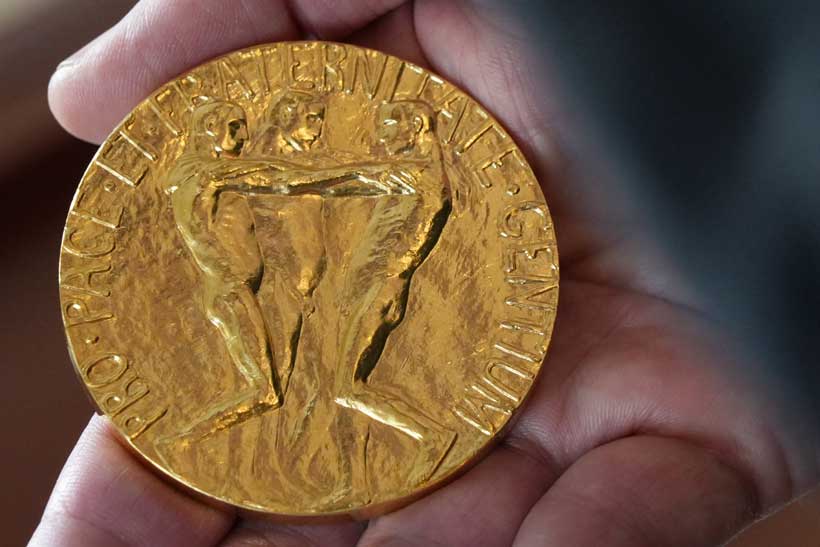
Last year’s award to Machado was unusual in the 125-year history of the prize. Trump had repeatedly lobbied for the award, and Machado later gave her Nobel medal to the US president in a gesture intended to secure his support for Venezuela’s democratic opposition.
According to Haakon Gjerloew, acting director of the Peace Research Institute Oslo, those events could affect the committee’s thinking this year.
Stay ahead of the geopolitical week.
MD Briefing delivers expert analysis across five global fronts — the Indo-Pacific, energy, geoeconomics, European security, and the Middle East — every Monday morning. Free.
The concern, he told Reuters, is whether selecting a particular laureate could expose that person to pressure from Trump and whether the award could ultimately “do more harm than good.”
That consideration potentially broadens the significance of this year’s prize. The committee is not only choosing an individual or organisation for its contribution to peace. It is also operating in an international environment in which the United States under Trump has repeatedly challenged institutions and actors associated with the existing international order.
Who Could Receive the Prize?
Several names and institutions have emerged in expert discussions about this year’s award, including Pope Leo, the International Criminal Court, the International Court of Justice and Francesca Albanese, the UN special rapporteur on the Occupied Palestinian Territories.
Pope Leo could represent a relatively broad interpretation of peacebuilding. The first US-born pope has spoken against war, advocated dialogue and peaceful conflict resolution, and addressed issues including migration and humanitarian protection. His position has also brought him into tension with Trump, who criticised him after the pope spoke out against the US conflict with Iran.
Karim Haggag, director of the Stockholm International Peace Research Institute, told Reuters that Leo had emerged as a significant voice beyond his role as a religious leader.
Albanese would represent a more contentious choice. The Italian UN official has faced strong criticism from both the United States and Israel over her condemnation of Israel’s conduct in Gaza and its policies in the occupied West Bank.
An award to either the International Criminal Court or the International Court of Justice would carry a different institutional message.
The ICC has faced growing pressure from Washington, including the prospect of sweeping US sanctions. Recognising the court could therefore underline the principle that alleged international crimes should be addressed through international legal mechanisms.
The ICJ, meanwhile, could symbolise the importance of resolving disputes through international law and respecting the sovereignty of states.
Such a decision would also place the Nobel Committee’s award within a broader debate over the future of the rules-based international system.
Could the Committee Choose a Less Controversial Laureate?
The political pressure surrounding Trump could, however, produce the opposite outcome.
Rather than selecting a figure or institution directly involved in disputes with Washington, the committee could choose a comparatively less controversial recipient whose humanitarian work is difficult to frame as a direct political challenge.
Among the possibilities mentioned by experts are Sudan’s Emergency Response Rooms, a network of community-based groups providing assistance to civilians during the country’s devastating civil war, and Save the Children, which works with children affected by armed conflicts.
Such a choice would allow the committee to emphasise humanitarian action without directly turning the Nobel Prize into a confrontation with the US administration.
But the committee also faces pressure from another direction.
Historian Oeivind Stenersen, who has written about the Nobel Peace Prize, argued that the international environment may instead demand a stronger defence of liberal democracy, international law and human rights.
That creates a difficult balance for the committee. A highly political choice could be interpreted as an institutional response to Trump’s approach to international affairs. A less controversial humanitarian choice could avoid that confrontation, but might also be seen as failing to address the broader challenges facing the international system.
Trump’s Own Nobel Campaign
Trump has reportedly been nominated for the prize by leaders from Cambodia, Israel and Pakistan. But his chances remain low, according to Gjerloew.
His campaign for the award has nevertheless already become part of the story surrounding this year’s prize.
After failing to receive the award last year, Trump blamed Norway, even though the Nobel Peace Prize is awarded by the Norwegian Nobel Committee rather than the Norwegian government.
The committee therefore enters this year’s selection process under unusual scrutiny. Whatever decision it announces on October 9 will inevitably be assessed not only in terms of the recipient’s contribution to peace, but also against the political tensions surrounding Trump’s relationship with the international institutions and actors involved.
Nobel Peace Prize laureate Maria Ressa, who watched last year’s developments with what she described as “horror,” told Reuters that political pressure should not determine international standards.
The larger question facing the Nobel Committee is therefore not simply who deserves recognition for peace. It is how the prize can retain its independence and credibility while operating in an increasingly contested international environment.
With information from Reuters.
