


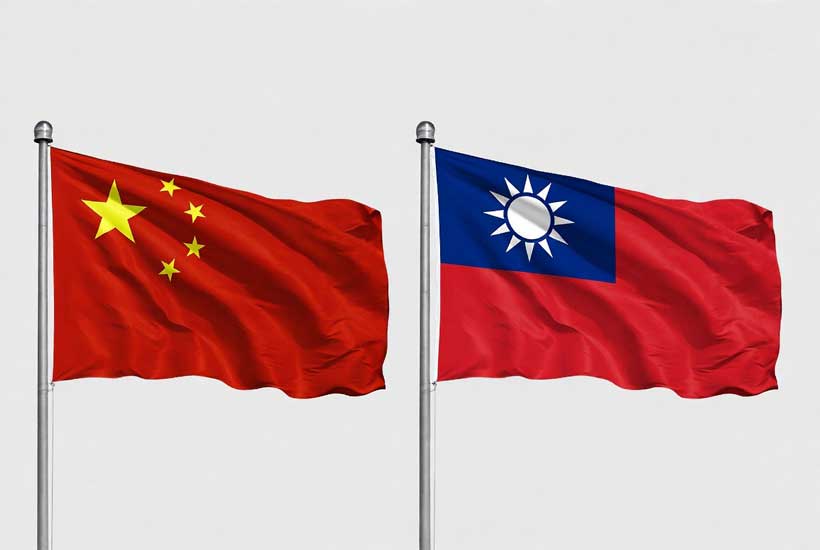
China has drawn a firm line around Taiwan, human rights and several other issues ahead of President Xi Jinping’s meeting with US President Donald Trump, signalling that Beijing intends to protect what it considers core interests while seeking greater stability in bilateral ties.
Chinese Ambassador to the United States Xie Feng said in an article published by the Communist Party’s People’s Daily that China’s sovereignty, security and development interests could not be violated. He identified four issues as “red lines”: Taiwan, democracy and human rights, China’s development path and political system, and its right to development.
Xi is travelling to Washington for a summit with Trump as the two countries attempt to manage tensions that have strained relations across trade, technology, security and Taiwan. Beijing has repeatedly argued that competition between the world’s two largest economies should not develop into confrontation.
“China’s sovereignty, security, and development interests cannot be violated,” Xie wrote, adding that China and the United States both benefit from cooperation while confrontation harms both sides.
Stay ahead of the geopolitical week.
MD Briefing delivers expert analysis across five global fronts — the Indo-Pacific, energy, geoeconomics, European security, and the Middle East — every Monday morning. Free.
The ambassador also accused Washington of using national security, economic imbalances and forced labour concerns as pretexts to constrain China. He called for both countries to approach their differences with good faith and said Beijing remained committed to peaceful development.
Taiwan remains the most sensitive issue
Taiwan is likely to remain one of the most difficult issues in US-China relations. Beijing claims the democratically governed island as part of China and has never renounced the use of force to bring it under its control, although Chinese officials continue to say they prefer peaceful reunification.
The United States does not have formal diplomatic relations with Taiwan but remains the island’s most important security partner and arms supplier. Beijing has consistently opposed US weapons sales to Taipei, arguing that they violate China’s sovereignty and increase tensions across the Taiwan Strait.
Trump has previously said that a new US arms package for Taiwan, reportedly worth about $14 billion, was being held back as a negotiating tool following his meeting with Xi in Beijing.
A senior Taiwanese security official said Beijing could view delays in US arms transfers as an opportunity to slow Taiwan’s military buildup while increasing pressure around Taiwan, Japan and the Philippines.
The official also said Beijing could seek to use economic incentives, including purchases of US goods or cooperation on Middle Eastern issues, to persuade Washington that reduced US military commitments in the region could support broader cooperation with China.
Chinese military activity around Taiwan and in surrounding waters has also become an increasing concern for Taipei. According to the Taiwanese official, Chinese naval, coast guard and research vessels have increased their activities around Taiwan and in the South and East China Seas, including efforts to collect information on undersea cables that could have military significance.
China’s defence ministry did not immediately respond to requests for comment.
China’s foreign ministry meanwhile reiterated its opposition to US arms sales to Taiwan, describing the Taiwan issue as concerning China’s “core of core interests” and as fundamental to the political foundation of US-China relations.
Beijing has also blamed Taipei for rising tensions. Taiwan Affairs Office spokesperson Zhu Fenglian accused Taiwan of deliberately escalating confrontation and said moves toward independence were responsible for undermining peace and stability in the Taiwan Strait.
Human rights add another layer to tensions
Human rights are another longstanding source of disagreement between Washington and Beijing. The United States has repeatedly raised concerns about human rights conditions in China, while Beijing has rejected what it describes as external interference in its domestic affairs.
Xie’s remarks place those disagreements alongside Taiwan as issues Beijing considers fundamental rather than ordinary areas for diplomatic bargaining.
A separate People’s Daily commentary published on Wednesday argued that US perceptions of China and Washington’s continued emphasis on strategic competition were major causes of difficulties in bilateral relations.
The commentary called on both sides to preserve recent momentum in their relationship and urged Washington to maintain consistency in its policies and honour its commitments.
For Beijing, the summit therefore comes with a dual objective: stabilising relations with Washington while making clear that certain issues are not open to unrestricted negotiation.
For Washington, the challenge is managing cooperation with China without removing longstanding disagreements over Taiwan, human rights, trade and security from the broader relationship.
What comes next
The Trump-Xi meeting could provide an opportunity to reduce some of the immediate tensions between the two countries, but the issues identified by Beijing as red lines are among the most deeply rooted disputes in the bilateral relationship.
Taiwan is particularly difficult because it connects China’s sovereignty claims with US security commitments in the Indo-Pacific. Any changes in US arms policy toward Taiwan could therefore be closely watched by Beijing, Taipei and US allies in the region.
The summit is unlikely to eliminate those structural disagreements. Instead, its significance will depend on whether Washington and Beijing can establish limits around their competition while maintaining channels for cooperation on issues where their interests overlap.
With information from Reuters.
