| TODAY’S NUMBERS: $126.4bn (BRI engagement, H1 2026, a record) · 3.1% (yuan’s share of global payments, June 2026) · $50,000 (China’s unchanged annual FX cap, reinforced today) Beijing is expanding yuan flows abroad while tightening what can leave through the front door at home. |
New rules took effect in China today letting authorities bar citizens from leaving if their departure threatens “national technological interests,” and imposing six-month-to-three-year exit bans on returnees judged to have harmed state security abroad. The package tightens scrutiny of outbound tech-linked investment while leaving the $50,000 annual personal foreign-exchange cap untouched. It lands five days after a PBOC deputy governor called yuan internationalisation “irreversible,” and a day after Bloomberg reported that boosting the currency’s global popularity abroad will anchor Hong Kong’s first-ever Five-Year Plan, due out tomorrow.
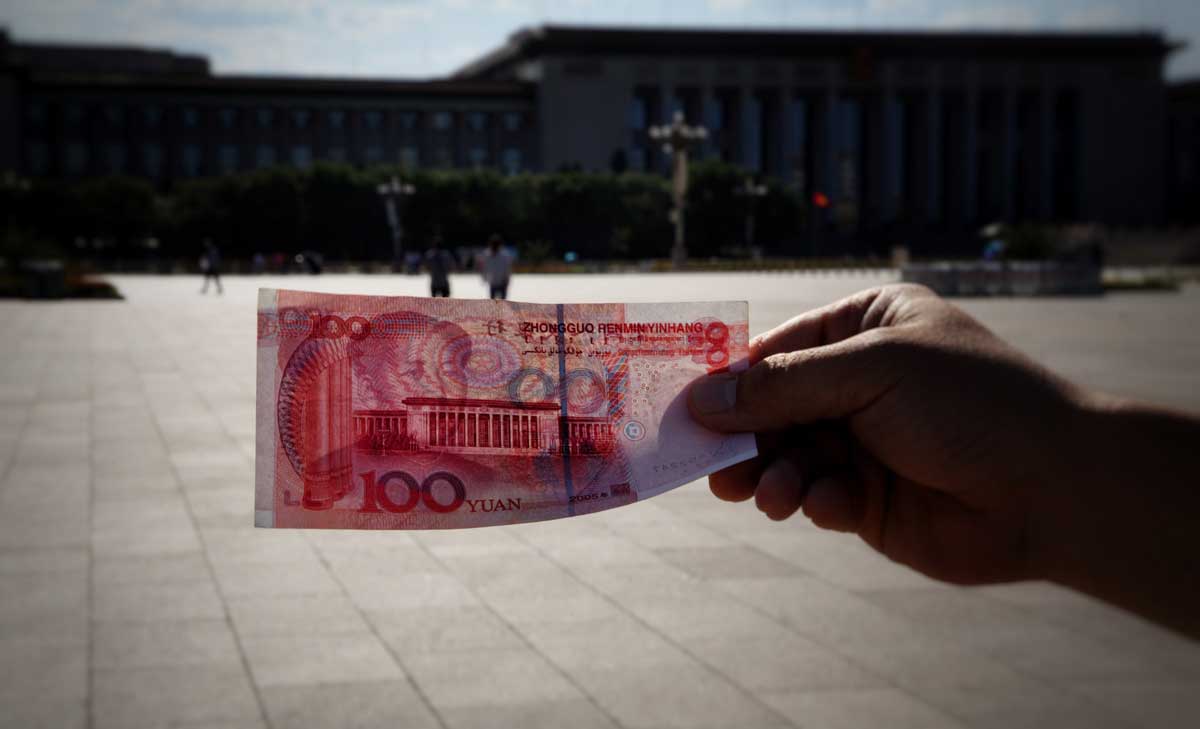
Beijing is running two different rules for two different accounts. Onshore, the capital account stays walled off: the $50,000 personal foreign-exchange cap hasn’t moved in a decade, and today’s rules add a national-security layer on top — officials have cited blocking Meta’s attempted purchase of Chinese AI startup Manus as the kind of tech-leakage case the new exit bans are meant to prevent. Offshore, the picture is the opposite. China’s Cross-Border Interbank Payment System (CIPS) now clears through 210 direct and 1,619 indirect participants across 189 countries; cross-border yuan settlement reached $9.9 trillion in 2025, up 10.2% year on year, with daily CIPS volumes rising from $96bn to $118bn by June 2026. Hong Kong is the pressure valve between the two accounts: an offshore yuan market (CNH), dim sum bonds and Stock Connect let foreign banks and governments use the currency without Beijing opening the mainland account itself.
The Belt and Road financing model is shifting for the same reason. China’s policy banks — China Development Bank and China Ex-Im Bank — are pulling back as sovereign-guarantee risk rises, so record H1 2026 BRI engagement of $126.4 billion (the highest first-half total since 2013) increasingly runs through syndicated deals, with commercial state banks ICBC and Bank of China co-lending alongside local and international partners rather than Beijing’s policy banks lending alone. Direct investment into BRI countries actually fell 11.1% even as China’s total outbound investment rose 3.8%, while BRI-linked construction and engineering contracts jumped nearly 12%. Beijing is exporting yuan-denominated credit and construction capacity through more hands, not fewer — spreading the risk across a wider set of balance sheets while keeping the terms in its own control.
Why it matters: This is the classic monetary trilemma, resolved in Beijing’s favour rather than the market’s. A country cannot simultaneously run free capital flows, a managed exchange rate and independent monetary policy — Beijing has chosen control over convertibility, which makes yuan “internationalisation” usage without ownership. Trading partners, sanctioned states and Belt and Road borrowers get a currency they can settle and borrow in, without the assurance that comes with a fully convertible reserve asset. That is why the yuan’s SWIFT-tracked payment share fell from a 2024 peak of 4.7% to roughly 2.75-3.1% even as CIPS volumes climbed: the growth is happening inside Beijing-controlled pipes, not in the open market.
Stay ahead of the geopolitical week.
MD Briefing delivers expert analysis across five global fronts — the Indo-Pacific, energy, geoeconomics, European security, and the Middle East — every Monday morning. Free.
For governments, this is real but bounded leverage. Countries leaning on yuan swap lines or syndicated Chinese bank financing to soften dollar-sanctions exposure — Russia and Iran-adjacent trade are the clearest cases — get an alternative to SWIFT, but one where Beijing, not the market, sets the terms of access. Belt and Road borrowers get financing structured around more institutions, which spreads Beijing’s own credit risk while leaving it holding the lever of who gets financed at all. The dollar’s 89% share of global foreign-exchange turnover shows how far this remains from a genuine reserve-currency challenge — but as a sanctions-hedging and influence tool, it doesn’t need to be one to matter.
Watch for: Hong Kong Chief Executive John Lee unveils the city’s first-ever Five-Year Plan (2026-2030) at the Legislative Council tomorrow, September 16, immediately followed by the annual Policy Address. Bloomberg has flagged renminbi promotion as a likely centerpiece. The test is specificity: concrete commitments — new dim sum bond issuance quotas, expanded Stock Connect capacity or offshore yuan liquidity facilities — would mark real follow-through on Beijing’s “irreversible” framing. Vague language about supporting the yuan’s “international role” would confirm that offshore promotion is still running well ahead of any onshore commitment.