TODAY’S NUMBERS: $102 (Brent crude) · 5.18% (US 10-year Treasury yield, Friday) · $4,137 (Gold, down 3% on the week). A wartime oil price next to a falling gold price: markets are treating the Gulf as an inflation-and-rates problem, not a safe-haven panic. That is today’s story.
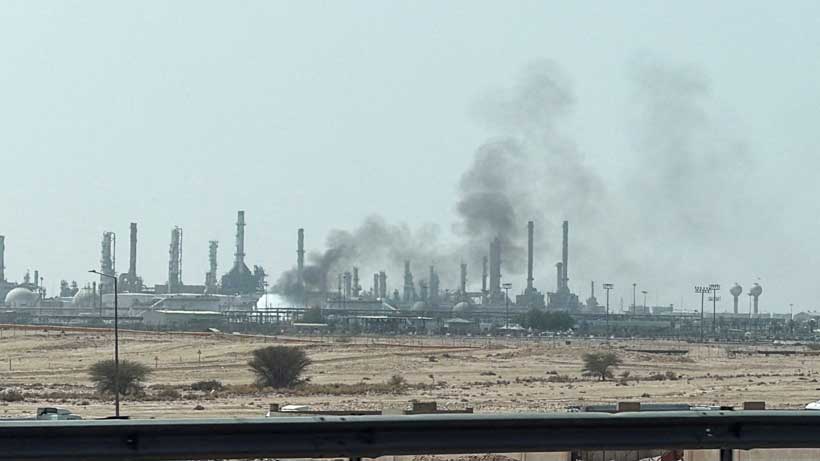
Over the weekend the war’s two chokepoints spoke at once. On Saturday the Houthis claimed missile and drone strikes on Saudi Aramco sites in Riyadh and Khurais; the Saudi-led coalition called the claims “misleading.” On Sunday Iran’s parliament speaker, Mohammad Bagher Ghalibaf, said the Strait of Hormuz stays closed until Washington meets seven conditions. Asian trading opened with Brent barely moving, at around $102. That calm is the story. Markets are no longer pricing a shock; they are pricing a long war, and the bill is landing somewhere other than the headline oil price.
The mechanism
Look past Brent to where the premium actually sits. Murban, the Abu Dhabi grade Asian refiners prize, traded near $110 on Monday morning, about $8 over Brent. The Brent–WTI spread is above $11, against a more normal $3–5. Very large crude carriers are earning around $1.3 million a day, roughly 43 times January rates. The world is not short of oil in aggregate: Gulf crude exports have climbed back to about 14 million barrels a day through a US-escorted corridor along Oman’s coast. It is short of safe, insured passage.
Stay ahead of the geopolitical week.
MD Briefing delivers expert analysis across five global fronts — the Indo-Pacific, energy, geoeconomics, European security, and the Middle East — every Monday morning. Free.
That picks the winners. American producers sell into a market paying an $11 premium for barrels that never go near the Gulf. Tanker owners are collecting windfall rates. Gulf producers with exits outside Hormuz — the UAE’s pipeline to Fujairah, Saudi Arabia’s East-West line to Yanbu on the Red Sea — get paid for their geography.
The losers are the importers buying delivered Gulf crude: Japan, South Korea, India and, increasingly, Europe. Aramco’s $3 cut to its Arab Light price for Asian buyers is Riyadh conceding that its customers are already paying the freight and the war-risk insurance; the discount is what keeps them from defecting to Atlantic barrels.
Then comes the rates channel. Oil above $100 keeps inflation sticky, which is why the Fed raised rates to 3.75–4.00% in September and why the 10-year still sits near 5.2% even after September’s payrolls showed just 29,000 new jobs. Gold falling 3% in a war week is the tell: yields are beating fear.
Why it matters
The weekend’s two statements fit together, coordinated or not. Iran’s leverage is Hormuz. The Gulf states’ answer to Hormuz is bypass infrastructure, and the bypass that matters most — Saudi crude piped west to the Red Sea — now sits within reach of a Houthi movement that seized islands in the Bab el-Mandeb in mid-September and targeted Yanbu later that month. Saturday’s claims, whatever the real damage, put the Saudi heartland on the list too. Riyadh’s spare-capacity diplomacy is becoming hostage to Yemen’s front line.
The West’s counter-tools look thin. The G7’s 100-million-barrel stock release, agreed on Friday under US pressure, covers roughly one day of world consumption, and Brent has not gone back below $100. The other tool is monetary, and it is turning the war into a fiscal problem for America’s allies. A dollar index at an 18-month high and a 5% Treasury export tightening abroad. France felt it first: the OAT–Bund spread hit about 130 basis points last week, its widest since the euro crisis, after a 2027 budget markets did not believe, with euro-area inflation at 3.8%. Tokyo is defending a yen near 157–158 to the dollar.
Tehran does not need to win at sea. It needs only to keep the premium in freight, insurance and bond spreads, where it wears down allied budgets slowly and never produces the single price spike that would force Washington’s hand.
Watch for
Wednesday, 7 October, 2pm ET (21:00 Athens): minutes of the Fed’s 15–16 September meeting. After Friday’s payrolls, markets put the odds of another hike on 28 October at roughly one in five. If the minutes show officials treating oil as a persistent rather than passing shock — Dallas Fed President Lorie Logan has already argued for at least 50 basis points more — that repricing reverses, the dollar climbs again and the squeeze on Paris, Tokyo and Gulf-dependent importers tightens. If they read as patient, gold is the first place relief will show.