


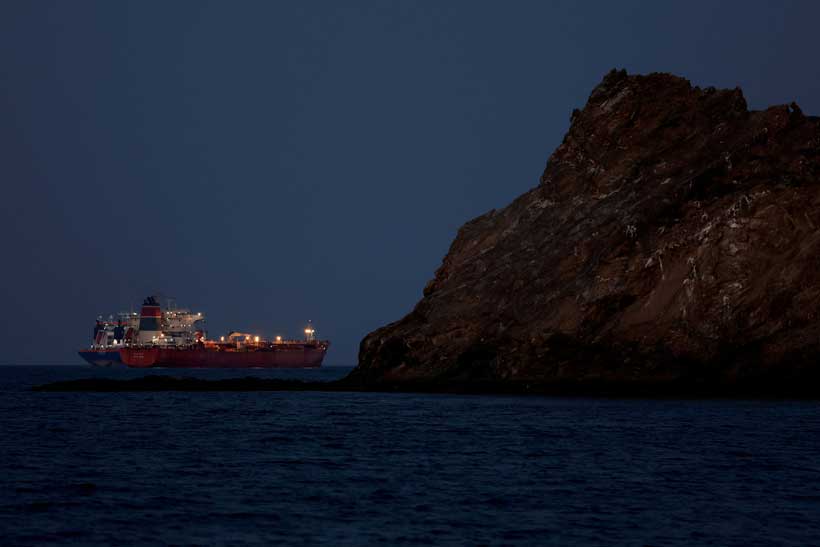
Oil markets are confronting a new kind of supply shock. The problem is no longer simply how much crude is available, but whether the global energy system can transport and refine it efficiently.
Middle East crude flows through the Strait of Hormuz recently reached their highest level since the start of the Iran war, with shipments rising to 14.2 million barrels per day on a seven day average on September 26, according to analytics firm Kpler. That was nearly 80% of pre-war levels.
Yet Brent crude remains above $100 a barrel, more than 40% above its pre-war level.
The apparent contradiction highlights a deeper problem in global energy markets. Years of geopolitical disruption have fractured the logistics network that once allowed crude and refined products to move relatively cheaply across continents. Tanker rates, insurance costs and limited refining capacity are now adding substantial costs to every barrel that reaches consumers.
Stay ahead of the geopolitical week.
MD Briefing delivers expert analysis across five global fronts — the Indo-Pacific, energy, geoeconomics, European security, and the Middle East — every Monday morning. Free.
Why Is More Oil Not Bringing Prices Down?
The recovery in crude flows through Hormuz has reduced the scale of the global supply deficit. Energy Aspects estimates that the shortfall has fallen to around 1.6 million barrels per day from approximately 4 million barrels per day at the height of the disruption in May.
Under normal market conditions, such an improvement would be expected to put significant downward pressure on prices.
But the oil market is no longer operating under normal conditions.
The threat of renewed attacks around Hormuz continues to support a geopolitical risk premium. At the same time, moving crude from producers to consumers has become considerably more expensive and complicated.
The result is a market in which the physical availability of crude tells only part of the story.
How Has the Strait of Hormuz Changed Global Oil Flows?
The conflict forced Gulf producers to search for alternatives to the waterway, which normally carries a substantial share of global oil supplies.
Saudi Arabia, for example, diverted more exports through its East West pipeline to the Red Sea port of Yanbu. At one point, the route carried around 4% of global oil supplies.
But an attack on the pipeline by Iranian backed Iraqi militias in early September forced Saudi Arabia to redirect more shipments through the Gulf.
That unexpectedly demonstrated that Hormuz remained more usable than some market participants had feared.
Saudi crude exports through the strait averaged around 3 million barrels per day in September, their highest level since the conflict began, according to Kpler. That was still roughly half of pre-war volumes, but shipments could increase further as the East West pipeline gradually returns to normal operations.
The development has created an unusual strategic outcome. Attempts to disrupt alternative routes may have encouraged Gulf producers to make greater use of Hormuz, weakening the perception that Iran can effectively prevent large volumes of oil from passing through the waterway.
But greater traffic through Hormuz does not mean the logistical problem has disappeared.
Why Are Tanker Costs So High?
The biggest pressure point is shipping.
The disruption has created a complicated shuttle system around the Gulf in which multiple tankers can be required to move crude through Hormuz toward the Gulf of Oman before cargoes are transferred to smaller vessels and transported onward to Asian buyers.
That process ties up large numbers of very large crude carriers, reducing the number of vessels available elsewhere.
At the same time, Asian buyers are increasingly sourcing crude from the Atlantic Basin and transporting it over longer distances. Those longer voyages consume additional tanker capacity and further tighten the shipping market.
The impact on freight rates has been dramatic.
Rates for transporting Middle Eastern crude to Asia aboard a very large crude carrier recently exceeded $1.2 million per day, compared with roughly $30,000 per day in January, according to shipping broker Poten & Partners.
Freight costs that once represented only around 3% of the delivered price of a barrel now account for roughly 27%.
That means even when additional crude reaches the market, the cost of physically delivering it to consumers can keep the final price elevated.
Why Is Refining Making the Problem Worse?
Transportation is only one part of the bottleneck.
The loss of refining capacity in the Middle East and Russia has created another major constraint, particularly in diesel markets. Ukrainian drone attacks have damaged numerous Russian refineries, while disruptions in the Middle East have further reduced available processing capacity.
That matters because crude is only useful to consumers after it has been converted into products such as diesel, gasoline and jet fuel.
Diesel has become a particular pressure point because it is essential to agriculture, manufacturing, transportation and construction. Its rising price has therefore become an increasingly important economic and political concern in the United States.
The Group of Seven’s decision to release diesel from strategic stocks may provide temporary relief, but it cannot replace the refining capacity that has been lost.
Why Does the Type of Crude Matter?
The refining shortage is also changing demand for crude itself.
Refiners are increasingly competing for medium sour crude grades because they can produce relatively large quantities of diesel. Many of these barrels come from the Middle East and Russia, precisely the regions experiencing the greatest disruption.
That creates a feedback loop across the energy market.
Limited refining capacity pushes diesel prices higher. Higher diesel prices increase demand for crude grades that produce more diesel. Stronger demand for those barrels supports crude prices, even as overall crude flows recover.
The result is that oil prices increasingly reflect the cost and difficulty of moving and processing crude rather than simply the amount of crude available.
What Does This Mean for Oil Prices?
The biggest implication is that restoring production alone may no longer be enough to bring oil prices sharply lower.
For prices to return to more normal levels, shipping routes, tanker availability, insurance costs and refining capacity will also need to recover. That could take considerably longer than restoring crude production.
Indeed, a further increase in shipments through Hormuz could initially worsen some of these pressures if it requires more tankers to operate within the region’s complicated shuttle system.
The oil market has therefore entered a more complicated phase of the conflict. The immediate supply shock may be easing, but the infrastructure required to transport and process that supply remains under strain.
That is why the central question for oil markets is no longer simply how much crude is available.
It is whether the global energy system can move and refine enough of it at an acceptable cost.
With information from Reuters.
