| TODAY’S NUMBERS: $108 (Brent crude) · 4.98% (US 10-year Treasury yield) · $4,330 (Gold) Oil is pricing a wider Gulf war, yields are pricing the Fed hike war-driven inflation now demands — and gold, the classic war hedge, is losing to both. |
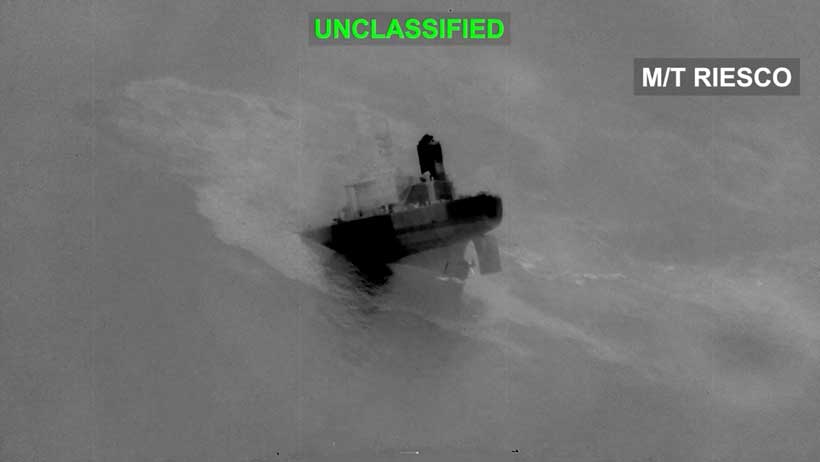
Over the weekend, an Iranian cargo vessel was attacked near the Strait of Hormuz, killing at least one crew member — the latest escalation in the US-Iran war that has run since August. Asked directly whether Washington was involved, Trump would say only, “I don’t want to say.” An Oman-hosted meeting meant to calm the crisis was postponed “in the interests of consensus.” Brent, which traded at $70 in July, is now above $108. The market’s read: this war is not cooling off, and Wednesday’s Fed decision has to be made inside it.
That is the mechanism to watch this week. Oil’s climb from $70 to $108 in two months has done what six months of tariff talk could not: it dragged US diesel above $6 a gallon and pushed August CPI higher than forecast. Futures markets now price an 88% probability that the Fed hikes on Wednesday, with the terminal rate creeping toward 4.53% — up from 4.29% before the CPI print. That repricing is the week’s real story, and it produces a clear split of winners and losers. US shale producers and Gulf exporters — Saudi Arabia, the UAE — are banking windfall revenue on every barrel, even as they absorb the insurance and shipping risk of operating a war zone next to their own coastline. Iran is the opposite case: squeezed by strikes on its tankers and further cut off from the financial system with every week the war runs. Oil-importing economies with dollar debt and managed currencies — India, Turkey, much of emerging Asia — face the worst of both: costlier crude and a dollar getting a rate-driven bid on top of its usual safe-haven flow, now trading at 99.46 on the DXY. Even Kyiv is caught in the mechanism: Trump is pressing Ukraine to stop striking Russian refineries, not out of sympathy for Moscow but because every refinery knocked offline adds to the diesel price he now owns politically.
Why it matters is bigger than this week’s barrel count. A war is normally a rate-cut trade — flight to safety, growth scare, central banks ease. This one is doing the opposite: it is forcing a hawkish Fed, because the war’s transmission channel into the US economy runs through the gas pump, not the stock market. That inverts the usual geopolitical playbook and puts Washington’s own monetary policy partly hostage to a conflict its own administration is party to. It also answers a question reserve-diversification advocates have been asking all year: does money still run to the dollar when the crisis is one America helped start? This week, yes — DXY is up, not down, which tells you rate differentials are still beating any doubts about US entanglement, at least for now. Meanwhile the coalition managing the other end of this crisis is fraying on its own terms: Ansarullah forces used the weekend to seize Yemen’s Red Sea coast, exploiting a Saudi-UAE-backed force that turned out to be a fifth as strong as advertised. A Gulf security architecture stretched thin in one war is now visibly cracking in a second, adjacent one — and that is a cost Riyadh and Abu Dhabi will be pricing long after this week’s barrel price settles.
WATCH FOR: The FOMC rate decision, Wednesday, September 16, 2:00pm ET. An actual hike would confirm markets are reading this correctly — that war-driven oil inflation, not growth, is now the Fed’s binding constraint. A pause, or hedged language from Powell on treating the oil shock as “transitory,” would be the first sign the Fed is trying to decouple its policy from a war that shows no sign of ending on Washington’s schedule.
Stay ahead of the geopolitical week.
MD Briefing delivers expert analysis across five global fronts — the Indo-Pacific, energy, geoeconomics, European security, and the Middle East — every Monday morning. Free.