


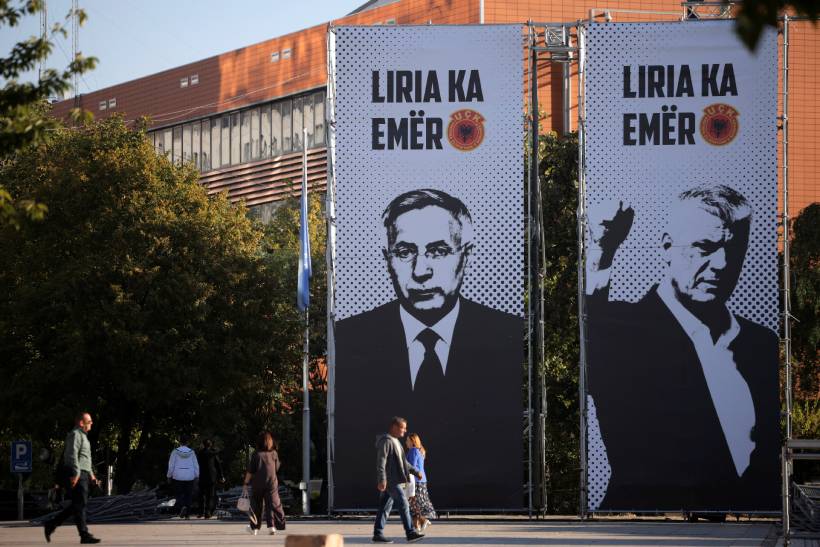
Former Kosovo President Hashim Thaci is set to hear a verdict on Wednesday at a war crimes tribunal in The Hague over allegations linked to his role in the Kosovo conflict of the late 1990s.
Thaci, who denies wrongdoing, rose from a student activist and Kosovo Liberation Army (KLA) commander to become one of the central figures in Kosovo’s campaign for independence from Serbia. He later became prime minister and president before resigning in 2020 after being indicted on war crimes charges.
From Student Activist to KLA Commander
Born on April 24, 1968, Thaci became involved in Kosovo’s national liberation movement during his youth. He later became head of the students’ union at the University of Pristina before moving to Switzerland in 1995, where he studied history and international relations in Zurich.
He returned to Kosovo as the KLA emerged in the late 1990s and became one of its senior political and military figures. The guerrilla group launched an armed campaign against Serbian forces after years of failed efforts to secure greater rights through peaceful resistance.
Stay ahead of the geopolitical week.
MD Briefing delivers expert analysis across five global fronts — the Indo-Pacific, energy, geoeconomics, European security, and the Middle East — every Monday morning. Free.
Thaci frequently travelled clandestinely between Kosovo and other countries during the conflict, earning the nickname “The Snake” for his ability to evade Serbian security forces.
Role in the Kosovo War
Thaci became an important figure in negotiations aimed at ending the conflict.
At the 1999 Rambouillet peace talks in France, he led Kosovo’s delegation in signing a Western-backed agreement designed to end the fighting. Serbia rejected the proposal, and NATO subsequently launched a 78-day bombing campaign against Yugoslavia.
The campaign forced Serbian forces out of Kosovo and paved the way for international peacekeeping forces and a United Nations administration.
From Guerrilla Leader to Prime Minister
After the war, Thaci helped establish the Democratic Party of Kosovo, which became the main political movement to emerge from the KLA.
He initially served as prime minister of a provisional Kosovo government before his party entered government following the 2001 elections.
The PDK later won parliamentary elections in November 2007, allowing Thaci to become prime minister in January 2008.
A month later, in February 2008, Kosovo declared independence from Serbia, with Thaci playing a central role in the process.
More than 100 countries, including the United States and many European states, have recognised Kosovo’s independence. Serbia, Russia and China have not.
From President to War Crimes Defendant
Thaci was elected president in February 2016 and took office two months later.
His political career was overshadowed by allegations concerning the KLA. A 2010 Council of Europe report accused him of involvement in an organised criminal network alleged to have killed opponents and trafficked organs taken from murdered Serbs.
Thaci denied the allegations, and prosecutors never brought a case against him over the alleged organ trafficking.
Meanwhile, pressure from the United States and European Union contributed to the creation of a special court in 2015 to investigate alleged crimes committed by KLA members during and after the Kosovo war.
The Kosovo Specialist Chambers later indicted Thaci on war crimes charges in November 2020. He resigned as president and was transferred to the tribunal’s detention centre in The Hague.
Why Thaci Remains Important in Kosovo
Despite the allegations against him, Thaci remains a highly influential and divisive figure in Kosovo.
For many Kosovars, he is remembered primarily as one of the political leaders of the struggle for independence and the man who proclaimed Kosovo’s statehood in 2008.
His supporters continue to portray him as a national hero. Photographs of Thaci and other former KLA figures facing proceedings in The Hague can be found across Kosovo alongside the words “Heroes of War and Peace.”
The verdict will therefore carry significance beyond the courtroom. It could affect how Kosovo’s wartime history is remembered and how one of the country’s most prominent political figures is viewed by future generations.
With information from Reuters.
