TODAY’S NUMBERS:
$97.19 (Brent crude, a six-week high) · $5.85 (US retail diesel, a record) · 4.79% (US 10-year Treasury yield)
War in the Gulf is repricing oil and diesel, while a hot jobs report keeps a Fed rate hike on the table — this week tests both bets at once.
Over the weekend, the US and Iran traded direct military fire in the Strait of Hormuz for the first time in this six-month-old war. US Central Command struck three Iranian vessels, including a tanker near Kharg Island; Admiral Brad Cooper, who commands US naval forces in the Gulf, warned, “If you shoot at two of our ships, we will impose an even higher economic cost — taking out three of yours.” Iran’s Revolutionary Guard answered with ballistic missiles fired at a US aircraft carrier and destroyer — both missed — then struck three more tankers. Brent crude rose to $97.19 a barrel on Monday, a six-week high and roughly 38% above the approximately $70 baseline that prevailed before the war began in February.
Stay ahead of the geopolitical week.
MD Briefing delivers expert analysis across five global fronts — the Indo-Pacific, energy, geoeconomics, European security, and the Middle East — every Monday morning. Free.
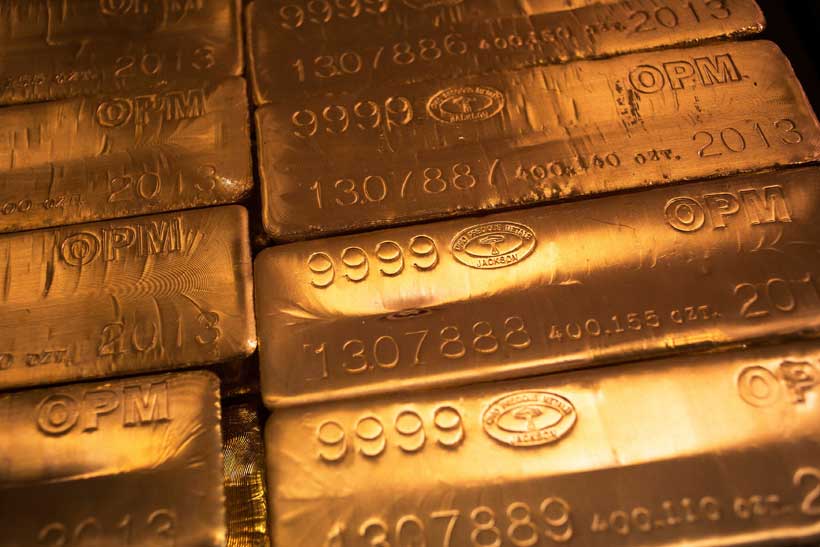
The mechanism here runs through two markets that are, for once, telling different stories. Oil is pricing physical risk: Brent’s climb to a six-week high, and US retail diesel’s rise to a record $5.85 a gallon, reflect a war that has cut into Iran’s shadow-fleet exports and put US Navy vessels in direct exchanges of fire with Iran’s Revolutionary Guard for the first time. Gold, historically the asset that catches a bid on exactly this kind of headline, instead slipped roughly 0.7% to about $4,402 an ounce, and the 10-year Treasury yield climbed to 4.79% — up nearly 20 basis points this month. The reason is Friday’s August jobs report: 162,000 payrolls added, more than triple the 53,000 forecast, reviving bets that the Fed’s September 15–16 meeting could produce a hike rather than the cut markets had been pricing as recently as Wednesday, when Governor Christopher Waller signalled openness to holding rates steady.
The winners: Exxon Mobil, Chevron and other majors with Gulf-linked crude exposure, who capture the risk premium in wider margins; and Saudi Arabia and the UAE, who finished unwinding OPEC+’s voluntary output cuts this month and can now use spare capacity as a moderating lever — profiting from the price spike while positioning themselves as the only actors able to visibly cool it. The losers: Asian refiners in Japan, India and South Korea, who had been buying discounted, sanctions-evading Iranian barrels through the same shadow fleet Washington is now striking; Iran’s own oil revenue, already squeezed by the US blockade in place since April; and US consumers and hauliers absorbing record diesel prices into an economy the Fed is simultaneously trying to cool.
Why it matters: This is a test of whether a war fought mostly through tankers and missiles that miss can be treated by markets as contained — and so far, the answer is yes. Gold’s decline shows investors are pricing this as an energy-specific supply shock, not a systemic flight-to-safety event, which is itself a signal to Tehran, Washington and Gulf capitals that a shooting war in the world’s most important chokepoint is not, on its own, enough to overturn a hawkish rates narrative. That gives Washington more room to escalate without spooking broader markets, and less incentive to negotiate an off-ramp quickly. It also hands Gulf producers real leverage: having restored their own output right as war risk lifted prices, Saudi Arabia and the UAE can present themselves to both Washington and Beijing as the indispensable stabilizers of a market Iran and the US are actively destabilizing — a form of state power exercised through a production quota rather than a warship. And it complicates the Fed’s task by forcing a geopolitical shock into a decision already being fought over labor-market data, at the exact moment the White House is also trying to manage a second, simultaneous crisis in Ukraine — a test of how much foreign-policy bandwidth one administration can spend at once.
Watch for: Two dated tests, both this week. First: the mutual pause on strikes against Kyiv and Moscow that Putin ordered and Zelenskyy matched expires at midnight tonight (September 7–8); its lapse would reopen the second front competing for Washington’s attention. Second, and bigger for markets: the Fed’s September 15–16 FOMC meeting, where this weekend’s oil shock and Friday’s payrolls beat both become live inputs into whether the Fed hikes, holds, or reopens the case for a cut.