Bottom line: Documented Ukrainian graft becomes diplomatic leverage on its own schedule, independent of its dollar value — the 2024 $40 million case and 2025’s NABU/SAPO law both proved that. This time, the reformer who was closing the exact loophole the new report describes was fired in July, leaving Kyiv’s fastest fix for this kind of story weaker than it was a year ago.
On Sunday, The New York Times published confidential Ukrainian government audits showing roughly $1.2 billion lost to fraud, waste and mismanagement in 2024 defense procurement alone — seven of Ukraine’s ten largest military contractors kept receiving orders despite active fraud investigations, eighteen companies won contracts after prior defaults, and the state-owned Pavlohrad Chemical Plant supplied 233,000 unusable mortar rounds and still got more work. Within hours, Russian foreign ministry spokeswoman Maria Zakharova said the findings showed corruption “permeates the entire Ukrainian power structure.” The story landed in the same week Steve Witkoff and Jared Kushner were shuttling between Moscow and Kyiv on a US-brokered peace framework. The fraud is real and documented. What matters more this week is how fast, and how independently of the battlefield, it becomes something else entirely.
The Context
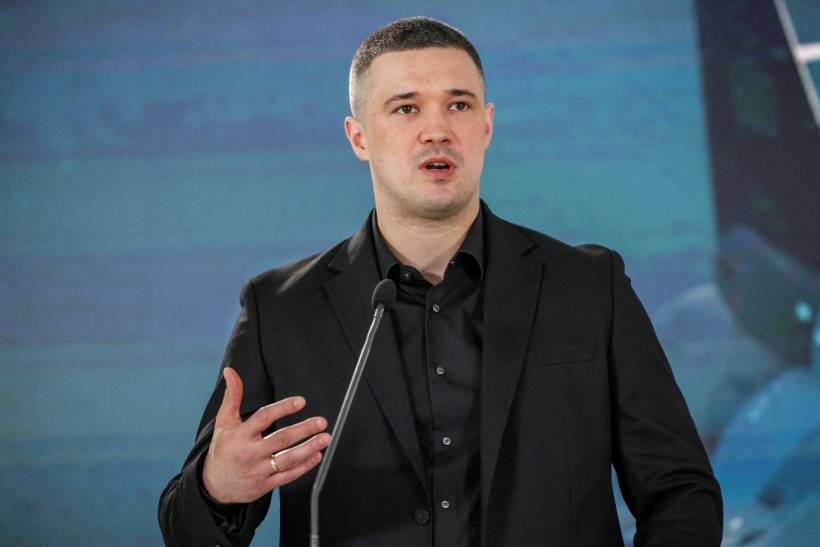
This is not the first time a Ukrainian procurement scandal has collided with a Western decision point. In January 2024, a $40 million scheme to embezzle funds meant for 100,000 mortar rounds surfaced just as a $60 billion US aid package sat stalled in Congress; it became a recurring talking point for skeptical lawmakers even though it represented a fraction of one percent of the aid in question. In July 2025, Kyiv passed a law stripping its anti-corruption bodies, NABU and SAPO, of independence, triggering street protests and EU alarm over accession implications — then reversed course within nine days, a fast, visible correction that mostly defused the crisis. This year added a new complication: Mykhailo Fedorov, appointed defense minister in January 2026, built a digitized procurement-tracking system aimed at exactly the kind of contract-inflation the NYT just exposed — before being dismissed in July over a command dispute with Ukraine’s then-military chief, an ouster protesters read as a corruption story of its own.
Stay ahead of the geopolitical week.
MD Briefing delivers expert analysis across five global fronts — the Indo-Pacific, energy, geoeconomics, European security, and the Middle East — every Monday morning. Free.
The Argument
Coverage of this week’s report has mostly asked a binary question: is Ukraine corrupt, yes or no. That’s the wrong question, and answering it either way misses what actually happens next. The more useful question is how a documented fraud finding gets converted into diplomatic ammunition, at what speed, and by whom — because that process runs almost entirely independent of the battlefield, and largely independent of the finding’s actual scale.
The 2024 precedent shows the scale-independence clearly. A $40 million scheme, uncovered in a war effort backed by tens of billions of dollars in Western funding, became one of the most repeated arguments against a $60 billion aid package for months. The dollar figure was almost irrelevant to its political utility; what mattered was that it existed, was documented, and arrived at a moment when skeptics needed a credible-sounding reason to withhold support. The same mechanism will apply to this week’s $1.2 billion finding regardless of whether the true operational impact turns out closer to that number or a fraction of it.
The 2025 NABU/SAPO episode shows the other half of the pattern: speed of response matters more than the underlying facts. Kyiv’s initial move, stripping the anti-corruption bodies of independence, was a genuine setback. But the reversal, passed within nine days under street pressure, was fast and visible enough that the EU described it as welcome and largely moved on. The lesson Kyiv’s own institutions absorbed from that episode was correct: a credible, quick, public course-correction can neutralize a corruption story faster than the story itself can spread.
That is exactly the capacity Ukraine now has less of. Fedorov’s digitized tendering system was designed to make it harder to inflate supply contracts and hide kickbacks — the specific abuse pattern in this week’s report. He was removed in July over an institutional turf war with the armed forces’ then-commander-in-chief, not over corruption, but the protests that followed chanted “corruption kills” regardless of the actual reason, which tells you how thin the line already was between military governance disputes and corruption narratives in Ukrainian public life. His successor, Yevhenii Khmara, has asked the ministry’s procurement reformers to stay on, explicitly citing the European funding tied to their work — a sign the institutional muscle memory from 2025 hasn’t disappeared. But a retention request is not a demonstrated response, and this report predates that team’s tenure entirely: the audits cover 2024, a year before Fedorov’s reforms existed to prevent any of it.
The honest objection here is that a $1.2 billion finding, with named companies still winning contracts after documented defaults, is a real readiness problem, not merely a talking point, and shouldn’t be waved away as noise. That’s fair. But it doesn’t weaken the argument; it sharpens it. Whether this finding degrades Ukraine’s actual military capacity is a separate question from whether it gets weaponized in Washington and Moscow, and the weaponization proceeds on its own schedule either way — Zakharova’s statement was published before anyone outside Kyiv had time to assess the report’s operational significance at all.
Layer on the specific moment: Witkoff’s own credibility as a mediator took a hit in November 2025 after a leaked call appeared to show him coaching a Kremlin aide on how to pitch Putin’s position to Trump. A shuttle-diplomacy track already facing skepticism about whose narrative it amplifies now has a fresh Ukraine-corruption story arriving in the same week — useful simultaneously to Moscow-aligned voices arguing Kyiv doesn’t deserve favorable terms, and to Washington aid skeptics arguing continued support isn’t warranted, from opposite ends of the same argument.
The Scenarios
Base case (55%): Kyiv follows its own 2025 playbook — Khmara’s ministry announces concrete action against specific named firms, likely including contract terminations tied to the Pavlohrad Chemical Plant and the eighteen previously-defaulting contractors, within a few weeks. That response is fast enough to blunt the story’s traction in Western capitals and keep the Witkoff-Kushner track moving, even as Moscow continues citing the underlying report indefinitely for its own purposes, unrelated to whether Kyiv responds at all.
Downside case, and the one with the most durable consequences: rather than fading as rhetoric, the finding gets written into the substance of the deal. US aid skeptics or negotiators attach explicit anti-corruption escrow or oversight conditions to any post-ceasefire reconstruction financing under discussion, echoing the precedent of Washington already tying “certain kinds of economic aid” to anti-corruption progress in 2024. That would move the corruption story from a talking point into a genuine friction point in the agreement’s fine print — one that outlasts the news cycle and complicates disbursement long after a ceasefire is signed.
Upside case: Khmara’s retained reform team, led by the officials he specifically asked to stay, produces a fast, well-publicized response — arrests, cancelled contracts, a public accounting — that becomes the more widely covered story within days rather than weeks, reassuring EU accession-track officials and undercutting Zakharova’s framing before it hardens into consensus. That would demonstrate the institutional capacity Fedorov built survived his own removal, which is a genuinely open question right now rather than a settled one.
The Takeaway
This fraud finding will be used exactly as the $40 million case and the NABU/SAPO law were: as ammunition whose political value is detached from its actual size, deployed by whoever needs a credible-sounding reason to slow or reshape support for Ukraine. What’s different this time is that Kyiv’s demonstrated capacity to respond fast — the thing that actually worked in 2025 — now rests on a reform team that survived its own minister’s ouster only because the next one asked it to stay. Watch whether Khmara’s ministry announces concrete, named action against the Pavlohrad Chemical Plant and the eighteen defaulting contractors within the next few weeks. That response time, more than the report itself, will decide whether this becomes a genuine complication in the Witkoff-Kushner track or fades the way the 2024 scandal eventually did, once the aid it was meant to block passed anyway.