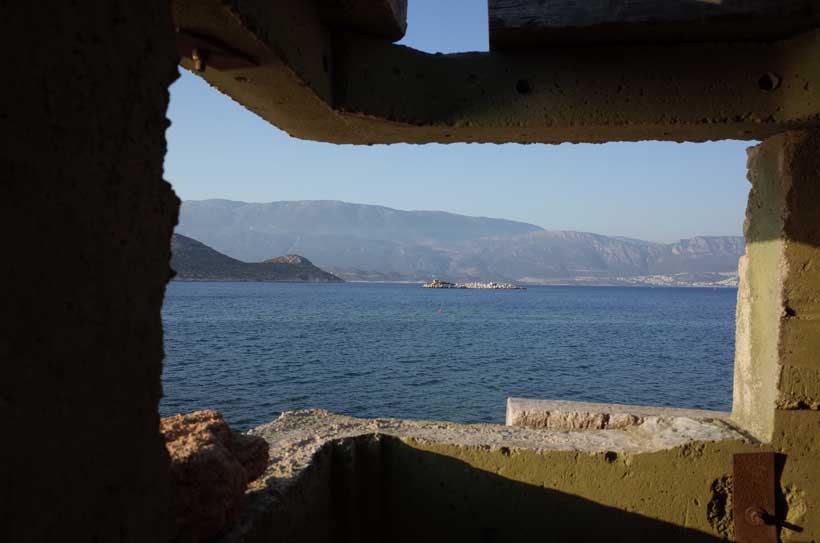
Turkey declared mid-August by presidential decree the establishment of two marine parks beyond its territorial waters. The first marine park lies in the northeastern Aegean Sea, covering a maritime area between the Greek islands of Lemnos and Samothrace, west of Imbros and Tenedos. The second marine park covers waters off the southern Turkish coastal towns of Fethiye and Kas in the Eastern Mediterranean, encompassing the maritime area surrounding the Greek island of Kastellorizo.
The establishment of both marine parks that cover high seas areas is illegal, as, according to the United Nations Convention on the Law of the Sea (UNCLOS), no state is entitled to unilaterally establish marine protected areas in areas beyond national jurisdiction. This UNCLOS provision reflects customary international law that is binding for non-parties, including Turkey. An additional factor that confirms the illegality of the two marine parks is that they extend within the Greek continental shelf. Turkey’s unilateral declaration of the two marine parks, therefore, creates no legal effect in respect of the high seas or regarding Greece’s rights over its continental shelf.
Turkey’s declaration of both marine parks coincides at a time that geopolitical realignments unfold due to the US-Israel war on Iran and energy turns into a top regional concern. This volatile regional environment has prompted Turkey to advance its “Blue Homeland” maritime claims in the Eastern Mediterranean in a calculated effort to counter competitive energy initiatives, primarily the Great Sea Interconnector (GSI), a subsea electricity cable project linking Greece, Cyprus, and Israel. Concurrently, Turkey scrambles to fill leadership roles in what it considers the unrolling geopolitical vacuum created by a fluctuating US security umbrella across the Middle East.
Motives Behind the Declaration of the Two “Marine Parks”
Stay ahead of the geopolitical week.
MD Briefing delivers expert analysis across five global fronts — the Indo-Pacific, energy, geoeconomics, European security, and the Middle East — every Monday morning. Free.
Turkey’s declaration of the marine park in the Eastern Mediterranean aims at obstructing the implementation of the GSI project. The Turkish declaration happened several days after the signing of the strategic agreement between the Independent Power Transmission Operator (IPTO/ADMIE), GSI, and cable manufacturer Nexans that enables the French investment group Meridiam to become the majority shareholder in the GSI project. The agreement foresees the expedition of submarine seabed mapping and bathymetric surveys.
The “marine park” declared by Turkey in the Eastern Mediterranean extends to areas that coincide with or are directly adjacent to the planned route of the GSI subsea power interconnection cable. Turkey seeks to nullify the European protection shield provided by the French group Meridiam for the GSI project by profoundly challenging the conduct of surveys without its permission in maritime zones that have been labelled as a “marine park.”
Simply put, Turkey’s demand for granting permission to any subsea survey or cable laying operationalizes the Turkey-Libya Memorandum of Understanding for the demarcation of maritime boundaries and the Blue Homeland doctrine, though international law and regional countries reject its expansive claims. In support of its expansionist ambitions, Turkey consistently adopts the strategy of naval harassment, thereby creating uncertainty in maritime transit zones and raising the overall cost of the electrical interconnection project, including risk insurance coverage and naval protection. The aim is to make the project economically unviable.
The GSI Project
The Turkish harassment strategy envisioned to be reinforced with the declaration of the “marine parks” may prove not successful in the case of the GSI project. The reason is that in case French companies Meridiam and Nexans participating in the GSI project are harassed by the Turkish navy and financial damage is caused due to the interruption of work or the destruction of equipment, then the French companies can turn against Turkey in international arbitration courts, such as the World Bank’s ICSID, on the grounds that Turkey’s actions constitute an indirect expropriation of their investment.
Also, in major projects, it is common for private companies to act under the diplomatic cover and military protection of their country of origin to face threats from any third country. The entry of American ExxonMobil into Guyana’s energy development program in the oil-rich Essequibo region serves as an example in this regard. ExxonMobil has explored hydrocarbons in Guyana’s offshore Stabroek, Canje, and Kaieteur blocks that are claimed by Venezuela and has managed to turn itself into a leading oil producer that contributes to the development of the South American country’s energy industry and the economy. The employment of gunboat diplomacy by Venezuela has not prevented ExxonMobil from accelerating its drilling operations that led to 25 significant discoveries and plans for additional drillings in two new wells off Guyana’s Atlantic coast. In fact, drilling and production operations by ExxonMobil in Guyana close to the disputed Essequibo region have been heavily secured by American political backing and strategic U.S. Navy deterrence.
The Greece-Israel-Cyprus Component
Turkey’s declaration of the two “marine parks” is driven by geopolitical antagonism with Greece in the Eastern Mediterranean and Israel in the broader Middle East. Under the guise of environmental conservation, Turkey profoundly utilizes the maritime areas to undermine the trilateral cooperation between Greece, Cyprus, and Israel, primarily in the energy sector.
Turkey views the Greece-Israel-Cyprus trilateral partnership as a geopolitical counterweight designed to marginalize Turkish energy and maritime ambitions in the Eastern Mediterranean and as a hostile “security alliance” that is directed exclusively against it. Ankara instrumentalizes relations with Arab countries to project regional security influence and challenge the strategic partnership shared by Greece, Israel, and Cyprus. The aim is to isolate Israel and to counter Greece’s and Cyprus’s diplomatic and military outreach in the Middle East.
The Mecca Joint DefenseAgreement between Turkey, Saudi Arabia, and Pakistan fits squarely into Turkey’s overarching strategy of industrial defense market extension across the Middle East and of geopolitical expansion. The Mecca Agreement envisions reshaping the economic and geopolitical architecture of the Middle East. On the one hand, the Mecca Agreement is viewed as an attempt to constitute an Islamic counterweight to Israel’s influence in the region, and on the other hand, it redesigns the energy corridors, electrical interconnection projects, and the IMEC trade corridor, where Greece and Cyprus, through the trilateral cooperation with Israel, constitute the European pillar of IMEC. Overall, the Mecca Agreement is considered a structural pivot away from decades of total reliance on a U.S.-led security umbrella toward a model of local “strategic autonomy” that balances against external hegemony, including Israel’s expanding influence.
The Greek Response
Given the circumstances, the major question that arises is related to the key actions of Greece. Turkey’s unilateral actions that attempt to create a fait accompli or to unilaterally influence the regime of the maritime zones in the Aegean Sea and the Eastern Mediterranean undermine good neighborly relations and the preservation of the “calm waters” policy. Turkey’s overlapping claims in areas of the Greek continental shelf and in international waters, and the encirclement of the island of Kastelorizo, create conditions for the escalation of tensions and heighten risks for restrictions or prohibitions on activities such as fishing and on free navigation.
Greece, thus, must expand its diplomatic outreach to inform the EU and other international organizations (UN and NATO) and allied countries about Turkish revisionism, which is directed against bilateral and regional stability. Turkey’s revisionism is denoted by the declaration of the two “marine parks” in the Aegean and the Eastern Mediterranean and the resumption of violations of Greek airspace by Turkish military assets, including fighter aircraft formations and unmanned aerial vehicles (UAVs). For example, on August 18th, in a single day, the Turkish Air Force committed 25 violations of Greek airspace and 14 breaches of air traffic rules within the Athens FIR. Turkish officials have repeatedly warned that its locally made ballistic missile Tayfun can reach Athens.
At the EU level, Greece can adopt a more conservative position pertaining to EU-Turkey relations by advocating for conditional progress on issues like visa liberalization, modernization of the customs union, and Turkey’s role as an energy hub connecting Europe with the South Caucasus and Central Asia. Greece can also consider the extension of its territorial waters south of Crete to 12 nautical miles, as provided by the International Convention on the Law of the Sea, after the relevant legislation is introduced.
At the regional level, Greece should continue to deepen strategic and defense relations with Israel, the United Arab Emirates, and other key allies, as well as the trilateral partnership with Cyprus and Israel. The launch of the Achilles Shield by Greece, a multi-layered air defense network in cooperation with Israel, falls within the goal of protecting Greek sovereignty amidst growing regional security shifts. Achilles Shield expands European defensive depth against potential long-range threats stemming from the broader Middle East and, concurrently, offers a credible Greek deterrence against Turkey as the Achilles network is intended to counter extensive drone arrays and “seal the Aegean from the ground.” At the international and regional levels, Greece has additional options to pursue that cannot be accounted for in this analysis.
Overall, Greece is a status quo country that upholds international law, respects existing treaties, solidifies strategic relations with regional countries, and advocates for the peaceful resolution of maritime disputes through international legal frameworks, while protecting its sovereign rights and the freedoms of the high seas.