


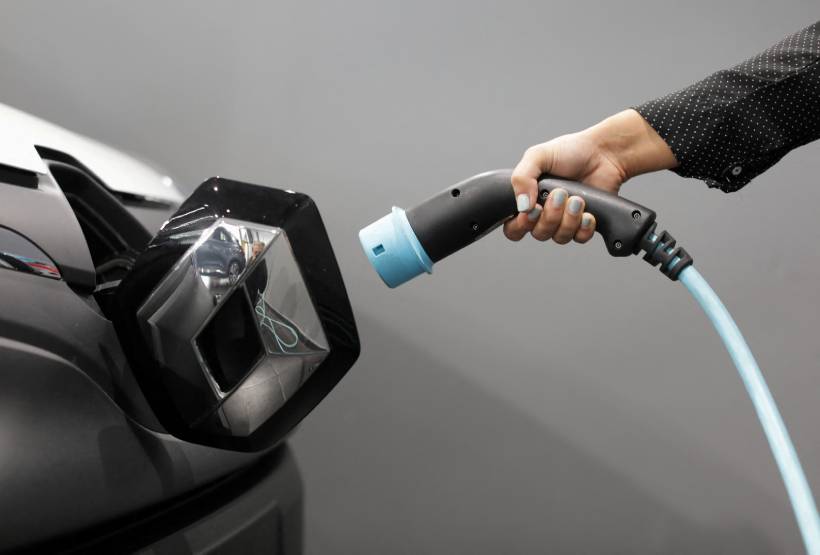
This article discusses the orderly transitions from gas vehicles to hybrid vehicles, and ultimately into EVs.
Pros of Relying on Hybrids First
Resource Efficiency: The raw materials needed for one full electric vehicle battery can build up to 90 hybrid batteries, spreading carbon-reduction tech across many more cars. Industries are scaling up to recycle spent lithium batteries. Right now, companies like Redwood Materials and Li-Cycle utilize advanced hydrometallurgical processing to recover 85% to 95% of battery-grade lithium.
Supply Chain Projections: Long-term energy forecasts indicate that as early-generation EVs reach their true end-of-life cycle, recycled materials will scale up to meet 20% to 35% of the total global demand for critical battery minerals, paving the way for a self-sustaining, closed-loop supply chain.
Stay ahead of the geopolitical week.
MD Briefing delivers expert analysis across five global fronts — the Indo-Pacific, energy, geoeconomics, European security, and the Middle East — every Monday morning. Free.
No Infrastructure Pressure: Hybrids do not need external charging stations, bypassing current grid limitations.
Immediate Drop in Fuel Use: They cut city fuel consumption and tailpipe emissions right away without changing driver’s habits.
Cons of Forbidding Non-Hybrids in 7 Years
Locked-In Emissions: Hybrids still burn fossil fuels, meaning they cannot achieve true zero emissions.
Stunted EV Growth: A hard mandate stopping pure electric vehicle development would disincentivize automakers from scaling up green factories and improving battery tech.
Slower Grid Adaptation: It removes the urgent pressure needed to upgrade public charging networks and clean up power grids.
Implementing a 7-year deadline to transition all new manufacturing and imports to at least hybrid status—while keeping existing gas cars on the road—is a practical strategy to cut emissions fast, but it still faces distinct advantages and hurdles.
Pros of This Transition Strategy
Rapid fleet modernization: Automakers already mass-produce hybrids, making a 7-year total factory shift highly realistic.
Instant emissions drops: Every new car sold would immediately consume 20% to 40% less fuel than the traditional gas model it replaces.
Affordable consumer transition: Hybrids cost significantly less than fully electric vehicles (EVs), protecting lower-income buyers from price spikes.
Zero lifestyle disruption: Drivers keep using existing gas stations, preventing any “range anxiety” while charging networks grow.
Cons and Policy Risks
Delayed zero-emission goals: Because a hybrid’s lifetime is 12–15 years, new hybrid cars sold 7 years from now will still burn fossil fuels past 2045.
The “Osborne Effect”: If buyers know new standard gas cars are being banned, used gas car prices might spike as people avoid switching to costlier hybrid tech.
Split automaker focus: Forcing factories to retool completely for hybrids can drain the capital and engineering focus needed to develop next-gen solid-state EV batteries.
Adding a progressive tax on existing pure-gasoline vehicles five years after the manufacturing ban provides a powerful financial incentive to clean up the fleet, but it introduces major social and economic challenges.
Pros of the Progressive Tax Phase
Accelerates fleet turnover: The rising tax penalizes keeping inefficient older cars, forcing drivers to trade them in for hybrids or EVs sooner.
Funds clean transit: Governments can use the tax revenue directly to build EV charging networks, improve public transit, or fund hybrid subsidies.
Signals market certainty: Businesses and fuel providers get a clear timeline of when gasoline demand will permanently collapse, speeding up investment in green alternatives.
Cons and Implementation Risks
Regressive financial burden: Lower-income drivers who cannot afford a newer hybrid will be stuck paying a rising tax on their existing gas cars, effectively punishing the poor.
Political backlash: Voters historically resist direct taxes on car ownership or fuel (such as the “Yellow Vests” protests in France), risking a complete political reversal of the policy.
Used car market collapse: The value of existing gas cars would plummet rapidly, wiping out a major financial asset for millions of households.
Low-Income Protection Programs
Scrappage cash: Provide direct government vouchers to low-income drivers who trade in old gas cars for hybrids.
Tax exemptions: Exempt households below specific income thresholds from the progressive gas car tax entirely.
Low-interest loans: Offer state-backed, interest-free loans to help budget-conscious buyers finance certified pre-owned hybrid vehicles.
Transit credits: Allow citizens to opt out of car ownership entirely in exchange for free public transportation passes funded by the tax revenue.
How Automakers Would Adjust Prices
Discounting remaining gas cars: Manufacturers would slash prices on pure gas models right before the 7-year ban to clear out factory inventory.
Hybrid price drops: Mass production scaling over 7 years would lower hybrid manufacturing costs, allowing brands to reduce MSRPs to stay competitive.
Inflated used car trade-ins: Dealerships might offer artificially high trade-in values for gas cars to lock buyers into new hybrid financing plans.
Premium EV positioning: Brands would shift pure EVs into luxury price brackets to maximize profits while hybrids handle the mass market.
Real-World Scrappage Programs
California’s Clean Cars 4 All: Gives lower-income residents up to $12,000 to scrap old, high-emission vehicles for hybrids or EVs.
EU “Cash for Clunkers” schemes: Countries like France successfully used cash incentives to transition millions of drivers away from older diesel cars.
U.S. 2009 Car Allowance Rebate System: Proved that federal financial incentives can clear massive inventories of inefficient trucks and sedans in under six months.
Vancouver’s Scrap-It: Offers citizens the choice between a cash rebate for a cleaner car or multiple years of free public transit passes.
Income-Tiered Tax Blueprint
| Household Income Level | Gas Car Tax Rate | Hybrid Subsidy Voucher |
| Below $40,000 (Low) | 0% (Fully Exempt) | $10,000 upfront voucher |
| $40,000 – $90,000 (Middle) | 50% of standard rate | $6,000 upfront voucher |
| Above $90,000 (High) | 100% (Full progressive tax) | $0 (No subsidy) |
Key Policy Mechanisms
The Exemption Phase-Out: The low-income tax exemption lasts for 10 years, giving vulnerable households a realistic window to use the $10,000 voucher.
Revenue-Neutral Funding: Every dollar collected from high-income gas car taxes directly funds the vouchers for low- and middle-income buyers.
Point-of-Sale Delivery: Subsidies apply instantly at the dealership checkout so buyers do not have to wait for a tax refund check.
Conclusions
By phasing out new internal combustion cars, the transition to a gasoline hybrid would happen sooner. Once the transition is over, or sooner if the economic conditions allow, phase out hybrids in the same way. While slower than going to EVs automatically, it does eventually phase out of gasoline cars beginning in 7 years, allowing for an orderly economic shift for both manufacturers and consumers.
