


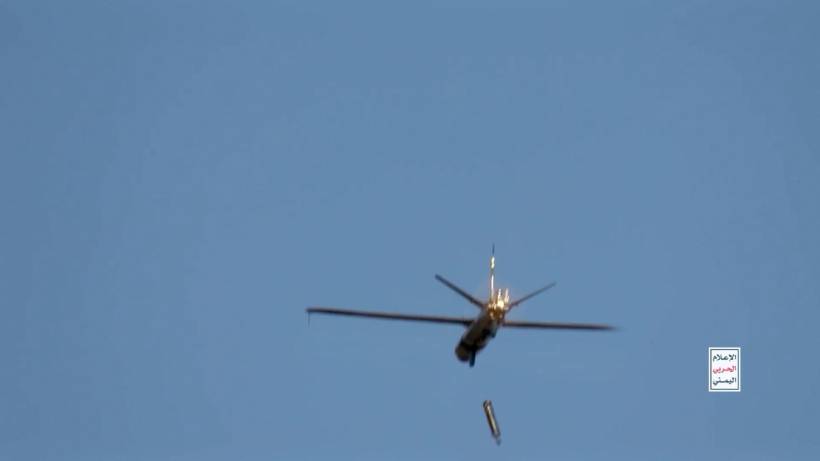
Yemen’s long-running war has entered another dangerous phase, with Houthi missile and drone attacks on airports in southern Yemen and Saudi Arabia coinciding with a government counter-offensive along the country’s strategically important Red Sea coast.
The escalation threatens to reopen one of the Middle East’s most complex conflicts after years of relative calm and could have consequences well beyond Yemen. The fighting is unfolding around the Bab el-Mandeb Strait, one of the world’s most important maritime chokepoints, while also drawing Saudi Arabia and Iran deeper into a renewed regional confrontation.
The latest escalation began after Yemeni government forces, backed by Saudi-led coalition air power, launched a rapid counter-offensive against the Iran-aligned Houthis.
Government forces say they have retaken territory captured by the Houthis last month, including areas along the Red Sea coast near the strategic city of Mocha and the Bab el-Mandeb Strait.
Stay ahead of the geopolitical week.
MD Briefing delivers expert analysis across five global fronts — the Indo-Pacific, energy, geoeconomics, European security, and the Middle East — every Monday morning. Free.
The Houthis responded on Wednesday by targeting Aden International Airport with ballistic missiles and explosive-laden drones, according to Yemen’s Transport Ministry.
One missile landed near the runway shortly before a flight from Cairo was scheduled to arrive. The flight was diverted to Jeddah, while aircraft already on the ground were moved away from the area because of concerns about further attacks.
Aden is the principal international gateway for areas of Yemen outside Houthi control, making an attack on its airport particularly significant for civilian travel and humanitarian access.
Why Has the Fighting Intensified?
The immediate trigger is the government-backed military campaign to reclaim territory from the Houthis.
The offensive is targeting the Red Sea coast, including areas around Mocha and the Bab el-Mandeb Strait. Control of this territory is strategically important because the strait connects the Red Sea with the Gulf of Aden and serves as a major route for international shipping.
The Houthis have responded by expanding their attacks beyond the immediate battlefield.
The Saudi-led coalition said it intercepted and destroyed a Houthi ballistic missile north of Riyadh. Saudi authorities said they were also tracking the launch platform in Houthi-controlled Sanaa.
Houthi military spokesperson Yahya Saree separately claimed that the group had targeted King Khalid International Airport in Riyadh with several drones.
The Houthis also claimed attacks against Abha International Airport and a military airbase in the southwestern Saudi city of Khamis Mushait.
Saudi authorities did not immediately confirm all of the reported attacks, making the full scale of the escalation difficult to establish.
Nevertheless, the geography of the reported strikes shows how quickly renewed fighting inside Yemen can expand into a wider regional security problem.
Yemen’s War Has Never Truly Been Resolved
The current escalation is a reminder that Yemen’s conflict was never permanently settled.
The Houthis seized Sanaa in 2014, prompting Saudi Arabia and its allies to intervene militarily the following year. Riyadh viewed the expansion of the group as a major security threat and as evidence of growing Iranian influence on its southern border.
The conflict subsequently developed into a prolonged war involving multiple Yemeni factions and external powers.
A UN-brokered truce in 2022 significantly reduced large-scale fighting but failed to produce a comprehensive political settlement.
The result was an unstable pause rather than a durable peace.
The latest fighting suggests that the underlying disputes over territorial control, political authority and regional influence remain unresolved.
Why Is the Red Sea So Important?
The renewed fighting around the Red Sea coast carries significance beyond Yemen because of the Bab el-Mandeb Strait.
The narrow waterway is a critical connection between the Red Sea and the Gulf of Aden. Any sustained threat to shipping through the area can increase transportation costs, disrupt supply chains and force commercial vessels to take longer routes around Africa.
The Houthis have previously demonstrated their ability to use missiles and drones to threaten regional targets and shipping.
Their ability to strike both Yemeni territory and locations inside Saudi Arabia means the conflict could once again become a wider security challenge for the Gulf and international maritime trade.
The possibility of attacks around the Bab el-Mandeb is particularly sensitive because the region has already experienced major disruptions to shipping in recent years.
Where Does Iran Fit In?
Iran remains central to the regional dimension of the conflict.
Saudi Arabia and its allies accuse Tehran of providing the Houthis with weapons, training and financial support. The Houthis reject the description of themselves as an Iranian proxy and maintain that they develop their own military capabilities.
Iran has also denied the allegations.
Nevertheless, the Houthis’ missile and drone capabilities have made them one of the most significant armed actors in the region.
Their ability to threaten Saudi territory and potentially disrupt maritime traffic gives Tehran and its regional partners an additional source of leverage during periods of heightened confrontation.
The latest escalation is therefore taking place against a broader backdrop of tensions between Iran and its regional rivals.
What Happens Next?
The most immediate concern is whether the current counter-offensive remains limited or develops into a much broader campaign.
If government forces continue advancing along the Red Sea coast, the Houthis could intensify missile and drone attacks against Saudi Arabia and government-held areas. That could draw the Saudi-led coalition into deeper military involvement and increase the risk of civilian casualties.
A prolonged offensive could also threaten the fragile political balance created by the 2022 truce.
For Saudi Arabia, the priority will be preventing renewed Houthi attacks from becoming a sustained threat to its territory and critical infrastructure. For the Yemeni government, the offensive presents an opportunity to regain territory and strengthen its negotiating position.
For the Houthis, maintaining control over large parts of northern Yemen remains essential to their political and military survival.
The wider international concern is the possibility that Yemen once again becomes a major front in a broader Middle Eastern confrontation.
The country’s war has repeatedly demonstrated that local territorial disputes can quickly become entangled with competition between regional powers. With fighting now reaching airports and strategically important territory around the Red Sea, the risk is that Yemen’s fragile ceasefire gives way to another prolonged cycle of escalation.
With information from Reuters.
