


Three years after Hamas-led militants attacked communities in southern Israel, Israelis and Palestinians are marking the anniversary from profoundly different but equally traumatic realities.
In Israel, families and communities are mourning those killed on October 7, 2023, while many are still demanding answers over the security failures that allowed the attack to take place. In Gaza, Palestinians are remembering lives and communities destroyed during the war that followed, with much of the population still displaced and living among the ruins.
The anniversary comes at a moment when the conflict has entered a new but fragile phase. A US-brokered ceasefire halted major fighting in October 2025, but it did not end Israeli military operations, resolve the question of Hamas’s disarmament or establish a lasting political settlement for Gaza.
The result is an uneasy pause rather than a clear end to the conflict.
Stay ahead of the geopolitical week.
MD Briefing delivers expert analysis across five global fronts — the Indo-Pacific, energy, geoeconomics, European security, and the Middle East — every Monday morning. Free.
October 7 Still Shapes Israel
At Kfar Aza, a kibbutz near the Gaza border that was overrun by Hamas militants three years ago, residents gathered on Wednesday for a memorial ceremony.
A solemn trumpet call was followed by a roll call of those killed. The community remains deeply affected by the attack, with many residents still displaced and unable to return permanently.
Hamas-led militants killed around 1,200 people in Israel on October 7 and took 251 hostages into Gaza, making it the deadliest attack in Israel’s history.
For Israelis who lost relatives, friends and neighbours, the anniversary remains a moment of mourning but also of unresolved questions.
The attack exposed major failures in Israel’s security system, intelligence assessments and military preparedness. Those failures have generated demands for accountability, including calls for an independent investigation into how the assault was allowed to happen.
That debate has become increasingly political.
Netanyahu Faces Questions Over Accountability
Protesters gathered outside Israel’s parliament in Jerusalem on Wednesday, accusing Prime Minister Benjamin Netanyahu’s government of avoiding responsibility for the security failures surrounding October 7.
Netanyahu has rejected personal responsibility for the breach and resisted calls for an independent inquiry.
The issue has become particularly significant as Israel approaches an election. Protesters argue that the public should be able to judge the government’s record, while Netanyahu has continued to defend his handling of the war and the country’s security.
The political consequences remain uncertain.
Recent polling indicates that neither Netanyahu nor his main political rivals would currently have enough parliamentary support to form a governing coalition on their own. That leaves the country’s political future dependent on alliances and the ability of competing blocs to assemble a majority.
The October 7 anniversary is therefore not simply a day of remembrance. It is also a reminder that the attack continues to influence Israel’s political debate over leadership, security and accountability.
Gaza Remembers a Different Catastrophe
Across Gaza, the anniversary carries a very different meaning.
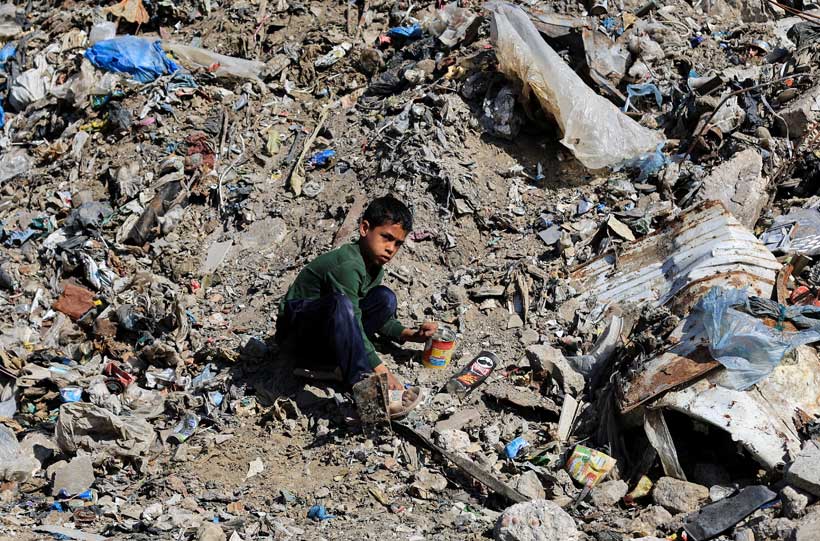
The Israeli military campaign that followed October 7 has devastated large parts of the territory and displaced nearly its entire population at some point during the conflict.
More than 74,000 Palestinians have been killed, according to Gaza health authorities, including at least 1,400 since the October 2025 ceasefire.
The ceasefire has significantly reduced the scale of fighting, but it has not brought normal life back to Gaza.
Israel remains in control of roughly two-thirds of the territory, while Hamas controls much of the remaining area. Around two million Palestinians continue to live amid destroyed infrastructure, damaged buildings and makeshift shelters.
The physical destruction is accompanied by a deeper social rupture.
Families have been separated by displacement, with relatives scattered across different parts of Gaza or forced to leave the territory altogether.
For many Palestinians, the anniversary is therefore less about a single day than about everything that followed it.
A Generation Has Lost Its Sense of Normality
For displaced Palestinians, memories of life before the war have become increasingly distant.
Umm Mohammad, a mother of five from Gaza City now living in a tent encampment in Deir Al-Balah, described how the conflict separated her family.
Her children are now living in different parts of Gaza or outside the territory, and the family rarely meets.
Her experience reflects a broader consequence of the war that is harder to measure than deaths or destroyed buildings: the fragmentation of families and communities.
Years of displacement have disrupted education, employment, healthcare and social networks. Even where active fighting has decreased, people face the consequences of the destruction around them.
The latest reported violence also shows how fragile the ceasefire remains. Palestinian medics said Israeli strikes in Beit Lahia and Khan Younis on Wednesday killed at least two people and wounded others. Israel said it had struck a militant target in Beit Lahia.
The Ceasefire Has Not Resolved the Central Questions
The biggest challenge is that the ceasefire has paused the conflict without resolving its underlying political disputes.
Israel wants security guarantees and the removal of Hamas’s military capabilities. Hamas has resisted demands for disarmament while continuing to seek a political role in Gaza.
The future administration of the territory remains uncertain, as does the question of who will be responsible for reconstruction and security.
Israel’s continued control over large parts of Gaza has also created another unresolved issue: whether the current territorial arrangement is temporary or could become a longer-term reality.
Without agreement on these questions, the ceasefire remains vulnerable.
What Comes Next?
Three years after October 7, both societies remain shaped by the consequences of the attack and the war that followed.
For Israel, the central questions include accountability for the security failures, the future of Netanyahu’s government and how the country should balance military security with the possibility of a political settlement.
For Palestinians in Gaza, the priorities are more immediate: security, permanent shelter, humanitarian access, reconstruction and the reunification of families separated by the war.
The anniversary therefore highlights a difficult reality. The guns may be quieter than they were during the height of the conflict, but the political and human consequences of October 7 remain unresolved.
For Israelis, the date represents a national trauma that fundamentally changed their sense of security. For Palestinians in Gaza, it marks the beginning of a war that destroyed much of the world they knew.
Three years later, neither side has fully escaped the aftermath, and the absence of a durable political settlement means the possibility of renewed conflict remains.
With information from Reuters.
