


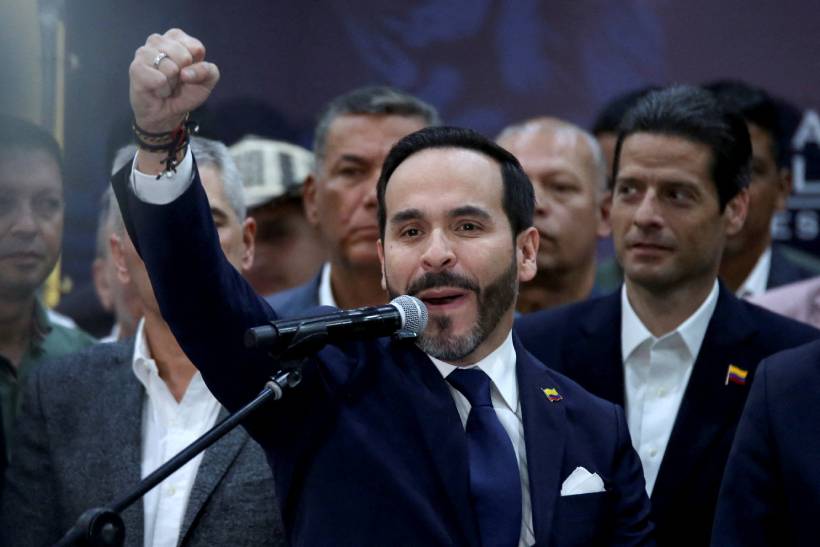
Right wing lawyer Abelardo De La Espriella will be sworn in as Colombia’s new president on Friday, marking a dramatic political shift after campaigning on promises to restore security, revive the economy and reverse many of former President Gustavo Petro’s policies.
The 48 year old secured victory in June’s presidential runoff by pledging an aggressive crackdown on armed groups, renewed support for the oil and gas industry, and a significant reduction in the size of the state. His inauguration comes as Colombia confronts rising insecurity, slowing economic growth and deep political divisions.
First Right Wing Victory After Petro Era
De La Espriella defeated left wing senator Ivan Cepeda, ending the presidency of Gustavo Petro, Colombia’s first leftist leader. Throughout the campaign, he blamed Petro’s security policies for strengthening armed groups and allowing violence to spread across several regions.
Unlike previous Colombian presidents, De La Espriella has never held elected office. Before entering politics, he built his career as a high profile lawyer, representing prominent right wing figures and becoming one of Colombia’s most recognizable conservative voices.
Stay ahead of the geopolitical week.
MD Briefing delivers expert analysis across five global fronts — the Indo-Pacific, energy, geoeconomics, European security, and the Middle East — every Monday morning. Free.
His election also reflects a broader political shift across Latin America, where concerns over crime, inflation and economic uncertainty have boosted support for conservative candidates promising stronger security measures and market friendly reforms.
Historic Inauguration in Cali
For the first time in Colombia’s modern history, a presidential inauguration will take place outside Bogota. De La Espriella will take the oath of office in the southwestern city of Cali under heavy security.
International leaders, including Spain’s King and several Latin American presidents, are expected to attend alongside a United States delegation led by Acting Attorney General Todd Blanche.
The decision to hold the ceremony in Cali is viewed as both symbolic and practical, highlighting the government’s focus on regions heavily affected by violence while demonstrating confidence in restoring security.
Security Takes Center Stage
Public security is expected to dominate the new administration’s first months in office.
De La Espriella has pledged to abandon the outgoing government’s negotiations with illegal armed groups and instead pursue a tougher military strategy. His proposals include expanding aerial coca eradication, increasing military operations against criminal organizations and constructing large prison facilities to combat organized crime.
Security analysts expect many of these measures to begin immediately through executive authority, making law and order the administration’s most visible priority during its first 100 days.
Economic Reform Faces Political Hurdles
Alongside security, economic recovery remains one of the government’s biggest priorities.
De La Espriella has promised to revive Colombia’s energy sector by encouraging oil and gas investment, simplifying taxes and reducing government spending. Business leaders have broadly welcomed the agenda, arguing it could restore investor confidence after years of policy uncertainty.
However, the incoming government inherits a fiscal deficit estimated at between seven and eight percent of GDP, limiting its ability to implement costly reforms without difficult budget decisions.
Many of the administration’s economic proposals will also require approval from a politically divided Congress, raising the possibility that key reforms could be diluted or delayed.
Cabinet Signals Market Friendly Direction
The president has assembled a cabinet that emphasizes economic management and security.
Former finance minister Jose Manuel Restrepo has emerged as one of De La Espriella’s closest advisers, while retired Major General Jorge Eduardo Mora will oversee defence policy. Miguel Gomez will lead the finance ministry with responsibility for preparing a growth focused tax reform package.
The administration has also appointed experienced officials to oversee foreign affairs and the energy sector, signalling an effort to reassure both domestic and international investors.
Analysis
Abelardo De La Espriella enters office with one of the strongest public mandates for security reform in recent Colombian history. His victory reflects growing frustration with rising violence, expanding criminal groups and economic uncertainty under the previous administration. Voters appear to have prioritized stability and security over ideological continuity, mirroring political trends seen across much of Latin America.
However, campaign promises will be easier to announce than implement. While the president can quickly strengthen military operations and adjust executive policies, his broader economic agenda depends on congressional cooperation and fiscal discipline. Colombia’s high budget deficit limits room for tax cuts, increased security spending and infrastructure investment simultaneously.
The greatest test of the new administration will be balancing tougher security policies with economic recovery. A more stable security environment could attract investment and strengthen business confidence, but prolonged military operations or political polarization could generate new domestic and international criticism. Ultimately, De La Espriella’s presidency will be judged not by the ambition of his promises but by whether he can reduce violence while restoring sustainable economic growth.
With information from Reuters.
