


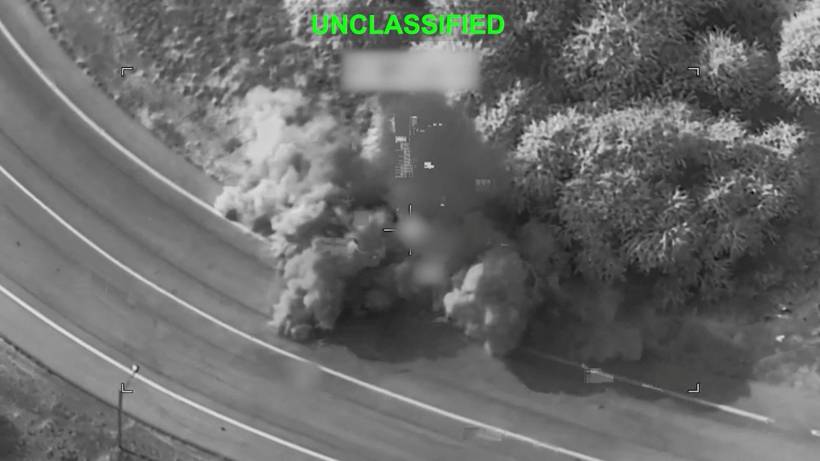
A renewed wave of U.S. attacks on Iran has shattered the fragile sense of stability that emerged during the recent ceasefire, plunging millions of Iranians back into uncertainty. While military exchanges dominate international headlines, ordinary citizens inside Iran say their greatest concerns are increasingly economic survival, psychological strain and an uncertain future.
Interviews conducted by Reuters through encrypted messaging applications reveal a population struggling with soaring prices, disrupted livelihoods and constant anxiety as the conflict enters another dangerous phase.
Economic hardship worsens
For many Iranians, the most immediate consequence of the renewed fighting is the rapidly deteriorating economy.
Somayeh, a 40-year-old photographer in Tehran, said the cost of basic groceries has nearly doubled compared with pre-war levels. She described inflation as a greater daily burden than the airstrikes themselves.
Stay ahead of the geopolitical week.
MD Briefing delivers expert analysis across five global fronts — the Indo-Pacific, energy, geoeconomics, European security, and the Middle East — every Monday morning. Free.
“The most important thing overall in the middle of the war is the economy,” she said. “Every day our situation is worse and more difficult.”
Years of sanctions had already weakened Iran’s economy, but renewed conflict has intensified inflation, reduced purchasing power and placed additional pressure on households already struggling with high unemployment and a sharply depreciating currency.
Internet disruptions cripple livelihoods
Beyond rising prices, repeated internet restrictions have become another major source of hardship.
Amir, a 30-year-old software engineer from Sanandaj, said his career as a remote worker effectively collapsed after authorities repeatedly shut down internet access during protests and later during the conflict.
Having married shortly before the war began, he accumulated significant debt after months without work.
Only recently finding employment again, Amir now faces renewed uncertainty as hostilities intensify once more.
His experience reflects the growing vulnerability of Iran’s digital workforce, whose livelihoods increasingly depend on reliable internet access that can disappear overnight during periods of political or military instability.
Living without certainty
Many Iranians say the greatest emotional burden is not knowing what tomorrow will bring.
The shifting cycle between temporary ceasefires and renewed attacks has made even short-term planning nearly impossible.
Families hesitate to make financial commitments, businesses delay investment decisions and ordinary people struggle to maintain routines amid fears that another escalation could occur at any moment.
Residents describe living in a constant state of anticipation, uncertain whether each day will bring peace or another round of strikes.
Why many still refuse to leave
Despite worsening conditions, several Iranians interviewed said they have no intention of emigrating.
Nazanin, a 34-year-old psychotherapist from Sanandaj, once hoped to pursue doctoral studies abroad but said the collapse of the Iranian rial has made that financially impossible.
More importantly, she said her attachment to her family outweighs the risks of remaining.
She recalled that being separated from relatives during earlier attacks convinced her she would rather endure hardship alongside them than face tragedy alone abroad.
Similarly, Somayeh said even if she could now afford to leave Iran, she would choose to remain because her family, home and life are rooted there.
Growing fears of domestic unrest
Some Iranians believe the economic crisis could eventually trigger widespread social unrest.
Hiwa, a resident of Mahabad, argued that prolonged inflation and deteriorating living standards leave few alternatives other than renewed public protests.
Iran has experienced repeated waves of anti-government demonstrations in recent years, often driven by economic grievances alongside political frustrations.
Authorities have responded with mass arrests, executions and expanded deployments of security forces in an effort to prevent further instability.
Psychological scars deepen
Beyond material hardship, the prolonged conflict is leaving lasting emotional effects.
Amir described months of insomnia after losing contact with his father, who was in Iraqi Kurdistan during earlier phases of the conflict.
Even so, he remains determined to stay in Iran, recalling stories from his mother about the Iran-Iraq War, when families endured bombardment rather than abandon their homes.
His account reflects a broader sentiment expressed by several interviewees—that despite fear and uncertainty, attachment to family and homeland remains stronger than the desire to flee.
Why it matters
The interviews highlight that the human cost of the conflict extends well beyond the battlefield. Inflation, disrupted communications, unemployment and chronic uncertainty are reshaping daily life across Iran, placing additional strain on a population that had already endured years of sanctions and economic decline.
While military developments continue to command global attention, the longer-term consequences may increasingly be measured through deteriorating living standards, declining public confidence and mounting psychological stress.
Analysis: A society under cumulative pressure
Iran today faces not just the pressures of war but the accumulation of multiple overlapping crises. International sanctions, currency depreciation, recurring internet shutdowns, political repression and renewed military escalation have created a cycle in which each shock compounds the previous one.
What stands out from these personal accounts is that many Iranians are no longer focused solely on the immediate danger of airstrikes. Instead, they are grappling with questions about economic survival, family security and whether normal life can ever resume.
The conflict is also revealing the resilience and limits of Iranian society. While many remain deeply attached to their homeland despite deteriorating conditions, prolonged economic hardship could gradually test that resilience. If inflation continues to accelerate, employment opportunities remain scarce and uncertainty persists, domestic social pressures are likely to intensify alongside the external conflict.
Ultimately, the war’s strategic outcome will be determined not only by military operations but also by whether Iran can maintain economic stability and social cohesion under sustained external pressure.
With information from Reuters.
