


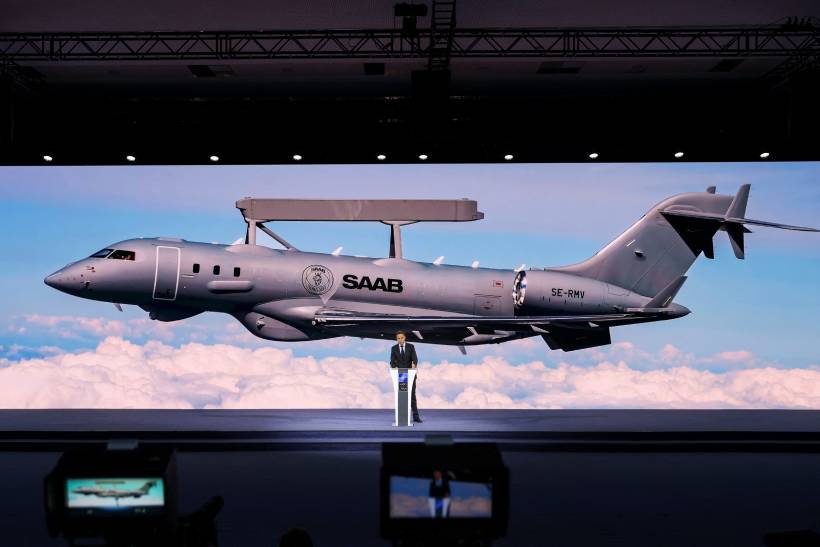
The irony of geo-political history is that circumstances shift drastically even for a hegemon. Türkiye joined the US F-35 program as a NATO member and planned to buy over 100 jets. But Washington expelled it in July 2019 after Ankara bought Russia’s S-400 air defense system. This cost Turkish firms over 9 billion dollars in lost work, left roughly 1.4 billion dollars of Turkish payments unreturned, and triggered CAATSA sanctions in 2020. Türkiye built its own program and pushed domestic defense production from 20% of its domestic need in 2004 to roughly 80% . Defense exports crossed $10.05 billion in 2025 and surpassed $11 billion on a rolling 12-month basis. The Ankara Summit (NATO summit) 2026 positioned Turkey as a major defense procurement partner due to its high level of domestic defense production and industrial capacity. What was the major reason for this geo-political shift? And how is Türkiye central to NATO defense procurement? And will these policies be able to address NATO security concerns?
Key outcomes of NATO Defense Industry Forum (2026)
1- New High Visibility Projects launched at Ankara, Turkey, appear in three of these four new projects.
2- New institutional mechanisms: NATO endorsed the Strategy for Industry-NATO Cooperation and the NATO Innovation Scale-Up Package.
Stay ahead of the geopolitical week.
MD Briefing delivers expert analysis across five global fronts — the Indo-Pacific, energy, geoeconomics, European security, and the Middle East — every Monday morning. Free.
3- The 2025 Hague Summit raised NATO’s defense spending target from 2% to 5% of GDP by 2035. The forum served a purpose to secure procurement opportunities for their defense equipment.
4- The MRTT program: a joint NATO-EU air refuelling fleet using Airbus A330 aircraft, reached full operational capacity, signifying a key effort of NATO.
5- Article 5 and the collective defense frame gives the legal backbone for why NATO frames all this industrial activity as deterrence rather than expansion.
What is NATO procuring with Türkiye?
NATO Defense Industry Forum (2026), held on the sidelines, but as an integral part of the NATO summit 2026 in Ankara. It followed the progress of NATO’s 5% of GDP defense investment commitment agreed at the 2025 Hague Summit. Ankara aimed to turn that target into an export opportunity, as Türkiye has the infrastructure for defense production. Infrastructure for drone production remains critical for modern warfare, and Türkiye competes with its Baykar and TUSAŞ’s positions in NATO drone supply chains. Türkiye is included in 3 of the 4 high-visibility projects, i.e., Ground-Based Precision Strike Capabilities (GBPSC), Generic NATO Indirect Fire Round (GENIFR), and Airbus A400M Multinational Fleet. This formalizes Türkiye as one of NATO’s main suppliers. Additionally, Türkiye is also a core member of the Critical Raw Materials for Defence (CRM-D), which aims to secure reliable access to 12 defense-critical raw materials.
Efforts to streamline production came with the proposal of a new institutional mechanism in which NATO endorsed the Strategy for Industry-NATO Cooperation and the NATO Innovation Scale-Up Package. The establishment of a single portal for companies to access NATO procurement and innovation opportunities will make procurement easier with SMEs and non-traditional defence suppliers. Production remains a challenge for NATO, and connecting factories across Europe, Canada, and the United States should increase the efficiency of production. The efforts to streamline production were heavily influenced by global security dynamics, in which drone warfare plays a pivotal role. NATO’s $40 billion commitment to counter-drone capabilities over the next 5 years, in addition to training aimed at increasing drone operators, gives Türkiye leverage in NATO drone supply chains with its Baykar and TUSAŞ position. Türkiye’s own drone exports back this up: the country now exports more than 230 defense systems to 185 countries, with roughly 56% of 2025 defense exports going to the EU, NATO members, and the United States. The institutional mechanism takes inspiration from the Multi-Role Tanker Transport program (MRTT), a joint NATO-EU air refuelling fleet using Airbus A330 aircraft, which reached full operational capacity in March 2026. Nine aircraft are in service, a tenth was delivered around the summit, and two more are due in 2028 and 2029.
The political component of the NATO summit emphasized Article 5 and the collective defense framework of NATO, that giver legal justification for all this industrial activity as deterrence rather than expansion. The Ankara summit stressed Article 5 through Article 3 that emphasizes the commitment to maintain the capacity to resist attack.
What remains Unresolved?
Efforts to overcome the supply chain dependency remain a major issue, even after NATO’s critical raw material project. The 12 raw materials addressed in this project majorly exclude drone-specific components, which was one of the major concerns of NATO, as drones remain fundamental to NATO’s military strategy, especially when Russia is procuring drones from Iran. Advanced semiconductors, chips, and optics, etc., remain outside of the scope. Türkiye, even though having the capacity and infrastructure to supply drones through Baykar and TUSAS, is still dependent on the supply chain for the procurement of critical drone components. Hence, the structural issue of reducing dependence on the supply chain is yet to be resolved.
Standardization of defense equipment remains limited to the Generic NATO Indirect Fire Round project (GENIFR), which covers artillery rounds. As the fundamental component of NATO defense procurement remains drones, drone procurement from Türkiye faces a standardization challenge. Limited integration of drones in NATO countries will reduce procurement efficiency and create new challenges.
Beyond standardization, decades of underinvestment in the defense industry have created an overdependence inertia for NATO countries (specifically the European countries), in which dependence on the American defense system remains a challenge for the European countries to deal with. The Ukraine war exposed this issue, where limited stockpiles and slow production proved a challenge for European countries, a challenge the US ultimately had to address. Hence, the US insistence on 5% GDP target is to address this structural issue, joint procurement projects, and the raw materials pact all respond to the same problem. Addressing this problem by including Türkiye in the main procurement projects might temporarily resolve the issue due to the existing manufacturing capacity of Türkiye, but this will again create a dependency cycle without addressing the structural industrial capacity issues of Europe, in particular Western Europe. Geographical issues highlight the security concern in particular, countries on the border with Russia are near 5% GDP mark, (: Lithuania sits at 5.33% of GDP on core defense, Estonia at 5.1%, Latvia at 4.92%, Poland at 4.68%, and Greece at 3.65%,) but Western nations, while being the wealthiest, remain near the 2-2.5 % GDP mark (, Belgium, Portugal, and Italy remain just above the old 2% floor,). Hence, the GDP approach is limited by geographical security dynamics
