


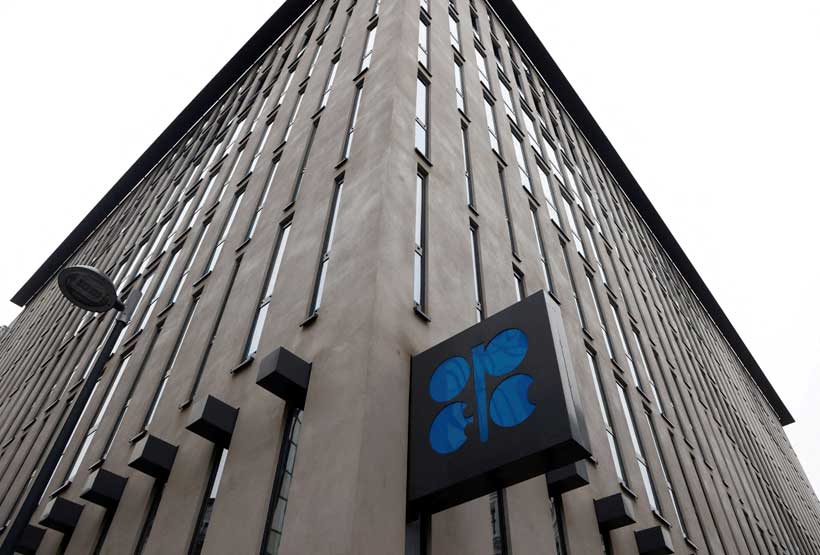
Origins of OPEC and the Oil Shocks
OPEC was initially formed in 1960 by Iran, Iraq, Kuwait, Saudi Arabia, and Venezuela to protect the national interests of oil-producing states against Anglo-American multinational oil companies. The organisation dramatically demonstrated its structural leverage during the 1973 oil shock—initiated by OAPEC following the Yom Kippur War—which forced a massive upward recalibration of global prices. However, this market status quo fractured following the 1979 Second Oil Shock, triggered by the Iranian Revolution and the subsequent Iran-Iraq War. In response to these prolonged oil disruptions, Western economies aggressively developed non-OPEC supplies in the North Sea, Alaska, and Mexico, undermining the cartel’s market share. At the same time, widespread quota non-compliance emerged within OPEC, as many members exceeded agreed production limits in pursuit of higher revenues.
The 1999 Vienna Agreement and the Limits of Cartel Coordination
By late 1985, frustrated by the behaviour of other OPEC members, Saudi Arabia announced that it would no longer limit its own oil production to support OPEC quotas. This policy pivot flooded the market, triggering the 1986 oil price collapse and causing a prolonged era of cheap crude, where OPEC’s price-setting influence remained highly constrained. Even oil prices fell to around $10 per barrel during the Asian Financial Crisis in 1997. In response, Saudi Arabia, Venezuela, and non-OPEC Mexico spearheaded an unprecedented coordination effort that culminated in the 1999 Vienna production-cut agreement between OPEC and several non-OPEC producers, helping to stabilise global oil markets.
Stay ahead of the geopolitical week.
MD Briefing delivers expert analysis across five global fronts — the Indo-Pacific, energy, geoeconomics, European security, and the Middle East — every Monday morning. Free.
This landmark agreement with a non-OPEC country signalled that coordination among OPEC members alone was insufficient to stabilise oil prices and underscored the growing geoeconomic importance of non-OPEC oil-producing states. This trend became evident in OPEC’s next initiative in 2000, when it introduced the “Price Band” mechanism, which sought to maintain prices within a range of $22 to $28 per barrel following the 1999 Vienna production cuts and subsequent market stabilisation. The mechanism represented a cartel-based approach to price management that required coordinated action among member states.
Commodity Supercycle and OPEC’s Return to Influence
However, it did not last long, as the global economy was entering a commodity supercycle driven primarily by rapid industrialisation in China, India and other emerging economies. The Iraq War in 2003 also contributed a geopolitical dimension, while hedge funds began to consider oil as an inflation hedge, adding a financial market layer to this period. Subsequently, oil-producing countries enjoyed high prices, which peaked at an all-time record of $147.27 per barrel in July 2008.
Following these peak prices, the severe Global Financial Crisis took place in 2008, causing oil prices to fall drastically from their July high to $33.0 per barrel by December 2008. OPEC was forced to initiate its largest-ever single production cut to halt the collapse of oil prices in world markets. It had to withhold a significant amount of oil production, which constituted around 4.2 million barrels per day. Yet, this intervention contributed significantly to the stabilisation of oil prices at around $100 per barrel by 2011.
Consequently, the first decade of the 2000s was largely positive for oil-producing countries rather than negative when compared with the 1990s, despite the Great Recession. During this decade, they were able to develop and invest in upstream oil production and supply chain infrastructure, which enabled them to cut costs and provided resilience to the industry in the future.
The Shale Revolution and the Birth of OPEC+
Technological innovation influenced the oil and gas industry during the 2010s. The pivotal moment came with the revolutionary exploitation of shale oil and gas through the introduction of horizontal drilling and hydraulic fracturing in the United States. This enabled the US to double its oil production and seize market share from its competitors. At the same time, geopolitical disruptions across the Middle East and North Africa during the Arab Spring helped sustain high oil prices during the early years of the decade.
There was a downside to this development, as the market became oversupplied due to the rapid growth of shale oil production and prices started to move in the opposite direction. Saudi Arabia decided to use its low production costs as leverage; it chose not to intervene, allowing prices to collapse by early 2016. Its calculus was simple: to make shale production economically unfeasible through a prolonged period of low oil prices. Although this strategy had a severely negative impact on the emerging sector, shale producers successfully withstood the challenge by adopting innovative technological approaches to cut production costs. Ultimately, the new industry proved its commercial viability, shifting the global energy landscape permanently.
As a result, the oil industry required broader production coordination that had to involve non-OPEC actors. Consequently, Saudi Arabia and fellow OPEC members decided to form the OPEC+ framework in 2016, which echoed the 1999 Vienna agreement but expanded to include 10 non-OPEC members, most notably Russia, which added a powerful institutional layer. This time, OPEC was compelled to pursue a formalised institutional approach toward cooperation with non-OPEC countries in order to navigate the new global energy reality successfully.
OPEC+ and the Challenge of Market Diversification
However, following the COVID-19 pandemic and the subsequent demand shock in 2020, Saudi Arabia and Russia waged an oil price war that contributed to a sharp decline in commodity prices, with WTI futures briefly turning negative for the first time in history. The two principal pillars of OPEC+—Saudi Arabia and Russia—openly diverged on how to respond to a major market shock. While Saudi Arabia advocated coordinated production cuts to stabilise prices, Russia initially preferred a less interventionist approach.
Despite the fact that this confrontation was episodic and both countries later reached an agreement to stabilise oil prices in the global market, the message was clear: the dispute between these key OPEC+ members revealed that the architecture of coordinated oil production—which had existed in various forms since the cartel’s inception—was becoming increasingly eroded.
The geoeconomic situation was far different from what it had been in the 1970s; the global oil market had become highly diversified, and alternative energy sources, such as solar and wind power, were steadily emerging. Furthermore, nuclear energy was experiencing a resurgence following the long-term impact of the Fukushima disaster on the industry, while the growing adoption of electric vehicles continued to influence long-term projections for global oil demand. All these factors do not favour the oil industry in the long run, and sustainable energy sources will continue to gain market share at the expense of fossil fuels over time. This trend ultimately puts pressure on the oil industry and, where applicable, on compliance with OPEC production quotas.
Within this context, the 2020s witnessed significant new oil discoveries across the Atlantic Basin, introducing three key frontier producers to the map: Guyana, Suriname, and Namibia. Because their fields boast exceptionally low cash break-even points—often falling below $30–$40 per barrel—and are operated by private international consortia designed to run at maximum capacity, these nations are highly reluctant to cooperate with OPEC+. Ultimately, this commercial reality allows them to act independently, entirely outside the constraints of the cartel’s production quotas. Established non-OPEC+ producers are also not standing still. They continue to expand upstream oil production and discover new fields. For example, Brazil has significantly expanded production from its offshore pre-salt reserves, with modern technologies making further development increasingly viable.
At the same time, the exit of notable members from the organisation is another warning sign. Although OPEC had experienced member withdrawals before, it had never witnessed the departure of such prominent members as Qatar, Angola, and, most recently, the United Arab Emirates. Beyond the commonly cited reason of quota constraints, these exits may also reflect the growing geoeconomic ambitions of member states. Although these developments are positive news for oil-consuming countries, they do not enhance the long-term commercial durability of the oil industry’s market structure; instead, they may intensify competition. As competition increases, it becomes increasingly difficult to sustain effective cartel-based coordination within a diversified global industry.
From Price Setter to Crisis Manager
Nevertheless, OPEC remains a recognised and influential organisation in the global energy industry, having been established in the second half of the twentieth century. It has evolved alongside the oil industry and ultimately underwent an institutional transformation into OPEC+ in order to coordinate production more effectively in line with global oil demand.
Despite its institutional influence, sustaining a high degree of coordination through production quotas has become increasingly difficult. New technologies, particularly shale oil extraction in non-OPEC countries, new oil discoveries that diversify global supply, and the rise of alternative energy sources and electric vehicles have collectively contributed to the erosion of OPEC’s traditional cartel-based influence.
However, OPEC’s role should not be underestimated during periods of severe market distress. History suggests that the organisation is often most effective during episodes of oil market collapse, as demonstrated by the coordinated production cuts of 1999, 2008 and 2020. In this sense, OPEC increasingly resembles a crisis-management mechanism rather than a traditional price-setting cartel. Its ability to organise large-scale production cuts can help stabilise markets, while the fact that such actions are undertaken under the umbrella of a recognised institution provides an important psychological signal to market participants that coordinated action is being taken.
