


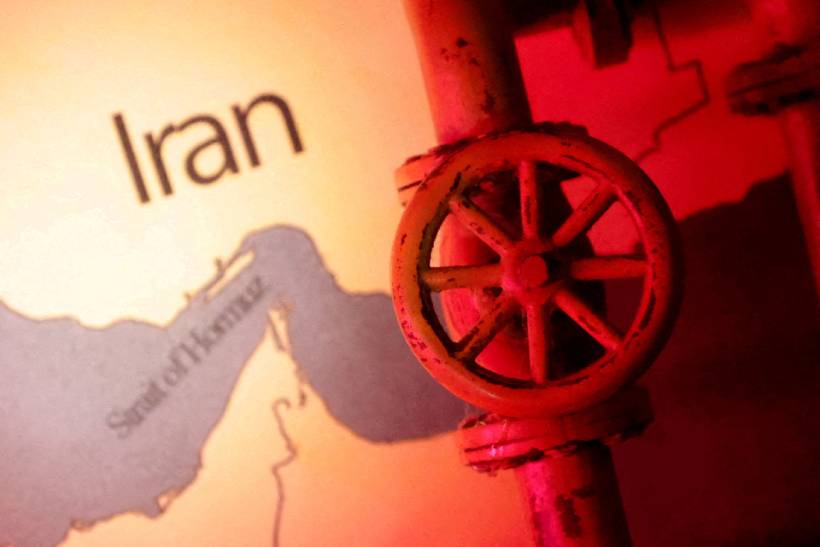
The United Nations has temporarily suspended its ship escort operation through the Strait of Hormuz after a commercial vessel came under attack near Oman, raising fresh concerns over the durability of the preliminary US Iran ceasefire agreement.
The incident has renewed fears over maritime security in one of the world’s most strategically important shipping lanes, despite recent diplomatic efforts to restore stability following months of conflict.
What Happened?
The U.N. International Maritime Organization paused its voluntary escort mission after a cargo ship reported being struck by a projectile near Oman.
According to the United Kingdom Maritime Trade Operations agency, the attack occurred just hours after Iran warned ships against using routes that had not been approved by Tehran.
Stay ahead of the geopolitical week.
MD Briefing delivers expert analysis across five global fronts — the Indo-Pacific, energy, geoeconomics, European security, and the Middle East — every Monday morning. Free.
Two US officials told Reuters they believe Iranian forces fired on the vessel. Iran has not directly confirmed the attack but reiterated that ships traveling outside designated routes would not be guaranteed safe passage.
The vessel involved was identified by multiple sources as the Singapore flagged cargo ship Ever Lovely, with security officials indicating it was likely targeted by a drone.
Why Did the UN Suspend Escorts?
The International Maritime Organization said the escort operation was being paused to verify that adequate safety guarantees remain in place for participating vessels.
The organization stressed that the attacked ship was not part of its evacuation program.
The escort initiative was launched to help hundreds of commercial ships and thousands of stranded seafarers safely leave the Gulf after months of disruption caused by the Iran conflict.
Iran Reasserts Control Over the Strait
Iran continues to signal that it intends to regulate maritime traffic through the Strait of Hormuz.
Tehran’s Persian Gulf Strait Authority warned that vessels using routes not authorized by Iran would assume full responsibility for any consequences.
The Revolutionary Guards also stated that safe navigation would only be guaranteed along Iranian designated routes and reportedly ordered two Panama flagged ships to change course on Thursday.
Oil Markets React
The reported attack immediately affected global energy markets.
Benchmark oil prices rose about 2 percent as investors worried that renewed security threats could delay the full recovery of oil exports through the Strait of Hormuz.
Before the conflict, the waterway handled around one fifth of global oil and liquefied natural gas shipments, making any disruption significant for international energy supplies.
Despite the latest incident, US Energy Secretary Chris Wright said overall shipments through the strait had nearly returned to prewar levels, while shipping data showed crude exports this week reached their highest point since fighting began.
Why It Matters
The Strait of Hormuz remains one of the world’s most important energy chokepoints.
Any renewed attacks on commercial shipping threaten global oil supplies, increase transportation costs, and raise insurance premiums for vessels operating in the region.
The incident also casts doubt on the effectiveness of the preliminary ceasefire between the United States and Iran and could complicate ongoing negotiations over regional security and Iran’s nuclear program.
Diplomatic Tensions Continue
While Secretary of State Marco Rubio reassured Gulf allies that Washington would respond if Iran threatened maritime traffic, Tehran maintained that it would continue enforcing its own navigation rules.
Meanwhile, disagreements remain over several parts of the interim agreement, including sanctions relief, nuclear inspections, financial arrangements, Israel’s parallel conflict in Lebanon, and future control of the Strait of Hormuz.
Iranian negotiators also rejected US claims that unfrozen Iranian assets would be used to purchase American agricultural products.
Future Outlook
The temporary suspension of the UN escort mission will likely remain in place until maritime security conditions can be reassessed.
The next phase of US Iran negotiations, scheduled to continue over the coming weeks, will be closely watched for progress on resolving disputes over shipping security, nuclear oversight, and implementation of the ceasefire.
Any further attacks on commercial vessels could delay the restoration of normal shipping operations and increase pressure on both Washington and Tehran to clarify the terms of the agreement.
Implications and Analysis
The attack demonstrates how fragile the current US Iran ceasefire remains despite recent diplomatic progress. Although commercial shipping volumes have begun to recover, Iran’s insistence on controlling navigation through the Strait of Hormuz introduces continued uncertainty for global trade and energy markets.
For the United Nations, suspending the escort operation reflects the difficulty of guaranteeing maritime safety while political and military tensions persist. For global markets, even isolated security incidents in the Strait of Hormuz can quickly trigger higher oil prices and renewed concerns over supply disruptions.
The coming weeks will test whether the United States and Iran can translate the preliminary agreement into a more durable framework that restores confidence for international shipping while reducing the risk of further military confrontation in one of the world’s most strategically important waterways.
With information from Reuters.
