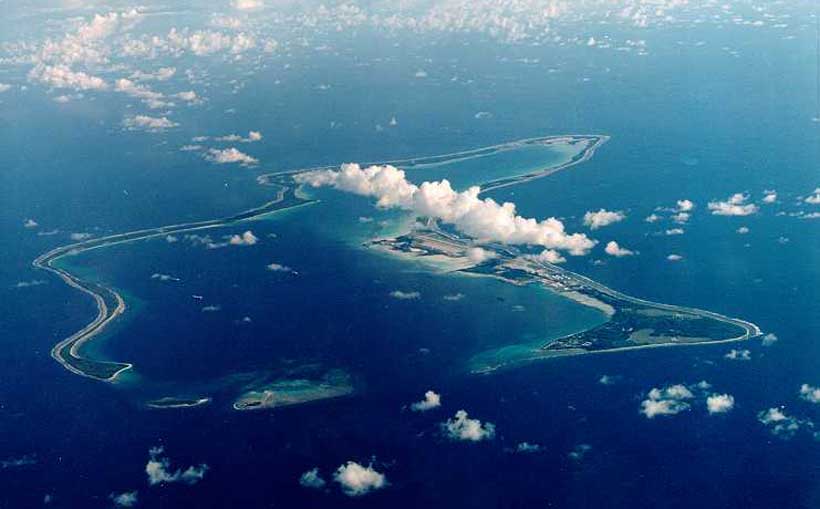
In June 2026, reports surfaced that Washington had begun considering a plan to purchase the Chagos Islands outright from Mauritius, bypassing London and dealing directly with Port Louis to secure permanent control of Diego Garcia. The plan arrived as an alternative to the British cession of the archipelago, a transfer Washington had come to oppose and London had already suspended. Four months earlier, in February, the same base had been at the center of a sharper episode, when Washington wanted to strike Iran from Diego Garcia and discovered that the access it assumed was conditional after all. Whether the purchase is ever adopted is beside the point, and the report need not be confirmed to be telling. A government that has treated Greenland, the Panama Canal, and the February use of Diego Garcia itself as matters of leverage rather than settled arrangement is precisely the one that would weigh buying an ally’s territory outright, and that the option reached a White House paper at all is the fact worth holding, whatever becomes of it. The two moves belong to one sequence, and read together they describe the strategy of denial turned on its own foundations, applied not to an adversary’s access but to the conditions under which the United States holds the one node in the Indian Ocean that answers to no one, and from which it can move without asking.
The February lesson was that conditional access is an illusion. When Washington sought to use Diego Garcia for offensive strikes against Iran, London hesitated, the reluctance later attributed to London turning the base America treats as its own, for a moment, into a base that answered to someone else. When operational pressure arrived, the elaborate legal architecture Britain had built around the atoll was worth precisely what the decisive power chose to make it worth, and Washington chose to make it worth nothing. That was a verdict on the framework, not a remedy. Overriding a lease at the moment of need disposes of the immediate obstacle and leaves the structural one intact, because the conditionality remains in the architecture, dormant, available to reactivate the next time the holder’s nerve fails or the next time sovereignty drifts toward a capital Washington cannot read in advance. February demonstrated that the framework does not bind the United States. June proposes that the framework should cease to exist.
The two moves operate on different objects. February acted on the decision, refusing to be conditioned by a condition. June acts on the structure that generated the condition in the first place. A lease, of any term, reinstalls what the asset exists to eliminate, a counterparty, a clock, and a date on which the conversation reopens, and the ninety-nine-year horizon attached to the Anglo-Mauritian arrangement is no reassurance, because duration was never the variable. A lease is a relationship, and a relationship has another party, whose future conduct cannot be guaranteed, whose sovereignty can change hands, whose orientation can be bid for by a third power with deeper reserves and a longer horizon. Freehold ends the relationship, not improving the terms of conditionality but abolishing the actor capable of attaching a condition at all. Having shown in February that it would not be governed by the framework, Washington need only follow that logic to its end, retiring the framework rather than litigating the lease, and with it the whole apparatus of conditions that made the asset something other than wholly its own.
The obvious objection is that ownership is simply tidier than leasing and needs no theory of coalitions to explain it. Owning ends the renewals and the landlord, and a great power might prefer that for no deeper reason than administrative convenience. But convenience accounts for wanting to own, not for the rest. It does not reach for freehold over a lease that already functions, and it does not cut a principal ally out of the arrangement to get there. What requires explanation is not the preference for ownership but the refusal of any counterparty at all, the willingness to override in February, to eliminate the lessor in June, and to bypass London in the doing. Convenience predicts none of that. What does is the pursuit of sovereignty over the node itself, a hold on the ground that tolerates neither a vote nor the eventual transfer of it to a rival.
Stay ahead of the geopolitical week.
MD Briefing delivers expert analysis across five global fronts — the Indo-Pacific, energy, geoeconomics, European security, and the Middle East — every Monday morning. Free.
That function has a name, or at least the strategy that requires it does. In May, at the National War College, Elbridge Colby set out what he presented as the framework of American military strategy under the nuclear shadow, resting on three elements, a denial defense, favorable escalation management, and a binding strategy. The three are not equal in what they do to the location of power. Denial sets a deliberately modest aim, not the defeat of the enemy but the failure of his attack, frustrating an attempt to seize and hold an ally’s territory so the aggression cannot win what it came for. It removes the destruction of the enemy state as the object of strategy. Escalation management shifts onto the opponent the choice of whether to widen the fight, a choice so costly that forcing it on him is often enough to stop him, in place of the older aim of out-matching him at every level.
The binding strategy puts the coalition itself at the center, making allied cohesion the thing the deterrent rests on. What carries that deterrent is then neither American firepower nor the resolve of any single state, but a property of the network, its tendency to hold under shock. Colby has described, without naming it in these terms, a strategy in which the unit of power has migrated from the state and its arsenal to the network and its behavior under stress. The coalition is no longer the setting in which American power operates but the instrument through which the deterrent is delivered.
A strategy that routes power through a coalition carries one precondition it does not state. If the deterrent rests on the cohesion of allies, it is only as reliable as the allies are steady, and allies are not uniformly steady. They are least steady in the wars fought close to home, where the proximity that makes a state a frontline ally is the same proximity that makes it the first to seek terms once the costs begin to arrive. A strategy built on binding everyone else is exposed at the exact moment binding matters most, unless somewhere in the system there is an instrument bound to no one, able to hold a forward presence when the coalition will not. Diego Garcia is that instrument, and its function is the inverse of every other node in the architecture. The forward bases sit inside the coalition, on allied soil, under allied consent, which is to say under an allied veto that can be exercised at the decisive hour, as February made plain. The atoll sits outside it.
From Diego Garcia no foreign capital holds a vote, no host government’s domestic politics can close the runway, no partner’s hesitation can be inserted into the chain of an operational decision. The United States has other un-bound capabilities, but none of the same kind. A carrier moves and must be elsewhere. A missile submarine surfaces only to strike. A bomber from the homeland reaches across hemispheres and returns. None holds a standing forward position the way the atoll does. Diego Garcia is the un-bound capability that is also persistent and forward, and a coalition-dependent strategy is survivable only because such a capability exists.
This is what makes the conditional status of the atoll intolerable in a way the conditional status of an ordinary base is not. An ordinary forward base is conditional by design, its whole logic shared sovereignty and negotiated access, and the coalition can absorb the loss of any one of them. Diego Garcia is the asset whose entire value is that it is not conditional, and a condition attached to it does not reduce its value at the margin but negates the thing it exists to provide. To hold it on a lease at all is to reintroduce, at the one site meant to be exempt, the very veto it was meant to escape. Held under an ally now and a small state once sovereignty transfers, the atoll inherits both, the British reluctance February exposed and the leverage Port Louis would gain. The campaign against Iran proved the point, though not in the atoll’s favor. With the atoll’s own availability in doubt, the option that answered to no one was the one launched from the American homeland, beyond any host’s reach to grant or withhold. What Diego Garcia demonstrated was not the autonomy the strategy requires but the lack of it, a forward node whose use its holder could throw into doubt at the decisive hour. The homeland option could be the workaround, the acquisition the cure.
Keeping the atoll usable is only the first of the things ownership secures, and it points inward, at the ally. A second points outward, at the adversary. The atoll must be kept not only from the partner who might withhold it but from the rival who might one day hold it. Diego Garcia’s position at the center of the Indian Ocean is what gives it value to the United States, a single apron from which force reaches the Gulf and the wider Middle East, the length of the Indian Ocean and its sea lanes, and the approaches to South and Southwest Asia. The same position is what would give it value to a rival, which is why who owns the surrounding ground is inseparable from the base itself. Sovereignty in Mauritian hands, however friendly the present government, places the freehold beyond anything Washington controls, and no government in Port Louis can bind its successors.
The risk is not a particular alignment but the openness of the question, the plain fact that a sovereign state cannot guarantee that future administrations will hold the orientation of the present one. A lease does not resolve this. It defers it. Ninety-nine years is not permanence but a clock, and at the end of the clock, at any renegotiation along the way, or under any future government in Port Louis that turns elsewhere, the archipelago around the base becomes available to the rival. A lease is a temporary exclusion of the adversary where ownership is a permanent one, and the temporary version is what a strategy organized around denial cannot accept at its most important node.
The third thing ownership secures is the hardest to see, because it concerns not the node but the water around it. A rival does not need to own Diego Garcia to degrade it. It needs only to stand near it. A presence in the surrounding archipelago, on the outer islands the base does not itself occupy, would be enough to watch the base and its tempo, to range it, to contest the sea lanes it exists to keep open, and so to turn the sanctuary into a target without ever touching the runway. The value of the atoll is inseparable from the exclusivity of its approaches, and a base whose neighborhood is open to a rival is not the same asset as one whose neighborhood is closed. The original lease understood this, which is why it troubled to bar other powers from the outer islands without British consent, an admission that to hold Diego Garcia is to hold the field around it. Ownership of the ground closes the islands to a rival outright, where the lease bars them only by the lessor’s continuing consent, for as long as the lessor remains both willing and in place. The difference is not that ownership seals the ocean, which no title can do, but that it removes the surrounding sovereignty as a future doorway.
What the small state stands to lose in all of this is a position, and the position is the real object of the move. In February the place Mauritius had been assigned, its presence in the chain of conditions governing American operational freedom, was shown to be worthless against will, because position holds only when the stronger party chooses to honor it. The June proposal does not dispute that. It acts on its corollary. If the position is worthless against will but keeps reappearing as something will must each time defeat, the efficient move is not to defeat it again but to dissolve it, to remove from the board the actor who occupies it. To let Mauritius set a price for Diego Garcia would be to grant a small state the thing the strategy is built to deny even great rivals, a vote over the platform the strategy silently rests on, and the option to sell that vote onward to whoever bids most.
This is the point at which a party tries to reposition the node and price it on its own account, and Washington’s answer is not to discipline the lessor but to retire the category of lessor, so that no one is left positioned to price anything at all. That the islands reached this point through a decade of decolonization law, through the advisory opinion of the International Court of Justice and the General Assembly votes that gave the Mauritian claim its standing, does not enter the calculation as a constraint, because the proposal converts the legal contest into a transaction. A sovereign question the law had answered one way is settled another way, by acquisition, the former colonial power and the decolonization framework alike written out of the instrument. It is the mirror image of the principle by which weaker states have lately sought to recover their autonomy through retention, the holding of the node in order to hold the leverage the node confers. The strong state performs the same recognition from the opposite end. Control of the node is the unit of power, so the node is to be owned rather than depended upon, and the autonomy a small state seeks by keeping its position is the autonomy a great power secures by removing that position altogether.
Colby applies denial outward, to the territory a rival might seize and the leverage it would confer. The denial that explains Diego Garcia turns the same logic inward, onto the one piece of ground the strategy itself cannot do without. It does not begin at the First Island Chain. It begins at Diego Garcia and widens outward, from the runway to the archipelago to the ocean. It denies a vote to the ally who might withhold the node and to the small state that might price it, so the atoll stays usable. It denies the ground to the adversary who might come to hold it, so the atoll never becomes someone else’s. It denies the surrounding islands to any rival who might use them to watch the base or contest its approaches, so the ground around the atoll cannot become the platform from which the atoll is degraded. A lease secures none of the three past its term.
Ownership secures all three without one. In February the strong decided. In June they moved to own, because deciding each time is itself a form of dependence, a reliance on one’s own willingness to override that a patient counterparty or an altered map could eventually test. Ownership removes the test. And what the three denials secure, taken together, is not only the exclusion of others but the freedom of the United States to move. A node that answers to no one is a node from which power can circulate through the sea lanes, the airspace, and the approaches around it without leave from any capital. Denial of the ground is the condition of free movement across the water. The force that distributes American power outward through allies who may or may not hold keeps one place back, bound to no one and permanently forward, and an exception that depends on a lease is not yet kept back at all. Before the United States can deny anything to China, it moves to ensure that no one can deny the atoll to the United States, that no one else can ever come to hold it, and that no one can stand near enough to use it against them.