


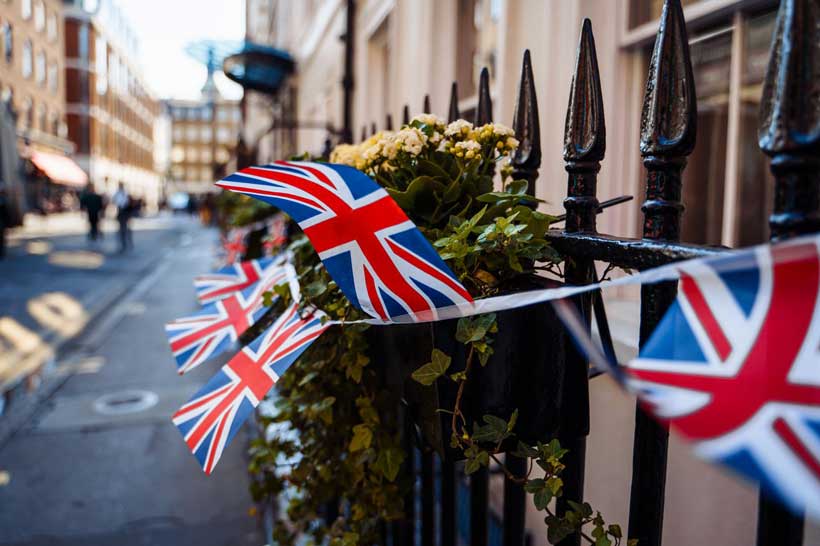
10 years ago Nigel Farage was in political heaven. Since entering the European Parliament in 1999 at the head of a small anti-European party, he had only one demand. That Britain organized a referendum on leaving the European Union. It was held on 23 June 2016.
His wish was granted by the coalition government headed by the Conservative Prime Minister, David Cameron, and his deputy, the Europhile leader of the Liberal Democrats, Nick Clegg.
Both men believed the British people would never turn their backs on Europe. It was the most stupid mistake by a British prime minister since Conservative Prime Minister Neville Chamberlain in 1938 signed the Munich Agreement with Adolf Hitler, believing the promise of the German Führer that Berlin had no more interest in other nations in Europe once London and Paris gave him a region of Czechoslovakia.
A decade later the verdict is in on Britain’s rupture with Europe. Most economists agree that Britain’s economy will shrink by 8 percent. Other than the financial services offered by the City of London, which for 200 years has been the European capital of banking, insurance, raising billions for international firms, hiding money in fiscal paradises, and providing luxury homes for Russian and Arab oligarchs, the rest of the British economy outside of London has suffered.
Stay ahead of the geopolitical week.
MD Briefing delivers expert analysis across five global fronts — the Indo-Pacific, energy, geoeconomics, European security, and the Middle East — every Monday morning. Free.
The manufacturing, aerospace, automobile, shipbuilding, chemical, farming, food, and other exports from Britain are smaller.
England’s premier jurist, Lord Jonathan Sumption, who argues “Britain is a European country, sharing the political, economic, and intellectual culture of Europe,” describes Brexit as “an act of gross economic vandalism’ and “the abandonment of five centuries of intelligent British statesmanship.”
In 2025 goods exports from Germany were $1.77 trillion, from Italy $726 billion, from France $668 billion, and from Brexit Britain $485 billion.
Britain after Brexit now lies 15th in the league table of OECD European economies. As the RU’s national income shrinks as a result of cutting trade and investment links with Europe, the government is finding it impossible to pay for the new demands of extra defense spending or social welfare payments to cover the 1 million young British citizens aged 16-24 who do not have a job and are not in education or on a training course.
Yet the authors of Brexit, like David Cameron and Boris Johnson, as well as many of the elite business leaders and journalists who refused to believe in 2016 that Britain would vote for economic isolationism and lose all say or influence on the direction of European policy on economic, environmental, transport, cultural, and frontier policy are now silent, not willing to accept, like other members of the national elite, including the pro-Brexit Labour Party leader, Jeremy Corbyn, the Jean-Luc Mélenchon of England, that Brexit is a disaster for Britain.
This omerta about Brexit pervades the political elites who are now frightened of the rise of Farage and other parties even more right-wing and racist supported by Elon Musk and JD Vance, as the American ethno-nationalist supremacists see Brexit Britain as their chief ally in their crusade against European democracies.
Brexit has been bad for Britain and bad for the wider European economy and for the idea of Europe becoming a more important global player faced with the aggressive economic and militarized foreign policy of Trump, Putin, and Xi.
But it has taught Marine Le Pen and Giorgia Meloni and most of Europe’s fellow travelers of the British Europhobe right one important lesson. When the Brexit vote was announced, Marine Le Pen covered her social media posts with the British union flag. But quickly as she and other leaders of Europe’s extreme right saw the damage Brexit has done to the British economy and politics, all talk of Frexit or Italy dropping the euro in favor of a return to the lira has vanished.
British politics, far from becoming more virile and making a new global mark on the world, looks more and more like 4th Republic France or the Italy of Berlusconi, with no party, even with a majority, able to govern effectively and constant changes of position and personalities leading to permanent instability and weak leadership and government.
Every opinion poll in the last 12 months shows a clear majority of voters who now think Brexit was a serious mistake. Voters in the Markerfield by-election massively repudiated Nigel Farage, who has devoted a political lifetime to rubbishing European partnership and promising voters a radiant future if only we shut the doors in the face of our close neighbors and friends. The pro-European Labor politician Andy Burnham won with a big majority of votes. But so far the political elites, including the EU-cautious prime minister Sir Keir Starmer, have not found a way of reflecting or respecting this massive change in public opinion.
The 6th of June, 1944, is a date every Englishman remembers with pride as British soldiers disembarked on Normandy beaches to free Europe from the evils of extreme right-wing ethnic nationalism.
23 June 2016 is a date most Brits now wish had never happened.
