


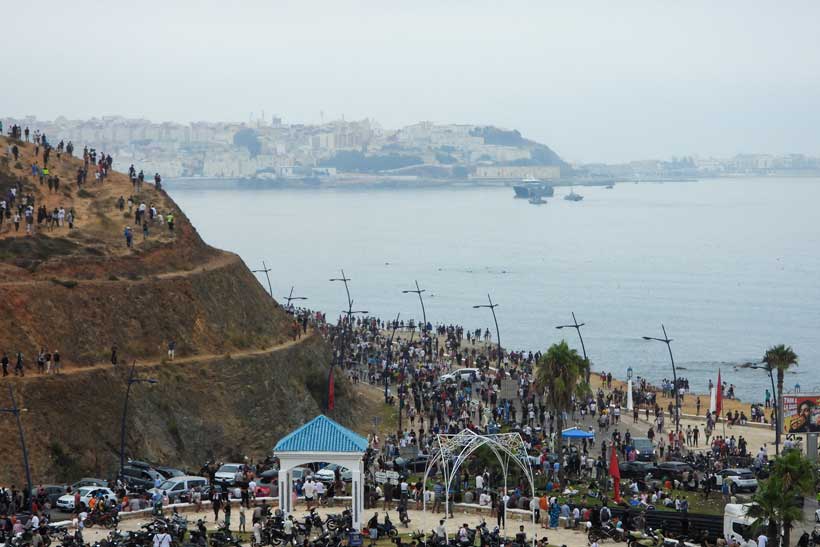
It’s clear that Europe cannot continue like this. The scenes at Ceuta over the past 24 hours—an estimated 49,000 people crossing the border by land and sea, including hundreds of unaccompanied minors; at least 19 bodies pulled from the water; and a second crossing point at Melilla forced into lockdown—are not an isolated emergency. They are the latest, starkest evidence of a union that still cannot decide what it believes, let alone act on it. And they land directly on the desks of two commissioners whose records, examined closely, show years of frameworks and pledges but little operational capacity to show for it.
A Crisis Managed by Denial
Ceuta’s regional president, Juan Vivas, said the Spanish government “doesn’t understand the true magnitude of this crisis.” Prime Minister Pedro Sánchez has since gone further, calling the mass entry a violation of Spain’s territorial integrity. Both are right to be alarmed, but alarm is not the same as preparedness: Madrid deployed troops to the border while still refusing to declare a national emergency—a half-measure that treats a humanitarian and security rupture as a public-relations problem to be contained rather than a crisis to be confronted.
The Commissioners in Charge—and Their Record
Stay ahead of the geopolitical week.
MD Briefing delivers expert analysis across five global fronts — the Indo-Pacific, energy, geoeconomics, European security, and the Middle East — every Monday morning. Free.
Security at Europe’s external border is, on paper, the job of two people: Magnus Brunner, Commissioner for Internal Affairs and Migration, and Dubravka Šuica, Commissioner for the Mediterranean. Both have now watched a major crossing crisis unfold in real time. Neither had a standing operational response ready.
Brunner has held the migration brief only since December 2024. His appointment itself raised eyebrows in Brussels, given that Austria—the country he came from as finance minister—has a documented history of opposing key EU migration policies. His signature achievement is the New Pact on Migration and Asylum, which the Commission describes as building “a common EU system to manage migration” based on solidarity and responsibility. It is, more than a year after formal agreement, still in the process of being transposed into national law across member states—meaning that when Ceuta needed an operational EU mechanism this week, the flagship reform was not yet the live system in the field. His response to the crisis so far has been a public statement calling on Morocco to contain “dangerous crossings” and an offer to deploy Frontex support—the same reactive playbook used after Lampedusa in 2023 and Lesbos and the Belarus border before that.
Šuica, as Commissioner for the Mediterranean, was handed the specific mandate of building partnerships with Morocco and the wider Southern Neighbourhood on migration, security, and border control. Her deliverables to date consist of framework documents and outreach—a “New Pact for the Mediterranean” still being constructed and funding agreements like the €152 million migration package signed with Morocco in 2023 by her predecessor’s portfolio. None of that produced an early-warning system, a coordination channel, or a contingency plan that was visible in Ceuta this week. When the crisis hit, her office had no independent operational role at all—the response fell instead to Brunner’s statement and Spain’s own troop deployment.
Set against that is one number the Commission cites as evidence of progress: a 31% drop in Western Balkan route arrivals in 2023. It is real, but it says nothing about the Western Mediterranean route through Morocco, which is precisely where this week’s crisis occurred—and where the “Four Action Plans” and Lampedusa-style measures have not been replicated with comparable results.
The pattern across both records is the same: pacts, letters, and pledged euros built over years that had never been tested against a live, fast-moving surge until this week—and that visibly were not ready when tested.
That pattern held again today. Commission President von der Leyen posted that the images from Ceuta were unacceptable, insisted the EU cannot allow entry outside its rules, and called for dangerous crossings to stop, smuggling networks to be dismantled, and returns to be swift. Her operational response was to confirm she had tasked Brunner and Šuica specifically: Brunner was already working with Spain and ready to travel to affected areas, pursuing further support including through Frontex; Šuica was in contact with her Moroccan counterpart, with von der Leyen voicing confidence the EU’s partnership with Morocco will “deliver concrete results.” It is, word for word, the same reflex the record above describes—a phone call and a statement of confidence, deployed by the president herself, in place of a mechanism that was supposed to already exist.
Brussels’ Words Without Weight
The wider commission response followed the same script. Commissioner Brunner’s call on Morocco to contain “dangerous crossings” is not wrong so much as toothless—the EU has issued near-identical statements after nearly every major crossing crisis of the past decade. The underlying leverage problem goes unaddressed: Europe depends on neighboring states like Morocco to police its external border, and those states know it. Whether or not this surge was a deliberate act of pressure by Rabat amid Spain’s warming ties with Algeria, the fact that the theory is credible at all is itself an indictment of a border strategy built on outsourced goodwill rather than European capability.
A Union Turning on Itself
More troubling than the external pressure is the internal one. Italy’s Tajani floating the suspension of Spain from Schengen and Salvini calling it “necessary” is not serious policy—it’s a domestic political performance dressed up as continental solidarity. Weber’s claim that Spain’s regularization of undocumented migrants caused this influx is a convenient talking point that ignores the far more immediate drivers on the Moroccan side of the border. And Spain’s furious response, summoning Italy’s ambassador and accusing Tajani of “partisan demagoguery,” only confirms that when a crisis hits, EU member states default to blaming each other rather than closing ranks.
This is a clash of values that runs deeper than migration policy. It’s a clash between a bloc that still markets itself as a union of shared responsibility and the observable reality that when the pressure is highest, both member states and the commissioners meant to coordinate them default to statements rather than capability.
What Gets Lost in the Noise
Amid the political point-scoring, the IOM’s warning is the one fact that should anchor the debate: this is, first, a humanitarian emergency, now with at least 19 confirmed deaths and children among those crossing. That irregular sea arrivals to Europe are down roughly 40% year-on-year overall is worth holding onto too—not as reassurance, but as a reminder that aggregate statistics can coexist with total unpreparedness for the next flashpoint.
Europeans are being asked to trust that their external border is secure, and that trust runs through two commissioners whose combined track record—a pact not yet fully implemented, partnership frameworks still being built, and funding pledges without an enforcement mechanism behind them – had produced no visible readiness when Ceuta was tested this week. Until that changes, “Europe cannot continue like this” isn’t just a reaction to one bad night at the border. It’s an accurate description of the governance behind it.
