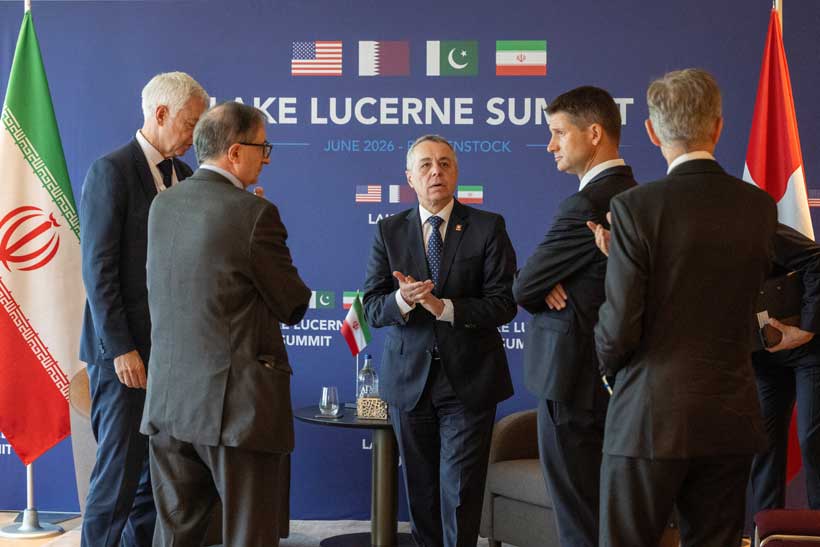
Peace talks led by U. S. Vice President JD Vance and Iranian chief negotiator Mohammad Baqer Qalibaf were set to begin on Sunday morning at a Swiss resort. The negotiations aim to end a prolonged conflict between the U. S. and Iran, although there are disagreements over Iran’s statement about the closure of the crucial Strait of Hormuz. The two nations agreed to a 60-day ceasefire for the discussions, but the Iranian Revolutionary Guard declared the strait shut following Israeli strikes in Lebanon, even as the U. S. military reported that commercial vessels continued to operate.
Complications arose as both sides attempted to push forward an interim deal brokered by Pakistan, which was recently signed by Presidents Donald Trump and Masoud Pezeshkian. Vance arrived at the resort with security measures in place and hopes to make progress on both the nuclear issue and the situation in Lebanon during the talks.
Iran’s Revolutionary Guards accused Israel of violating ceasefire agreements and warned that approaching ships could be in danger at the Strait of Hormuz, which is vital for global oil supplies. Despite the ceasefire, hostilities continued between Israeli forces and Hezbollah. The U. S. Central Command reported that shipping traffic through the strait remained active, with U. S. forces committed to ensuring safe passage for commercial vessels.
Trump indicated there would be no toll for passing through the strait during the ceasefire, but mentioned that a toll might be considered if peace negotiations were unsuccessful. An Iranian advisor criticized the U. S. for not fulfilling its commitments, while Iran’s Oil Minister stated that if Western nations complied with the agreement’s spirit, there could be many investment opportunities.
The Iranian delegation included several key officials, and the U. S. team featured prominent names like Jared Kushner. Iranian officials stressed the importance of meeting obligations due to past failures in agreements. Pakistan’s Prime Minister and army chief also joined the talks at the resort, which had heavy security.
Vance expressed confidence that the ceasefire would hold, noting he had seen no evidence of the Strait of Hormuz being closed. A halt to fighting in Lebanon was a condition for starting talks about Iran’s nuclear program and other matters. However, Israeli strikes reportedly killed civilians after the truce began, and both sides remained in a tense standoff. Israel declared it would not withdraw from occupied areas and planned to act against any threats. A poll indicated widespread belief among Israelis that Iran had emerged stronger from the conflict, with many doubting the success of their military objectives. Lebanon reported significant civilian casualties from Israeli attacks, underscoring the dire humanitarian impact of the ongoing conflict.
With information from Reuters