


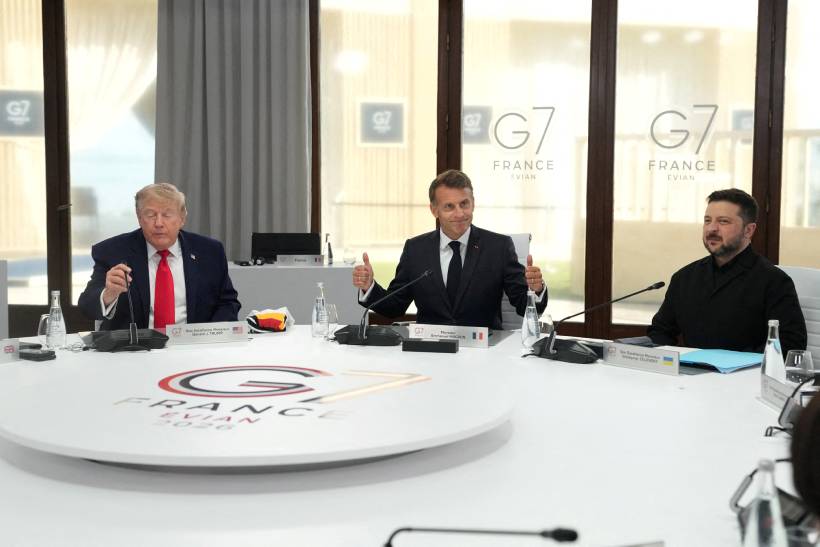
Ukrainian President Volodymyr Zelenskiy told an EU summit that Ukraine’s fastest path to securing Europe’s long term stability is accelerated membership in the European Union, arguing that the country’s future is inseparable from Europe’s security architecture.
Zelenskiy said Ukraine is aiming to end the war with Russia by the end of the year, while acknowledging that this depends heavily on continued Western military and financial support. He also called on EU partners to prepare Ukraine for another difficult winter by providing air defence systems, fuel supplies, and energy infrastructure support.
His remarks came alongside continued Ukrainian military operations, including long range drone strikes inside Russia, such as an attack on an oil refinery near Moscow. Kyiv has framed these strikes as retaliation for Russian attacks on Ukrainian cultural and civilian sites.
EU leaders discussed Ukraine’s accession process during the summit, with some progress made on opening negotiation clusters. However, divisions remain among member states over how quickly Ukraine should be integrated.
Stay ahead of the geopolitical week.
MD Briefing delivers expert analysis across five global fronts — the Indo-Pacific, energy, geoeconomics, European security, and the Middle East — every Monday morning. Free.
Why It Matters
Ukraine’s push for fast track EU membership is not only about economics or politics, but about long term security guarantees.
Zelenskiy is effectively arguing that integrating Ukraine into European institutions would help deter future Russian aggression by locking the country into the EU’s political and security framework. This would make Ukraine’s stability directly tied to the stability of Europe itself.
At the same time, EU enlargement is politically sensitive. Member states remain divided over timing, with concerns about institutional readiness, economic costs, and the implications for relations with Russia.
The debate also reflects a broader question facing Europe: whether Ukraine should be treated as a candidate country on a long reform path, or as a strategic partner that requires accelerated integration due to wartime conditions.
Key Developments
EU ambassadors have already agreed to move forward with accession talks for Ukraine and Moldova, signaling gradual institutional support for enlargement.
However, resistance remains from some member states. Hungary pushed to remove language supporting accelerated accession from a European Council statement, highlighting internal divisions within the bloc.
Despite this, EU leaders reaffirmed that Ukraine’s accession process is moving forward on a merit based approach, even if timelines remain unclear.
Zelenskiy also stressed immediate military needs, including air defence missiles and a large stockpile of interceptors, warning that continued war would require sustained Western support in weapons, energy supplies, and financial aid.
What Happens Next
The next phase of Ukraine’s EU bid will focus on opening additional negotiation clusters, which are necessary steps before full membership talks can advance.
At the same time, Ukraine’s military and economic dependence on Western support will continue to shape EU discussions, particularly as winter approaches and Russia intensifies its attacks on infrastructure.
EU unity will remain a key factor. Any expansion of support or acceleration of membership will require agreement among all member states, making internal political disagreements a potential obstacle to Kyiv’s ambitions.
Analysis
Zelenskiy’s push for fast track EU membership reflects a strategic attempt to redefine Ukraine’s war effort as part of Europe’s long term survival rather than a standalone conflict.
By framing EU accession as a security guarantee, Kyiv is trying to move the debate beyond technical enlargement criteria and into geopolitical necessity. This approach strengthens Ukraine’s argument in Western capitals but also raises expectations that may be difficult for the EU to meet quickly.
For Europe, Ukraine’s membership question exposes a tension between strategic urgency and institutional caution. While many leaders recognize Ukraine’s importance to European security, full membership would require deep reforms within the EU itself, along with long term financial commitments.
The broader implication is that the war is accelerating Europe’s geopolitical evolution. Decisions on Ukraine’s future will not only determine the country’s trajectory but also reshape the European Union’s identity as a political and security actor.
With information from Reuters.
