


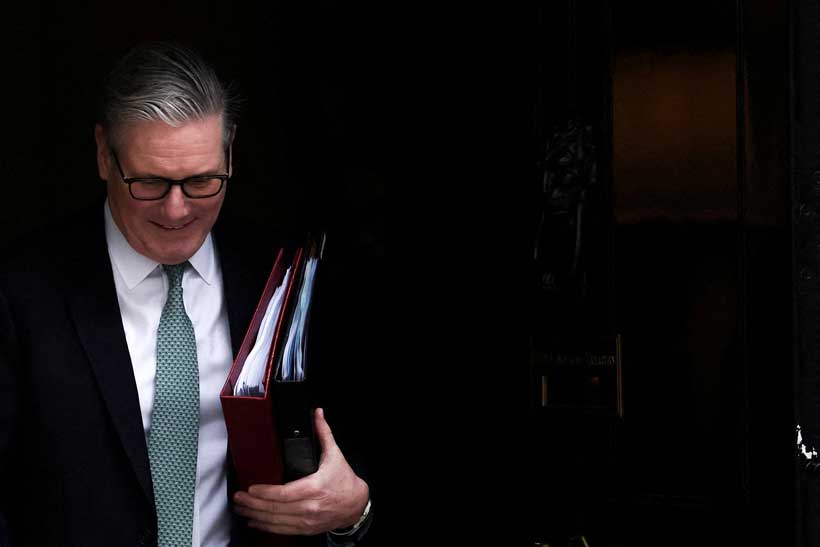
British Prime Minister Keir Starmer has declared he will not step aside despite growing pressure from within the Labour Party following a major electoral victory by rival Andy Burnham.
Burnham’s strong win in a parliamentary contest in Makerfield, where he secured 54.8 percent of the vote, has significantly strengthened his position as the leading alternative to Starmer’s leadership. The result has intensified debate within Labour about whether the party should pursue a managed transition of power or enter a full leadership contest.
The political tension comes at a time when Starmer’s government is facing internal dissatisfaction, declining approval ratings, and concerns among MPs about Labour’s ability to win the next general election in 2029.
Why It Matters
The confrontation between Starmer and Burnham raises the possibility of a major leadership crisis inside Britain’s governing party.
Stay ahead of the geopolitical week.
MD Briefing delivers expert analysis across five global fronts — the Indo-Pacific, energy, geoeconomics, European security, and the Middle East — every Monday morning. Free.
With Labour in power, any internal contest risks creating political instability at the centre of government, potentially affecting policy delivery, economic confidence, and public trust.
It also highlights a deeper strategic debate inside Labour over how to respond to the rising challenge of Nigel Farage’s Reform UK, which has gained traction in national opinion polls by appealing to disaffected voters.
Key Developments
Burnham’s election victory has encouraged some Labour MPs to openly call for Starmer to consider stepping down and allow an orderly leadership transition.
Starmer, however, has rejected those calls and said he will “not walk away,” emphasizing his record in office, including closer ties with the European Union, economic stabilization efforts, and healthcare reforms.
Burnham, meanwhile, used his victory speech to outline a broader national political message focused on affordability, industrial renewal, and reducing household costs, reinforcing his positioning as a potential prime ministerial alternative.
What Happens Next
The immediate question is whether Burnham will secure enough backing from Labour MPs to trigger a formal leadership challenge, which requires support from at least 20 percent of the parliamentary party.
Some Labour figures are attempting to avoid a drawn out contest by encouraging informal negotiations over a possible transition, while others are preparing for a direct leadership battle.
Attention will also focus on whether more ministers or MPs publicly shift their support away from Starmer in the coming days, which could accelerate pressure for a change in leadership.
Analysis
Labour is now entering a period of internal uncertainty that could shape the direction of British politics for years.
Starmer is trying to project stability and continuity in government, but the scale of Burnham’s victory and his growing popularity within the party suggest that his leadership is increasingly contested.
A formal leadership challenge would expose divisions inside Labour at a time when it is expected to govern decisively, potentially weakening its political standing and giving opposition parties an opening.
However, avoiding a contest entirely may also prove difficult if MPs continue to fear electoral losses and view Burnham as a stronger general election candidate.
The core issue is not just a personal rivalry but a strategic disagreement over how Labour can respond to voter dissatisfaction and the rise of Reform UK.
With information from Reuters.
