


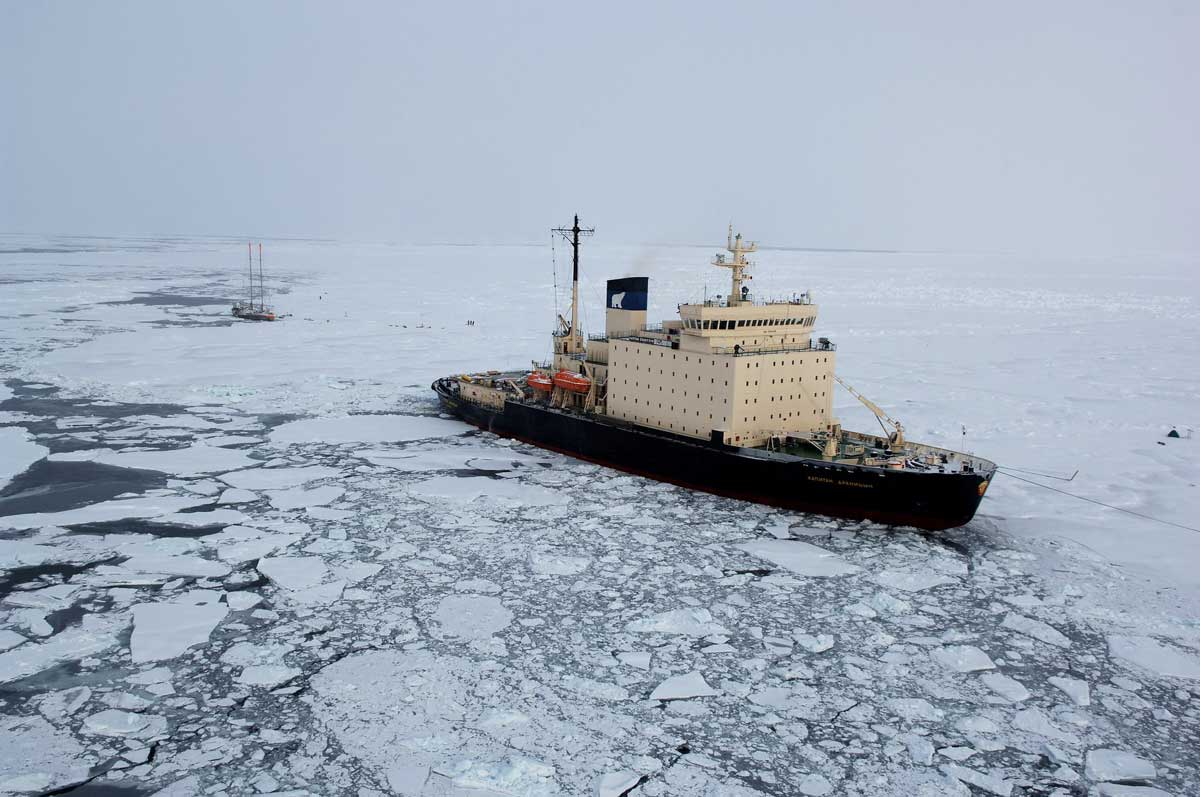
China’s new Arctic route cuts the journey from Ningbo to Europe in half. What the headlines aren’t saying is that every mile of it runs through Russian waters, on Russian terms.
You’ve rarely seen China advertise dependency. This is because its foreign policy vocabulary is based on self-reliance, strategic autonomy, and calculated display of strength. So, when the first regular container service through the Arctic was quietly launched by a Chinese shipping company this month, the press release called it a commercial breakthrough with a much faster route. This is a modern-day Silk Road, but on ice.
What it actually is; it’s a bet Beijing is placing on Moscow, on climate science, and on the continued volatility of every other shipping route it relies on. Whether that bet pays off depends on variables China does not fully control, and one it cannot control at all.
Why Is China Suddenly Betting on a Melting Arctic?
Because seemingly every alternative is getting worse. The Strait of Hormuz has been effectively blocked since the U.S.-Iran strikes in February. Houthi attacks on Red Sea shipping pushed crude prices above $100 per barrel after two Saudi tankers were hit in late July. Owners of vessels which take a new route around the Cape of Good Hope now have an additional 10-14 days on each trip, costs for fuel are significantly more expensive and insurance rates have surged since the Red Sea has fallen into disrepair. This caused a substantial decline in traffic through the Suez Canal, which relies on access to the Red Sea. Beijing has seen Hormuz, Bab al-Mandeb and the South China Sea all being pressure points in the past ten years. A route that avoids all three is not a preference, but a response.
Stay ahead of the geopolitical week.
MD Briefing delivers expert analysis across five global fronts — the Indo-Pacific, energy, geoeconomics, European security, and the Middle East — every Monday morning. Free.
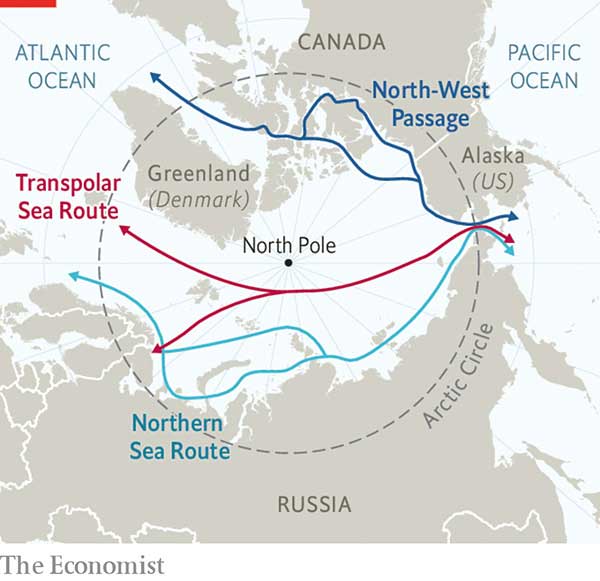
Sea Legend’s Arctic Express runs from Ningbo to Felixstowe along Russia’s Arctic coast once a week, and reduces the standard 40-day passage to approximately 20 days. The number of Northern Sea Route transits rose from 15 to 23 last summer. Sea ice in the peak winter season of 2025 was 5.8 percent below 2024, the largest year-on-year decline on record, allowing for more of the year for standard vessels to operate without an icebreaker escort. A seasonal curiosity is now emerging as a structural option, at least on paper.
Can a Route That Closes Every Winter Actually Replace a Year-Round Chokepoint?
This is the question the commercial coverage keeps sidestepping. The Arctic Express runs until November, after that, the ice wins. No amount of climate change has made the Northern Sea Route a twelve-month proposition yet, and the gap between a seasonal supplement and a genuine alternative to Suez is significant for any shipper planning inventory cycles, just-in-time manufacturing, or long-term freight contracts.
The counterargument is that reliability comes in relative terms. A closed route is more predictable than a route where Houthis operate year-round, where insurance costs are variable, and a single escalation can close transit down overnight. For Chinese exporters whose products are already on ships that have been rerouted around Africa, 20 days is preferable around summer through the Arctic than 40 days around winter through a war zone. The bar for good enough has moved considerably since February.
Who Gave Russia the Keys to China’s Fastest Road to Europe?
Geography did, but China walked in knowing the locks would need to be changed, and decided to proceed anyway. Russia’s Northern Sea Route passes through waters Moscow considers sovereign and has the legal architecture to match: permits, icebreaker dependencies, and 28 sections each governed by different rules and ice conditions. Every container transiting the Arctic Express is a transaction that benefits Rosatom, which controls permits and icebreaker services. Moscow charges for access. It can raise prices once demand is established. It can revoke permits if the political relationship deteriorates.
A China dependent on Arctic access is a China that needs Russia’s continued cooperation, a new layer of leverage on top of the energy dependency already in place. Russia has been building toward exactly this outcome for years. China becoming its anchor commercial partner on the Northern Sea Route is not a side effect of the Ice Silk Road. It is close to the point of it, from Moscow’s perspective.
What Does Washington Do When the Trade Route Runs Through Moscow?
Very little, for now. The United States has no presence on the Northern Sea Route. NATO’s Arctic posture is focused on Norway and the Greenland-Iceland-UK gap, not commercial shipping through Russian coastal waters. If the Ice Silk Road becomes a functioning trade artery, it creates a China-Russia economic corridor running entirely outside Western strategic oversight. Three powers, two of them in open or implicit confrontation with Washington, sharing an Arctic trade corridor that Washington’s allies cannot easily access or influence. That is not a logistics story. It is a structural shift in where global trade flows and who gets to watch it happen.
Western shipping companies are staying out, for now. MSC and other major carriers have not shifted their Arctic position despite the disruptions elsewhere. The environmental objection is not purely performative: Arctic shipping accelerates ice melt, which expands the route’s viability, which brings more traffic, which accelerates melt further. European ports and regulators are watching. The reputational cost of profiting visibly from a melting Arctic, in the same news cycle as record European heatwaves, is one most Western boards are not willing to absorb. This is partly why Sea Legend, a Chinese company with a different risk calculus, opened the route rather than a Western carrier.
Five Things Worth Watching
- Whether Sea Legend’s weekly service completes the full 2026 season through November without a significant incident, mechanical, meteorological, or diplomatic. A single high-profile failure would set the route back commercially by years.
- Russia’s permit pricing as the route proves viable. If Moscow raises access costs once demand is established, the economics shift fast and China’s new shortcut becomes a new liability.
- Whether any European carrier quietly begins Arctic transits through a subsidiary or under a different flag. Silent entry would signal the environmental objections are softer than publicly stated.
- Formal response by India and Japan if any. There are strategic reasons why both are uneasy with a China-Russia corridor that runs around Indo-Pacific shipping lanes. Whether they raise it in multilateral forums will tell us how seriously they are taking the long-term implications.
- The Suez Canal Authority’s position. Egypt stands to lose the most if Arctic routing becomes a permanent fixture in Asia-Europe freight. Whether Cairo considers this a temporary solution or a structural issue for its most significant revenue stream will reveal its reaction, be it through price, diplomacy or investment in security in the Red Sea.
The Bottom Line
China has found a faster road to Europe. The problem is that it runs through Russia’s front yard, on Russia’s terms, through waters only accessible because of a climate crisis the same shipping industry helped cause. The Ice Silk Road is real, but it is also seasonal, politically contingent, and ecologically self-defeating in ways the commercial coverage is not sitting with long enough.
Whether it replaces Middle East chokepoints depends on whether the Arctic stays stable, whether Russia stays cooperative, and whether the ice keeps melting on schedule. Two of those conditions are outside Beijing’s control. The third is a catastrophe nobody should be routing their supply chains around: that China is doing it anyway tells you something important about how desperate the alternatives have become, and how little the current global order is equipped to manage what happens next when a melting planet becomes a shipping opportunity.
