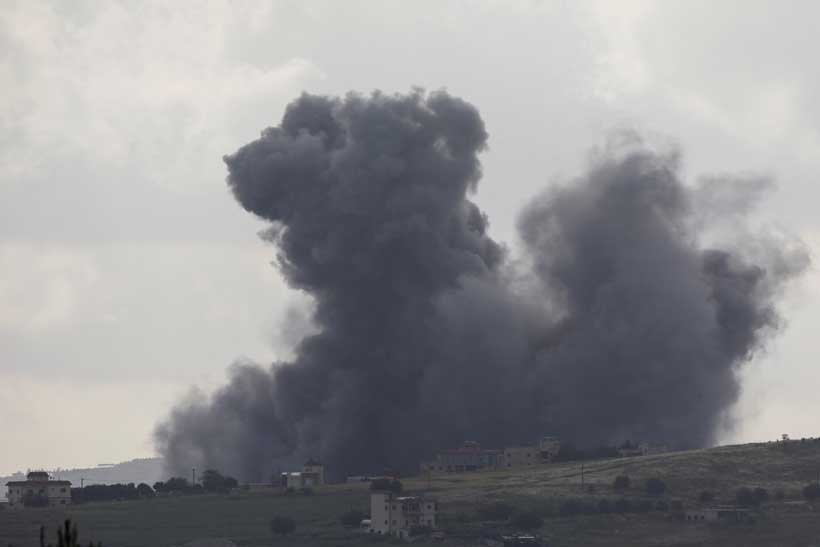
Israel and Hezbollah agreed to a ceasefire in Lebanon after escalating violence threatened to derail potential peace talks regarding the ongoing war in Iran. This ceasefire was announced just before 4 p.m. Lebanon time, with a U. S. official confirming that negotiations, facilitated by the U. S. and Qatar with assistance from Iran, had led to this agreement. Both sides indicated they would uphold the ceasefire, with an Israeli official stating that Israel would remain in southern Lebanon but would not engage in conflict unless attacked.
The recent conflict included intense airstrikes that resulted in 18 deaths and injuries to 33 others in Lebanon. Four Israeli soldiers were also killed by Hezbollah. This violence could complicate U. S.-Iran negotiations, as establishing peace in Lebanon is key to a broader agreement. The recent memorandum signed by the presidents of the U. S. and Iran postponed discussions on critical issues like Iran’s nuclear program, granting parties 60 days to agree on a lasting solution or extend the current deal.
Technical talks were planned in Switzerland but were postponed, and officials from both the U. S. and Iran indicated that their respective negotiators would not be attending. Hezbollah lawmakers suggested that further discussions hinge on a complete ceasefire and urged the Lebanese government to reject any negotiations with Israel as long as hostilities continued.
The interim agreement seeks an end to military operations in various regions, including Lebanon, but Israel maintains that it is not a part of these deliberations. The fighting began when Hezbollah fired at Israel, prompting Israeli military responses, including strikes targeting Hezbollah’s positions.
Lebanon’s health ministry confirmed the heavy toll from recent airstrikes, and its President condemned Israel’s actions while emphasizing the commitment to achieve a comprehensive ceasefire. The broader conflict, which originated on February 28 with U. S. and Israeli attacks on Iran, has reportedly resulted in at least 7,000 deaths, primarily in Iran and Lebanon.
Despite the conflict’s impact on oil prices, which had risen due to concerns over regional stability, the signing of the interim deal resulted in a drop in prices as shipping through the Strait of Hormuz resumed. Under the terms of the agreement, Iran will receive economic relief and unfreezing of assets, with negotiators tasked with addressing the status of Iran’s nuclear program and establishing a reconstruction fund within the next 60 days.
In the face of criticism in the U. S., former President Trump defended the deal, arguing that the war had weakened Iran and affirming that the terms would lead to significant concessions from Iran without offering direct financial support.
With information from Reuters