


China is adopting a pragmatic approach to its post-war relationship with Iran, attempting to balance maintaining its strategic and economic interests with Tehran, including access to discounted oil supplies, with protecting its broader relations with the United States and rival Gulf economies. Chinese intelligence and military circles continue to analyze and formulate China’s new post-war approach to engaging with emerging centers of influence in Iran. In the aftermath of the conflict and the Strait of Hormuz crisis, and with the growing influence of Iranian institutions like the Islamic Revolutionary Guard Corps (IRGC) within Iran’s decision-making circles, relevant strategic circles in Beijing are currently analyzing the likelihood of China expanding its communication channels to include these institutions, seeking to build more stable relationships with the actual power centers in Tehran. Chinese think tanks and intelligence agencies view the IRGC as a dominant de facto force and a central pillar of decision-making in Tehran. China’s post-war strategy relies on integrating the Iranian Revolutionary Guard Corps (IRGC) as a key partner and interlocutor to protect Beijing’s economic interests, secure oil supplies, and implement the $400 billion of the China-Iran Comprehensive Economic Partnership (CEPEK). Iran, in turn, seeks to encourage China to play a larger political and economic role in the post-war Middle East. China’s balancing act is evident in its continued indirect economic and oil support for Iran to circumvent US sanctions, while Beijing maintains its role in fostering regional stability by supporting Iranian-Saudi rapprochement and avoiding escalation with Western powers.
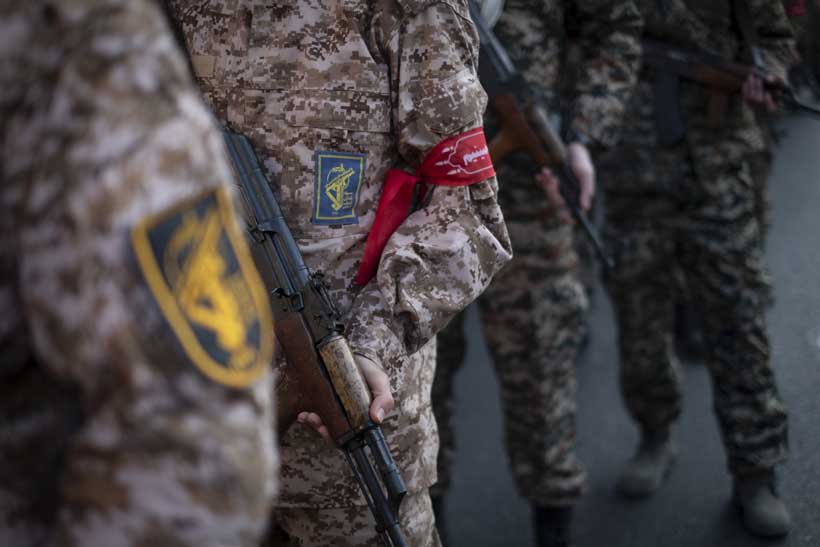
As for China’s new vision of the centers of influence in Tehran, particularly in the post-war Iranian era, it is based on acknowledging the central role of the IRGC within the Iranian decision-making apparatus. Beijing’s intelligence services recognize that traditional military and political structures within Iran have been restructured, effectively granting the IRGC the upper hand. Therefore, Beijing is pursuing a pragmatic approach. Recognizing that relying solely on official Iranian state institutions is no longer sufficient, Chinese think tanks are now focusing on building direct and stable communication channels with the leadership of the Iranian Revolutionary Guard Corps (IRGC) to ensure the continuity of its influence in the Gulf. This is especially relevant given the IRGC leadership’s tendency to politicize and direct interests within Iran. Beijing believes that the centers of real power have shifted more significantly towards the security and economic institutions affiliated with the IRGC, which are best positioned to implement strategic projects within China’s Belt and Road Initiative.
Therefore, we analyze that the future of the relationship between China and Iran, especially after the US-Iran agreement brokered by Pakistan, will remain strong and cohesive for several reasons. Iran serves as an economic lifeline for China, and China will remain the primary buyer of Iranian oil. China also plays a key role in helping Tehran circumvent economic pressures and sanctions and integrate into international alliances, where China and Iran work together within international organizations such as BRICS and the Shanghai Cooperation Organization (SCO). Furthermore, their comprehensive strategic partnership makes them allies in undermining the unipolar world order. In addition, China desires to invest in the post-war Iranian era. The Chinese government rejects Western and US sanctions against Iran and Chinese companies investing in or dealing with it and vows to protect its companies affected by these unilateral sanctions imposed on a number of Chinese or Iranian entities and companies. China also pledges to continue providing a financial lifeline to Tehran by purchasing the vast majority of its oil exports.
In the post-war era, China is poised to circumvent US and Western sanctions and interventions against Iran, opting instead for a broader partnership. This partnership aims to expand investment and security channels with key Iranian institutions to secure its interests and activate its investment plans. China seeks to implement a 25-year long-term cooperation program, which includes massive investments of $400 billion in Iran’s energy, infrastructure, and transportation sectors. The Sino-Iranian partnership forms a pivotal pillar in Tehran’s strategy to mitigate the impact of economic sanctions. Beijing accounts for approximately 90% of Iranian oil exports through covert financing mechanisms and infrastructure swaps. China also plays an active diplomatic role in integrating Tehran into international blocs. Furthermore, China is the primary destination for Iranian oil exports, having purchased record volumes exceeding 2 million barrels per day. Tehran relies on these revenues to overcome its banking isolation, and these sales are largely conducted through independent Chinese refineries at discounted prices. Therefore, China supports Iran politically and strategically, with Beijing consistently rejecting secondary US sanctions imposed on its companies. China also acts as a mediator, supporting de-escalation talks with Washington to ensure stable energy supplies. Furthermore, China has adopted a peace broker role to halt the war against Iran without direct intervention or provoking the United States, focusing on economic and energy issues. Beijing has criticized the US blockade of the Strait of Hormuz and called for a ceasefire. Despite its relationship with Iran, Beijing has maintained a balanced relationship with the Gulf states and supported negotiations through Pakistan to prevent escalation. Accordingly, the post-war strategic alliance between China and Iran is based on risk management and balancing. Beijing does not seek to put all its eggs in one basket, but rather aims to maintain a comprehensive strategic partnership without a direct military alliance that would draw it into regional conflicts. This partnership also ensures energy security, as cheap Iranian oil is a cornerstone of Chinese national security, and Beijing guarantees its continuation through these alliances. China provides Iran with all forms of technical and intelligence support, continuing to bolster Tehran’s intelligence and technological capabilities to enhance its deterrent capabilities. Currently, Tehran relies entirely on Chinese dual-use (civilian-military) technology and Chinese satellites, known as BeiDou, bypassing the Western GPS system. This approach is part of a quantum strategy to achieve geopolitical gains.
Stay ahead of the geopolitical week.
MD Briefing delivers expert analysis across five global fronts — the Indo-Pacific, energy, geoeconomics, European security, and the Middle East — every Monday morning. Free.
