


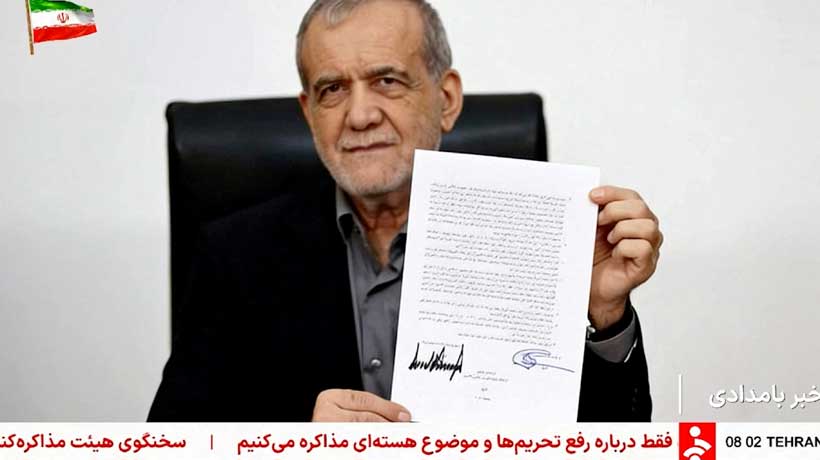
The 14-point Islamabad Memorandum of Understanding between the United States and Iran deserves cautious support, not celebration. Its most important promise is immediate and permanent cessation of military operations on all fronts, including Lebanon. That is a serious achievement if it holds. The reported US-Iran text also commits both sides to avoid threats or use of force and to respect sovereignty. But wars do not end because officials announce elegant clauses. They end when armies, proxies, navies, banks, inspectors and political leaders behave differently the next morning.
The reported Versailles signing, with President Macron nearby, gave the accord theatrical weight. The reported confirmation by Iran’s Foreign Ministry gave it visibility in Tehran. Yet the title “Islamabad” may be the most revealing symbol. It suggests that diplomacy around Iran is no longer owned by Washington and Europe alone. Pakistan, Qatar, Oman and Gulf states now matter. That is healthy. But symbolism cannot replace sequencing. A memorandum is useful only if it becomes a disciplined path toward a final settlement.
Hormuz is the pressure point
The Strait of Hormuz is the economic heart of this agreement. The International Energy Agency describes it as one of the world’s critical oil chokepoints, so restoring commercial shipping is a global necessity. The MOU’s promise of safe, toll-free passage for 60 days can calm markets, but it cannot settle maritime governance. Iran’s future talks with the Sultanate of Oman and other littoral states must produce rules on fees, inspections, de-mining, escorts and disputes. Without that, Hormuz remains a bargaining chip, not a secure passage.
Stay ahead of the geopolitical week.
MD Briefing delivers expert analysis across five global fronts — the Indo-Pacific, energy, geoeconomics, European security, and the Middle East — every Monday morning. Free.
The most controversial part is economic. Washington would provide waivers for Iranian oil exports, make frozen assets usable, avoid new sanctions during talks and support a reconstruction plan of at least $300 billion. This could be pragmatic statecraft or a strategic mistake. The OFAC Iran sanctions system affects banks, insurers, traders and shippers. Recent State Department sanctions show how aggressively Iranian petroleum networks had been targeted. Relief must therefore be sequenced with measurable action. If Tehran receives benefits before verification, critics will call it capitulation. If Washington delays relief after compliance, Tehran will call it bad faith.
Nuclear language cannot stay vague
Iran’s renewed pledge not to build nuclear weapons is necessary, but not enough. The decisive issue is the future of enriched material, enrichment activity and inspection access. Any final deal must put IAEA Iran monitoring at the centre. The IAEA’s NPT safeguards framework and the Non-Proliferation Treaty offer the right balance: Iran has civilian nuclear rights, but the world has a right to credible assurance that military pathways are closed. Down-blending enriched material under inspection may be a start. It cannot be the finish line.
Including Lebanon in the ceasefire is wise, but risky. The promise to protect sovereignty echoes the UN Charter. But Lebanon has long suffered from the gap between formal sovereignty and armed reality. If Hezbollah, Israel, Iran or any other actor treats Lebanon as a loophole, the ceasefire will collapse at its weakest seam. The final text must clarify what “all fronts” means, how non-state armed groups are restrained, and what happens if a party violates the ceasefire through an ally.
The final agreement must be public and enforceable
A binding UN Security Council resolution is essential, but it should not rubber-stamp ambiguity. The history of Resolution 2231, wider UN sanctions practice, IAEA reports to the Security Council, and the UN record on Iranian ballistic missiles shows why detail matters. The final agreement must define deadlines, verification triggers, consequences for breach and the exact sanctions schedule. The Guardian’s analysis and Iran International’s reporting underline the same reality: the MOU buys time, but time can be wasted.
The Islamabad MOU is not peace. It is a pause with possibilities. It should be supported because war has already proved disastrous, but it must be judged by performance: ceasefire maintained, Hormuz reopened, sanctions relief sequenced, nuclear material verified, Lebanon protected and the final deal anchored in law. Anything less would turn a promising memorandum into another diplomatic mirage.
