


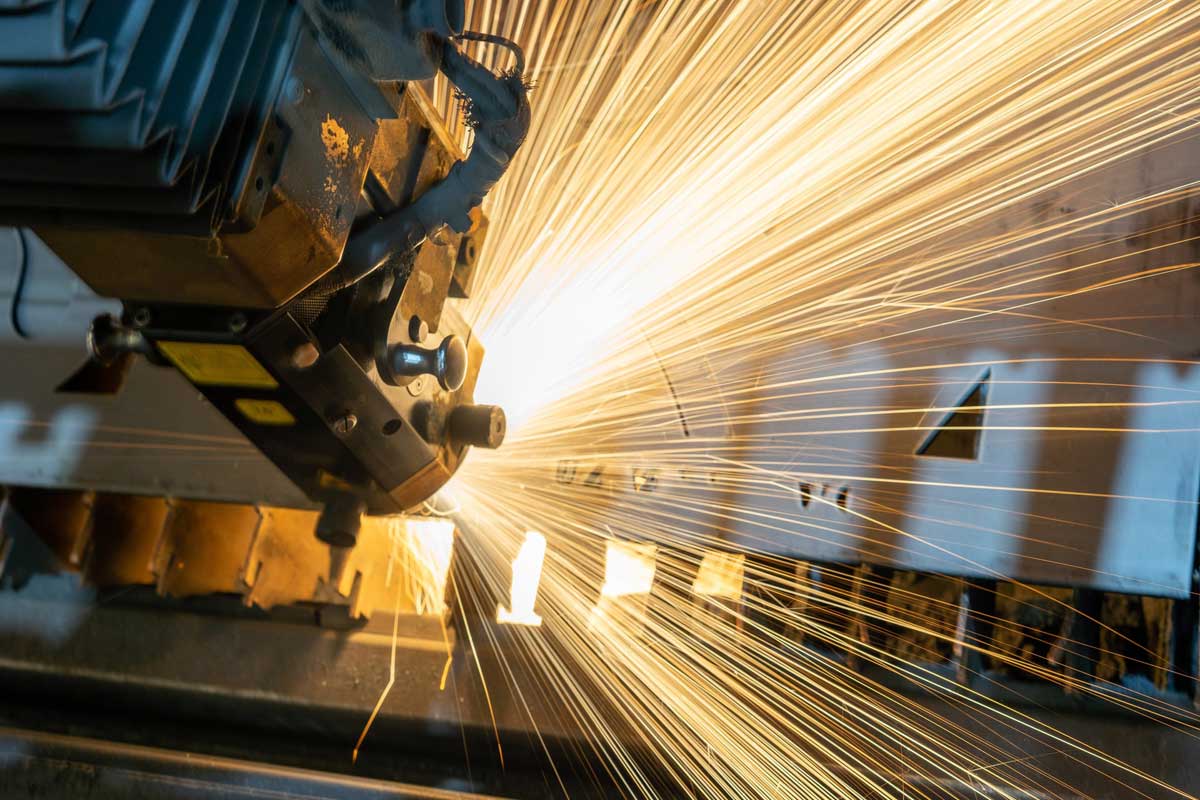
The dramatic transformation of the global flange industry over the past two decades serves as a masterclass in the profound structural power of China’s localized cluster economy. Around twenty years ago, a delegation of German engineering experts traveled to Dingxiang County, a rural area in North China’s Shanxi Province, for field research. What they witnessed was a rustic scene where coal ash blanketed the ground and bare-chested laborers toiled over rudimentary equipment. Their conclusion was immediate and dismissive. At that time, their skepticism was historically justified because for nearly half a century, the global high-end flange market had been locked in a tight duopoly heavily monopolized by established German and Japanese enterprises. Chinese companies, lacking advanced technology and precision machinery, were forced to struggle for survival in the low-margin, low-end market.
No one operating in that era could have anticipated that this group of traditional northern Shanxi blacksmiths would completely shatter the overseas technological blockade and pricing hegemony. By leaning heavily into collaborative synergy and geographic concentration, they completely rewrote the rules of global industrial manufacturing. By the end of 2025, the total output value of Dingxiang’s flange forging industry had surged past 20 billion yuan, with the region’s production accounting for a staggering 48% of the national total. More impressively, it now commands over 60% of China’s wind power tower flanges and comprises more than 30% of all forged steel flange exports nationwide. Dingxiang’s products are exported to more than 70 countries and regions, securing long-term, designated procurement contracts from international industrial titans such as Siemens, General Electric, and Vestas.
The underlying catalyst for this massive counterattack against entrenched multinational enterprises does not lie in an isolated technological breakthrough by a single company. Instead, the true secret is the comprehensive industrial cluster ecosystem nurtured by China’s localized economy, which is a unique operational model that German and Japanese enterprises simply cannot replicate. While Western and Japanese flange manufacturers still possess first-mover technological advantages and legacy precision equipment, their broader industrial layouts are geographically fragmented. Their upstream raw material providers and downstream processing units operate in disconnected silos where cutthroat corporate competition far outweighs collaborative synergy. This fragmentation directly inflates comprehensive operational costs in areas like specialized equipment maintenance, complex material logistics, and raw material procurement, while dragging down order response efficiencies and struggling to generate any meaningful industrial synergy. In stark contrast, Dingxiang County compresses a massive industrial footprint into a total area of just 865 square kilometers, cultivating the world’s densest and most comprehensive flange-forging industrial cluster. It features an ultimate agglomeration pattern defined by zero geographical distance, total supporting coverage, and a highly refined division of labor. This layout yields a profound scale effect where the entire county practically operates as a single, coordinated mega-factory, which infinitely reduces transaction costs between individual enterprises while maximizing overall production velocity.
Today, this paradigm of one town, one product, and one county, one industry manifests in highly successful hubs across China, creating an unmovable manufacturing paradigm that defies any threat of international offshoring. For instance, Shaodong in Hunan controls 70% of the world’s disposable plastic lighters, maintaining absolute dominance over production costs to keep retail prices at a steady, profitable single yuan for over a decade. In Ningjin County, Shandong manufactures more than 70% of the high-end weight training equipment and treadmills used in commercial gyms across China, exporting to over 100 countries as a premier hardcore steel town. Meanwhile, Shanxiahu Town in Zhejiang supplies 73% of the world’s freshwater pearls, generating astronomical daily transaction volumes driven by modern livestreaming commerce.
Stay ahead of the geopolitical week.
MD Briefing delivers expert analysis across five global fronts — the Indo-Pacific, energy, geoeconomics, European security, and the Middle East — every Monday morning. Free.
The supreme operational advantage of this economic model is driven by three distinct structural pillars that work in perfect harmony. First, the industry is highly clustered and characterized by a mature, well-structured corporate ecosystem. In Dingxiang, the county has seamlessly integrated 319 core forging enterprises alongside more than a thousand supporting micro- and small businesses, including national-level hidden champions, specialized firms, high-tech enterprises, and national-level green factories. Backed by over 15,000 sets of advanced production and testing equipment, the region’s annual production capacity exceeds 1.9 million tons across 2,000 product categories, creating a highly resilient industrial hierarchy driven by market leaders, anchored by mid-sized firms, and padded by nimble micro-businesses. Second, spatial and temporal costs have been compressed to the absolute physical limit, resulting in world-leading response efficiency. Within the Dingxiang cluster, the average distance between manufacturing enterprises is under three kilometers, creating a comprehensive 15-minute regional supply ecosystem. This proximity enables a rapid-response cycle where heavy equipment is repaired on-site within 18 minutes, specialty steel is allocated from nearby warehouses within two hours, precision machining is coordinated within five minutes, and finished products are processed through neighboring industrial parks for export within 48 hours, eliminating assembly line downtime entirely. Third, the massive scale effect dilutes costs to construct an absolute price advantage. High-density industrial clustering gives rise to large-scale joint procurement, mass production, and specialized regional logistics systems. This allows local enterprises to reduce their overall costs by 30% to 50% compared to Western and Asian competitors, with data indicating that the overall production cost of Dingxiang’s flange industry runs 42% lower than that of similar German and Japanese enterprises.
The strength of China’s “cluster economy” lies in its dense, full-spectrum industrial clusters. By combining specialized labor, shared resources, and collective risk management, it sharply cuts costs and production timelines, giving Chinese manufacturers a decisive advantage over overseas rivals in efficiency, profitability, and high-end production capacity.
By pooling research and development expenses, sharing heavy equipment, co-managing logistics, and collectively expanding markets, thousands of small and medium enterprises successfully overcome traditional vulnerabilities like limited scale, scarce capital, and weak risk resilience. This model seamlessly consolidates minor factories into a major industrial force, providing a definitive roadmap for localized manufacturing to ascend to the highest echelons of the global value chain.
