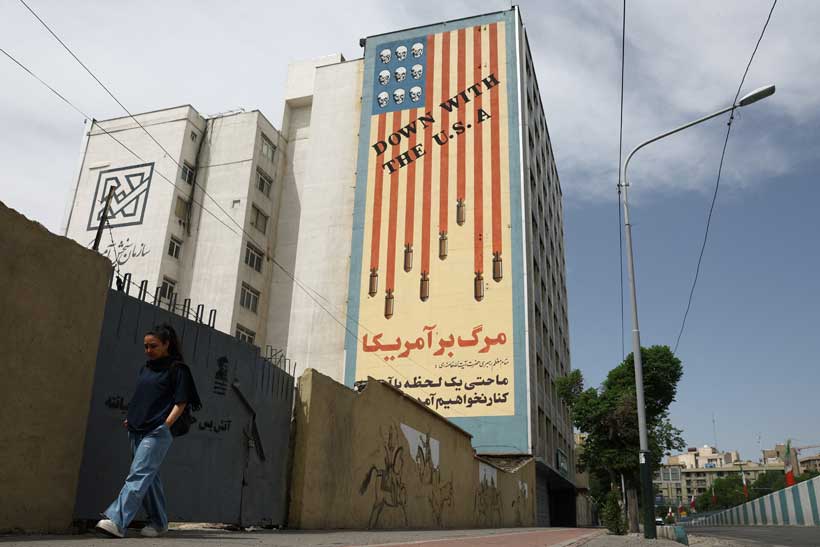
At 1:15 a.m. on February 28, 2026, the United States crossed a threshold it had circled for over four decades. Operation Epic Fury was launched by U.S. Central Command, striking over 1,700 targets in Iran with B-2 stealth bombers, F-22s, F-35s, guided-missile destroyers firing Tomahawk cruise missiles, and a full array of electronic warfare platforms. Within a few hours, Supreme Leader Ali Khamenei was dead, along with several senior aides, and dozens of military and security installations had been destroyed. It was the most consequential American military action since Iraq launched, notably, without a congressional declaration of war and without a UN mandate.
The White House called Operation Epic Fury a success. The stated objectives were met. But the question that will define this war’s legacy is not whether the United States won the opening battle. It is whether that victory translated into the broader strategic leadership Washington claimed to be defending. On that question, the evidence from the battlefield, the bond markets, and Capitol Hill tells a far more complicated story.
The Military Ledger: Dominance with an Asterisk
The raw scale of the operation is undeniable. By March 10, the U.S. had struck more than 5,000 targets across Iran, with 50 Iranian vessels damaged or destroyed. The White House declared Iran’s command and control structures have been shattered by more than 2000 strikes, leadership losses triggering desertions and paralysis, and its ballistic missile arsenal and production capacity razed. By any traditional measure of firepower, the message was sent: the United States can reach anyone, anywhere, with a density of strikes that no adversary can absorb.
Stay ahead of the geopolitical week.
MD Briefing delivers expert analysis across five global fronts — the Indo-Pacific, energy, geoeconomics, European security, and the Middle East — every Monday morning. Free.
But military dominance and strategic effectiveness are not the same thing. The U.S. achieved tactical damage but could not reach underground infrastructure, eliminate the Strait of Hormuz threat, or produce the political outcome it sought. Iran did not win militarily but it didn’t need to. That second war caused more durable damage. Centre for Strategic and International Studies (CSIS) found that the 39-day campaign against Iran significantly drew down America’s stockpiles of Tomahawk Land Attack Missiles and key interceptor systems, with the United States needing at least three years to restore inventories to pre-war levels. CSIS concluded that while the U.S. has enough munitions for any plausible scenario in the Iran war, the depleted inventories have created a window of vulnerability for a potential Western Pacific conflict, and the time needed to rebuild those inventories has become a major strategic concern.
The Economic Blowback and the Geopolitics Winners
No Pentagon planning document appears to have fully modeled what would happen when Iran closed the Strait of Hormuz. The answer arrived within days. The International Energy Agency characterized the disruption as the “largest supply disruption in the history of the global oil market,” with Brent Crude surging past USD 120 per barrel. The World Trade Organization warned that due to the ongoing West Asia conflict the global trade growth may slow down by 1.9 percent this year.
At home, the cost was immediate and political. A Reuters/Ipsos poll from March 23 put Trump’s approval at 36 percent, his lowest since returning to office, with only 29 percent of Americans approving of his economic stewardship, lower than any figure recorded under his predecessor. A president who made economic competence his political identity had watched gasoline prices spike as a direct consequence of his own foreign policy.
The deeper damage was geopolitical, and the beneficiaries were not American allies. CSIS assessed that Russia could accrue between USD 45 billion and USD 151 billion in additional budget revenues in 2026 from the energy price surge, money that directly underwrites Moscow’s war machine in Ukraine. The conflict is also accelerating the consolidation of a loosely aligned Russia-Iran-China axis, deepening operational linkages across theaters, while expanded U.S. engagement in the Middle East risks perceptions of strategic overextension that could weaken deterrence credibility in Europe.
Diplomatic Fallout and the Fractures at Home
The diplomatic picture is where the gap between battlefield success and strategic leadership is most exposed. The Council on Foreign Relations noted that since his April Fool’s Day speech, President Trump went back and forth between threatening to end Iranian civilization, upholding a fragile ceasefire, and blockading the Strait of Hormuz. Allies and adversaries were left guessing what American red lines actually meant, which is precisely the opposite of what effective deterrence requires.
Mediation of peace talks by Pakistan, rather than NATO allies, signal in itself about how the architecture of American diplomatic authority has shifted. At home, the constitutional fissure is equally significant. The administration never sought congressional approval for Operation Epic Fury. Under the War Powers Act, the president is prohibited from keeping U.S. troops in active hostilities beyond 60 days without that approval. On June 3, a bipartisan House majority voted 215 to 208 to invoke the War Powers Act and direct an end to the conflict, with four Republicans joining Democrats, the first time the chamber moved to force a halt to an unauthorized military campaign of this scale. A poll found 59 percent of Americans saying the U.S. made the wrong decision using military force in Iran, while another survey found 42 percent of voters believing the war would make the world less safe.
Conclusion: What this War Reveals About American Power
The Iran war does not mark the end of American power. No adversary looking at Iran’s shattered command infrastructure, its dead Supreme Leader, and its razed missile depots will conclude the United States has become a paper tiger. The capacity for military force remains, by any measure, unmatched on earth.
But this war has revealed that capacity and strategy are not the same thing and that the gap between them is where the real contest for global leadership is now being fought.. Iran lost the military battle and still managed to hold the global economy hostage through a single geographic chokepoint. American power in 2026 is more kinetic and less convertible than at any point in recent memory. More willing to use force; less able to translate that force into durable outcomes. The first major war of Trump’s second presidency produced a ceasefire, not a settlement, and left behind a munitions stockpile that will take years to rebuild, a global economy shaken by the largest oil disruption in history, and a set of unanswered questions about what U.S. global leadership actually means that no declaration of victory from the West Wing has yet managed to answer.