


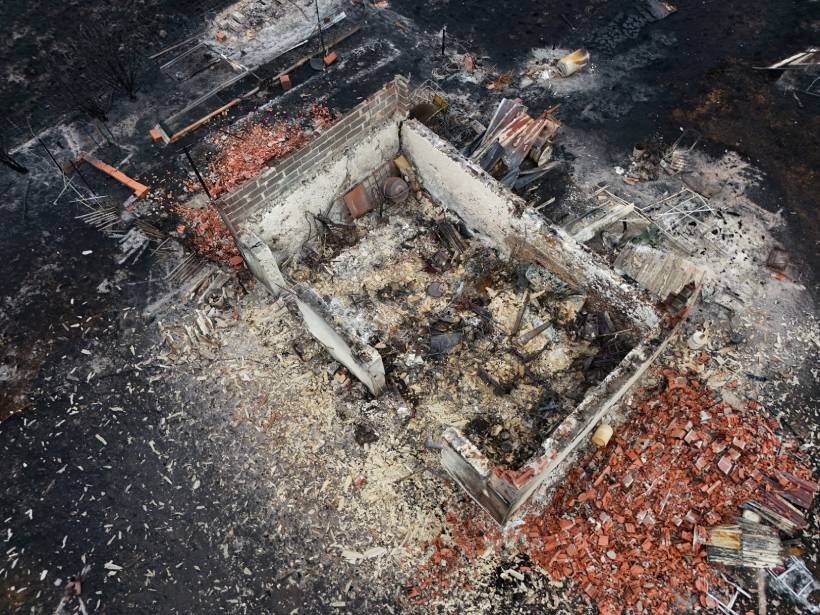
For anyone in Europe who still viewed climate change as a problem for future generations, this summer’s extreme heat has offered a stark reality check. Record temperatures, droughts and wildfires are already imposing significant economic costs across the continent, disrupting power generation, transport, agriculture and public health.
Scientists say global warming is intensifying these extreme weather events, while economists warn that the economic damage will extend well beyond the immediate disruption. The combined cost could already run into hundreds of billions of euros, with losses expected to increase as extreme weather becomes more frequent.
Europe is warming faster than any other continent, and the consequences are increasingly reaching national budgets, consumer prices, tourism and infrastructure.
“What makes 2026 particularly worrying from an economic perspective is that there are multiple episodes of extreme events,” said Sehrish Usman, an economist at the University of Mannheim.
Stay ahead of the geopolitical week.
MD Briefing delivers expert analysis across five global fronts — the Indo-Pacific, energy, geoeconomics, European security, and the Middle East — every Monday morning. Free.
Heatwaves, droughts and wildfires are occurring simultaneously in some regions, compounding their economic impact.
Record Heat Disrupts Europe’s Economy
Temperatures reached record levels across Europe in June and July, creating disruptions across several major economic sectors.
Low water levels have severely restricted traffic on the Rhine and Danube, two of Europe’s most important commercial waterways. At the same time, more than half a dozen nuclear reactors have reduced or halted production because rivers have become too warm or water levels have fallen too low for effective cooling.
Agriculture has also suffered. Estimates for several crops have been reduced, with maize and sunflower harvests already facing losses of around 6% to 7% in July.
Extreme heat is also reducing worker productivity and contributing to tens of thousands of deaths. Germany alone has reported more than 10,000 heat related deaths.
Governments are facing additional costs from firefighting, emergency measures and efforts to keep electricity supplies stable.
ING estimates that disruptions to Rhine shipping could reduce Germany’s GDP by 0.3 percentage points this year. Hungary’s MBH Bank estimates that every week its largest nuclear power plant remains offline could reduce GDP by another 0.1 percentage point.
Allianz estimates that the two week heatwave in June alone could reduce Europe’s GDP by 0.3 percentage points. It also estimates that climate change could reduce growth by 5% to 7% by 2030 in particularly exposed economies such as Spain, France and Italy.
“The total bill for this year will be much larger,” said Hazem Krichene, an economist at Allianz, noting that the estimate does not include the full impact of wildfires, droughts, floods or a potential El Niño.
With the euro zone expected to grow by only around 1% this year, even a relatively small reduction represents a significant economic blow.
Climate Damage Continues Long After Heatwaves
The immediate economic losses may only represent the beginning.
Research suggests that the economic consequences of extreme weather can intensify for years after an event has occurred. Damaged infrastructure, weaker investment, reduced productivity and lower agricultural output can continue affecting economies long after temperatures return to normal.
“You’d expect the damage to be largest in the year an extreme event happens and then to fade but we find the opposite,” Usman said. “The economic impact grows over the following years because the extreme weather set off a chain of slow economic consequences.”
That creates a difficult challenge for European governments, which must deal with immediate emergencies while simultaneously investing in infrastructure capable of withstanding future climate shocks.
Southern Europe Faces Tourism Losses
Southern European economies could be among the hardest hit.
Spain, Italy and Greece depend heavily on summer tourism, but increasingly extreme temperatures could force tourists to reconsider when and where they travel.
“Can you see tourists marching through southern Italy or Spain in 45 degrees? I can’t. So, I think the nature of tourism will change,” said ING economist Carsten Brzeski.
Tourists could increasingly shift their holidays toward northern Europe or visit southern countries during cooler months. That could reduce the concentration of tourism during the traditional summer season and threaten businesses dependent on peak season demand.
The shift could also deepen economic disparities between European regions as northern countries become more attractive to tourists escaping extreme heat.
Food Prices Add to Inflation Pressure
Climate change is also creating a problem for Europe’s inflation outlook.
Extreme heat and drought can reduce agricultural production, pushing food prices higher. Research by Maximilian Kotz of the Barcelona Supercomputing Center found that the 2022 heatwave increased euro zone inflation by around 0.34 percentage points through higher food prices, with southern Europe experiencing a particularly strong impact.
The problem could become more difficult for the European Central Bank as extreme weather creates inflationary pressure that monetary policy cannot directly solve.
Disruptions to river transport are adding another layer of pressure. Lower water levels make it more difficult to move fuel and other commodities, increasing transportation costs and contributing to differences in prices between European regions.
Governments Face Growing Budget Pressure
The economic consequences are increasingly becoming a fiscal problem.
Allianz estimates that lost economic output could reduce annual tax revenues by around 1.8% in France and 1.3% in Italy and Spain. Lower business profits could further reduce investment, amplifying the economic damage.
At the same time, governments must spend more on emergency responses and climate adaptation, including strengthening electricity systems, transport networks and other infrastructure.
“A key concern is that countries still rely far too much on ad hoc emergency response, which is both expensive and also often quite inefficient,” said Heather Grabbe, a senior fellow at the Bruegel think tank.
The problem is particularly difficult for countries already carrying high levels of public debt.
France and Italy face significant fiscal constraints while governments across Europe are simultaneously being pressured to increase defence spending and accelerate the transition to clean energy.
Climate Change Could Increase Pressure on the ECB
The growing financial burden could eventually create pressure on the European Central Bank.
Governments may need to borrow more to finance emergency responses and long term adaptation. Higher borrowing could place upward pressure on government bond yields, particularly in heavily indebted countries.
ING economist Brzeski said that with governments facing multiple competing spending demands, the trend could be toward higher public debt and eventually greater pressure on the ECB to intervene if bond markets experience a sharp selloff.
This creates a difficult policy dilemma. Europe must invest more to protect its economies from climate change while also maintaining fiscal stability and controlling inflation.
Analysis
Europe’s extreme summer weather is increasingly demonstrating that climate change is not simply an environmental challenge but an economic one. The damage is spreading across interconnected sectors, meaning that a drought can affect agriculture, a heatwave can disrupt electricity generation, and low river levels can simultaneously disrupt trade and raise transportation costs.
The most important concern is that these shocks are no longer occurring as isolated events. When heatwaves, droughts and wildfires hit the same regions at the same time, their economic consequences multiply.
For European governments, the challenge is therefore shifting from emergency response to long term resilience. Repeatedly paying for disaster relief, lost production and damaged infrastructure will become increasingly expensive if governments fail to invest in adaptation.
The burden will also be uneven. Southern Europe faces greater risks to agriculture and tourism, while highly indebted countries have less fiscal space to absorb repeated shocks. This could widen economic inequalities within the European Union.
Ultimately, Europe’s climate challenge is becoming a question of economic security. The cost of adapting to a warmer continent may be substantial, but the evidence from this summer suggests that the cost of repeatedly failing to prepare could be considerably higher.
With information from Reuters.
