TODAY’S NUMBERS
$26.3bn (EM portfolio outflows, September) · 5.29% (US 10-year yield peak, 29 September) · 13% (Asia’s share of Mubadala’s portfolio, up from 10%). Fund money is leaving emerging Asia for US yields as a Gulf state fund leans in. Who fills the gap is today’s story.
The hook
Two numbers landed within hours on Wednesday. The Institute of International Finance reported that foreign investors pulled $26.3bn from emerging-market stocks and bonds in September, the first monthly outflow since June. The trigger was the Federal Reserve under Kevin Warsh, which on 16 September raised rates for the first time since 2023, to 3.75–4.00%. The same day in Singapore, Mubadala’s chief financial officer, Carlos Obeid, told the Milken Institute Asia Summit that Abu Dhabi’s fund will keep deploying about $39bn a year through every cycle — and wants more of it in China, South Korea, India and Japan.
Stay ahead of the geopolitical week.
MD Briefing delivers expert analysis across five global fronts — the Indo-Pacific, energy, geoeconomics, European security, and the Middle East — every Monday morning. Free.
The mechanism
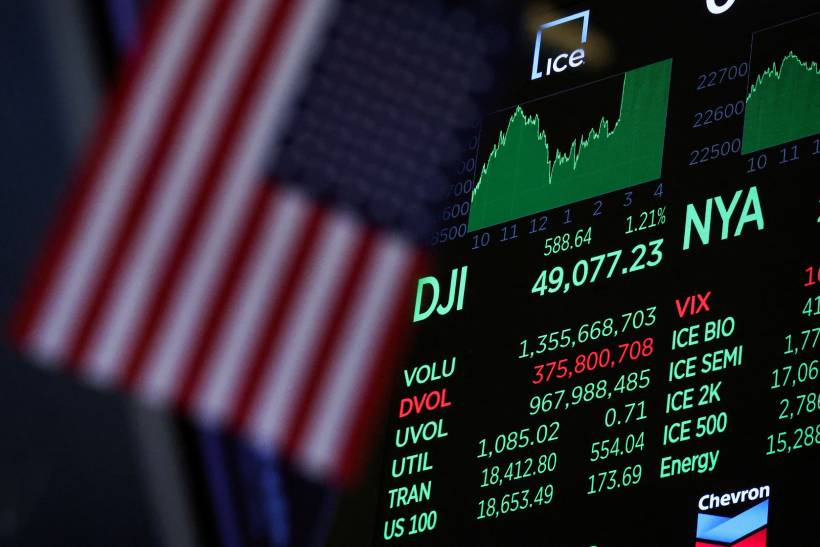
The hike ran a familiar playbook: higher US yields raise the hurdle every other asset must clear. The 10-year Treasury touched 5.29% on 29 September, its highest since 2007, and equity money left first. EM equity outflows reached $19.2bn in September, led by South Korea, where foreigners sold a net ₩21.5tn of KOSPI shares, their fifth straight month of selling. Samsung Electronics and SK hynix took more than three-quarters of it, as investors banked gains after a 62% rally and a cooling in the AI trade.
India is more exposed. Foreign portfolio investors have pulled nearly $30bn from Indian equities this year, already past 2025’s record, and the rupee is down almost 7% against the dollar. Expensive oil, with exports through Hormuz disrupted, hits India twice: through the import bill and through inflation.
The winners are the US Treasury, which now funds its deficits at the top of a global funnel; the dollar; and anyone holding permanent capital. Sovereign funds do not face quarterly redemptions, so falling prices are an entry point, not a margin call. Mubadala has already deployed $26.2bn this year, more than any other Gulf state investor, according to Global SWF. One outlier: IIF figures imply China’s equity market has drawn net foreign inflows this year while the rest of the emerging world has lost $151.5bn. The losers are Korean chipmakers’ foreign shareholder base, the rupee and the Reserve Bank of India’s reserves, and EM borrowers rolling over dollar debt as spreads widen.
Why it matters
Portfolio money has no foreign policy; sovereign money does. When index funds leave, the capital that replaces them often comes with a state attached, and Obeid was explicit that Mubadala’s strategy tracks government goals, including integrating the UAE into the global economy. Every turn of Fed tightening therefore shifts bargaining power in Asian capital markets away from anonymous fund managers and toward a handful of state investors who choose sectors — energy transition, supply chains, technology — and choose partners. For New Delhi, which already counts Gulf money in Reliance Jio, the trade is cheaper, stickier capital in exchange for closer strategic alignment with Abu Dhabi.
But this is not a Gulf pivot to Asia. Global SWF data show 45% of Middle East sovereign investment this year went to the United States and only 10% to China and Hong Kong. Gulf capital is hedging, not leaving Washington, its main security partner at a moment when war has cut oil exports through Hormuz. The cushion is also thinner than the headlines suggest: Global SWF expects Gulf deployment to finish 2026 below last year, and flags that Kuwait’s and Qatar’s funds may be called on to plug budgets. The same war that inflates India’s oil bill is squeezing the Gulf’s chequebook. Asia faces a Fed-made vacuum with a smaller backstop than advertised, and the clearest winner is Washington, which can tighten policy and still draw capital from both directions.
Watch for
The Fed’s 27–28 October meeting. At the start of the month, markets put roughly even odds on a second hike after New York Fed President John Williams signalled no rush. A hike would extend Korean and Indian outflows into the fourth quarter and test whether Gulf funds actually buy the dip in Asia. If Mubadala or its peers announce large Indian or Korean deals before year-end, today’s read holds; if the cheques keep going to the US, it does not.