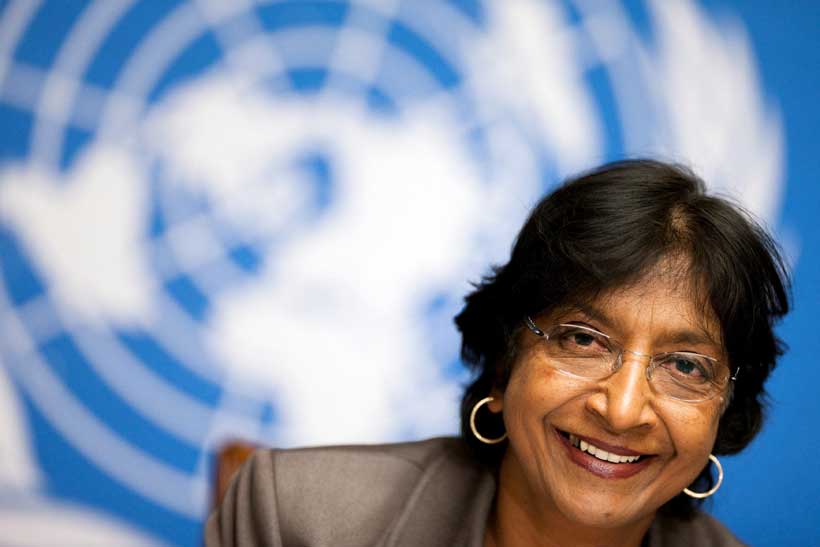
The Trump administration has imposed sanctions on the International Criminal Court (ICC), coinciding with the announcement that former ICC judge Navi Pillay won the Nobel Peace Prize. This move puts the U.S. on a path of conflict with its European allies, as the administration has been critical of the court for some time. Secretary of State Marco Rubio stated that President Trump will not allow the ICC to prosecute Americans and outlined plans to restrict the court’s financial resources and operations.
U.S. anger toward the ICC stems from its issuance of arrest warrants for Israeli officials, including Prime Minister Benjamin Netanyahu, and a prior investigation into U.S. military actions in Afghanistan, which has since concluded. The ICC, established in 2002 to handle war crimes and crimes against humanity, includes 125 member states, with all EU countries and nearly all NATO members participating, except for the U.S. and Turkey.
Navi Pillay’s Nobel Prize was described by the committee as a reminder of the importance of international law, especially in the face of political attacks on judicial institutions. Rubio mentioned that the sanctions were designed to give the ICC and its member states a chance to address U.S. concerns, although he did not provide specific details. A senior official indicated that the U.S. Treasury plans to issue licenses to protect American interests amid the sanctions.
U.S. sanctions generally prohibit American companies from engaging with targeted organizations, leading to banks shutting accounts and insurers ending coverage. Preparations for potential sanctions have been ongoing at the ICC, with officials shifting to alternative software and making banking adjustments. The ICC’s registrar has called on the EU to implement mechanisms to protect its member states from the implications of these sanctions.
Rubio also indicated that if the ICC does not address U.S. concerns, the U.S. may take further actions, expecting its allies to help restrict the court’s activities.
With information from Reuters