


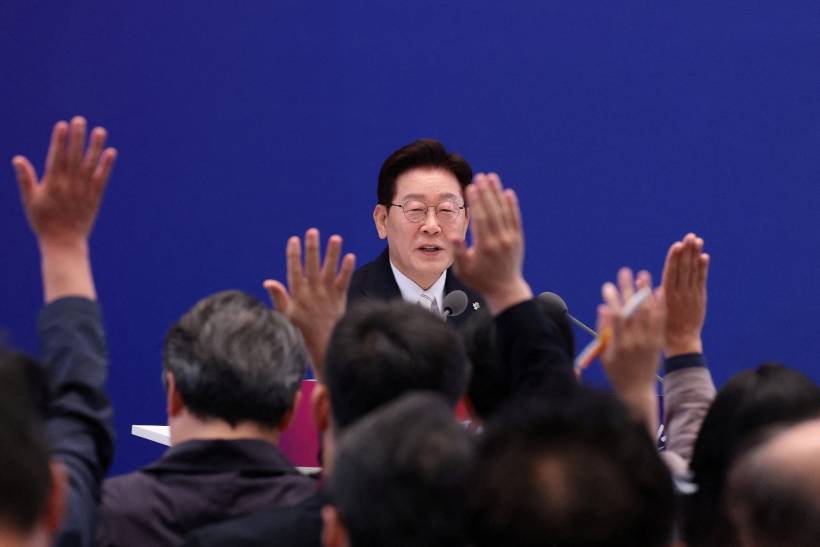
South Korea has announced plans to launch a large-scale investment initiative as it benefits from a surge in tax revenues driven by the global artificial intelligence (AI) boom. President Lee Jae Myung said the government will soon unveil a major economic transformation project aimed at reshaping the country’s long-term growth strategy.
The announcement comes as major South Korean semiconductor firms, including Samsung Electronics and SK Hynix, report record profits fueled by rising global demand for AI-related memory chips.
The government said increased corporate earnings are significantly boosting tax revenues, with estimates suggesting windfall gains far above earlier projections due to the rapid expansion of the AI sector and related supply chains.
Alongside economic policy, Lee also reiterated South Korea’s ambition to become a global leader in AI integration across industries and reaffirmed plans to strengthen the country’s defence and technological self-reliance.
Stay ahead of the geopolitical week.
MD Briefing delivers expert analysis across five global fronts — the Indo-Pacific, energy, geoeconomics, European security, and the Middle East — every Monday morning. Free.
Why It Matters
The development highlights how the AI boom is reshaping national economic strategies, particularly in technology-intensive economies such as South Korea.
The semiconductor sector has become a central driver of fiscal strength, with chipmakers benefiting from sustained global demand for high-performance memory used in AI data centres, cloud computing, and advanced digital infrastructure.
This shift is not only increasing corporate profitability but also expanding government fiscal space, enabling large-scale public investment initiatives that could redefine industrial policy.
At the same time, the concentration of wealth in the tech sector has sparked domestic debate over distributional inequality, with calls for greater sharing of AI-driven gains across society.
- South Korean Government: Seeking to convert AI-driven revenues into long-term structural economic transformation.
- Samsung Electronics: Major beneficiary of global AI chip demand and a key driver of export and tax revenue growth.
- SK Hynix: Central player in global memory chip supply chains supporting AI infrastructure.
- South Korean Workers and Labour Groups: Engaged in debates over distribution of AI-generated economic gains.
- Global Tech Industry: Dependent on South Korean semiconductor output for AI development.
- Regional Competitors: Monitoring South Korea’s expanding role in AI and semiconductor leadership.
Analysis
The announcement reflects a broader structural shift in which AI-driven semiconductor demand is becoming a primary engine of national fiscal and industrial policy in advanced manufacturing economies. South Korea’s position at the center of global memory chip supply chains has translated directly into increased government revenues and expanded policy flexibility.
However, the reliance on a concentrated high-tech export base also underscores structural vulnerability to cyclical shifts in global AI demand. While current conditions are generating record surpluses, future volatility in semiconductor markets could affect both fiscal planning and investment strategies.
The policy direction suggests a strategic attempt to convert short-term technological gains into long-term economic transformation, positioning AI not only as an industrial sector but as a foundational layer of national development strategy.
With information from Reuters.
