


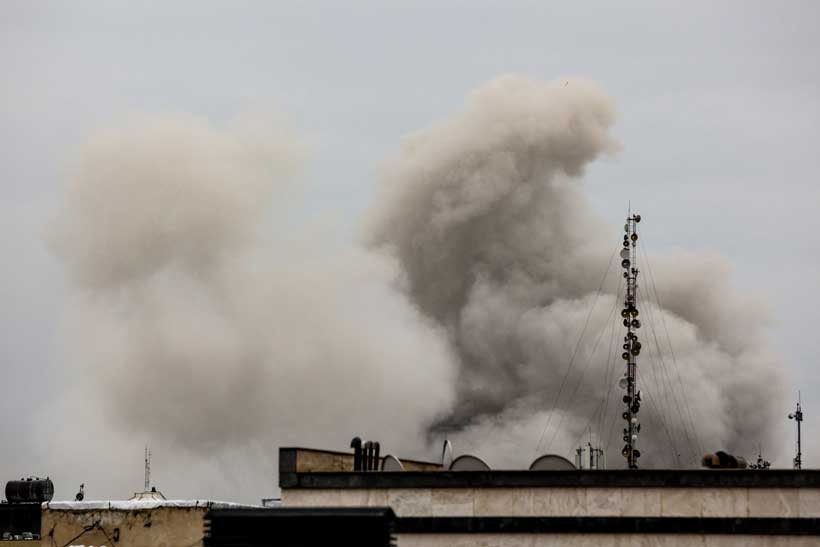
Israel said it carried out strikes on military targets in western and central Iran on Monday, despite reported warnings from U.S. President Donald Trump urging restraint as Washington pushes forward with fragile peace talks with Tehran.
The strikes came shortly after Trump publicly stated that renewed hostilities between Israel and Iran would not derail U.S.-Iran negotiations. He also asserted that Israeli Prime Minister Benjamin Netanyahu “doesn’t call the shots,” reflecting tensions over coordination between Washington and Tel Aviv.
The escalation follows days of intensified regional violence, including Israeli strikes in the Beirut area targeting Hezbollah-linked positions and Iranian missile fire toward Israeli territory. These exchanges have taken place alongside ongoing U.S.-led diplomatic efforts aimed at de-escalating broader regional conflict.
Iran’s Islamic Revolutionary Guard Corps said Israel used air-launched ballistic missiles in the latest attacks, while Israel maintained that its strikes targeted missile infrastructure and military facilities.
Stay ahead of the geopolitical week.
MD Briefing delivers expert analysis across five global fronts — the Indo-Pacific, energy, geoeconomics, European security, and the Middle East — every Monday morning. Free.
Why It Matters
The latest escalation highlights the widening gap between diplomatic negotiations and military realities in the Middle East.
While Washington continues to pursue a negotiated framework with Tehran, repeated Israeli and Iranian strikes suggest that key regional actors are operating on separate security timelines and threat perceptions. This divergence complicates efforts to stabilise the broader conflict environment.
Energy markets reacted sharply, with Brent crude rising more than 3% to above $96 a barrel, reflecting heightened concerns over supply disruptions linked to the Strait of Hormuz and wider regional instability.
The confrontation also underscores the strategic challenge facing the United States as it attempts to balance support for Israel with efforts to secure a diplomatic agreement with Iran. The situation illustrates the limits of external mediation when local actors continue active military engagement.
- United States: Managing negotiations with Iran while attempting to contain regional escalation.
- Israel: Continuing military operations against Iranian-linked targets and regional adversaries.
- Iran: Responding with missile strikes while linking diplomacy to broader regional ceasefire conditions.
- Hezbollah (Lebanon): Active in parallel conflict theatre affecting Israel-Iran dynamics.
- Gulf States: Exposed to spillover risks and energy market volatility.
- Global Energy Markets: Sensitive to disruptions in Middle Eastern supply routes.
- Regional Allies and Rivals: Monitoring shifts in deterrence and escalation thresholds.
Analysis
The latest strikes indicate that diplomatic engagement between Washington and Tehran is proceeding alongside an active and escalating military confrontation involving multiple regional actors. This parallel track increases the risk that tactical battlefield decisions could override political negotiations.
Israel’s continued operations suggest a prioritisation of immediate security objectives over broader diplomatic sequencing, while Iran’s responses reflect an intent to maintain deterrence and signal resilience under pressure. The resulting cycle of action and retaliation reduces the space for de-escalation.
For the United States, the situation highlights a structural constraint in regional diplomacy: the inability to fully align the strategic priorities of key allies and adversaries within a fast-moving conflict environment. This misalignment is likely to remain a defining feature of the current escalation phase unless a durable framework linking multiple theatres—Israel, Iran, and Lebanon can be established.
With information from Reuters.
