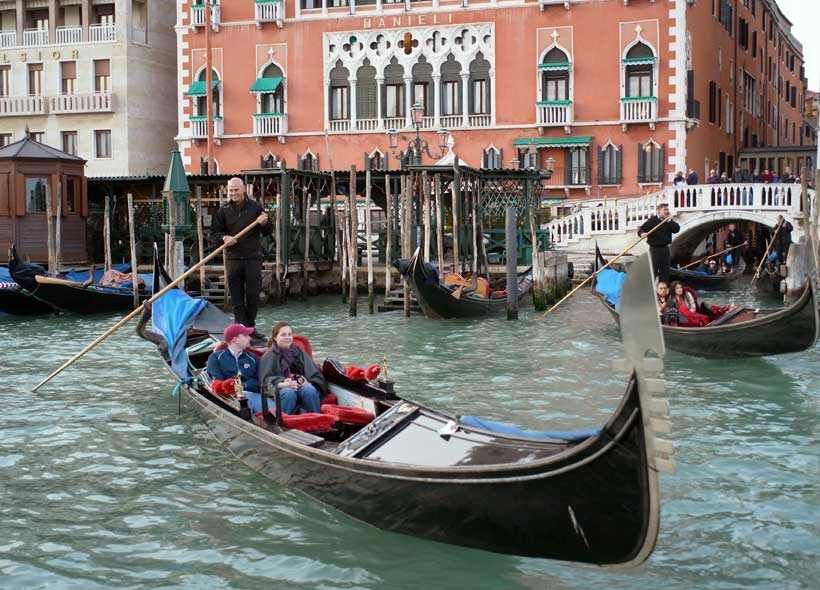
Room 10 at the Danieli has been empty longer than usual. It is the room where, in 1834, George Sand nursed a fever in Venice while her lover Alfred de Musset took up with the doctor summoned to treat her — one of the more operatic literary scandals of the nineteenth century, recorded in Sand’s own letters and retold by biographers ever since. The room, like the rest of the hotel, went dark in January 2023, when the palazzo on Venice’s waterfront closed for what became a three-year, ground-up restoration. On July 30, it reopened — not simply as the Danieli of old, but as Danieli, Venezia, A Four Seasons Hotel, the first Four Seasons property in a city that, remarkably, had never had one.
What Happened
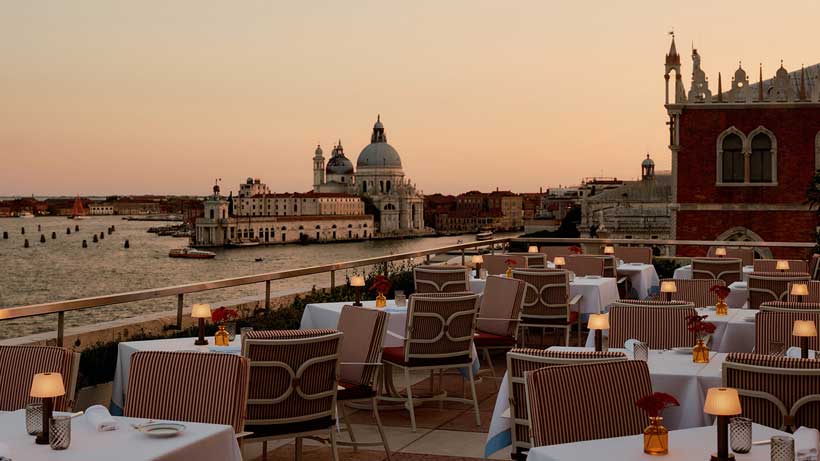
The reopening brings 120 of an eventual 168 rooms and suites back into service, spread across the hotel’s historic wings on Riva degli Schiavoni. The remaining rooms, in the Palazzo Danieli Excelsior wing, are due to open in 2027, and a spa — three treatment rooms, including one for couples, plus a sauna and hammam — is scheduled to follow by the end of this year. The rooftop restaurant, Terrazza Danieli, has reopened under executive chef Adriano Rausa, serving what Four Seasons describes as a contemporary take on Italian cooking with Venetian inflections, finished tableside. Interior designer Pierre-Yves Rochon, who has restored a run of historic European hotels for Four Seasons, led the redesign. “With the reopening of the iconic Danieli, Venezia, we usher in a new chapter,” said Rainer Stampfer, Four Seasons President, in the company’s announcement — the kind of line hotel executives say at every reopening, though in this case the chapter genuinely is a new one: the Danieli has operated under half a dozen owners in two centuries, but never before as a Four Seasons.
Why It Matters
Stay ahead of the geopolitical week.
MD Briefing delivers expert analysis across five global fronts — the Indo-Pacific, energy, geoeconomics, European security, and the Middle East — every Monday morning. Free.
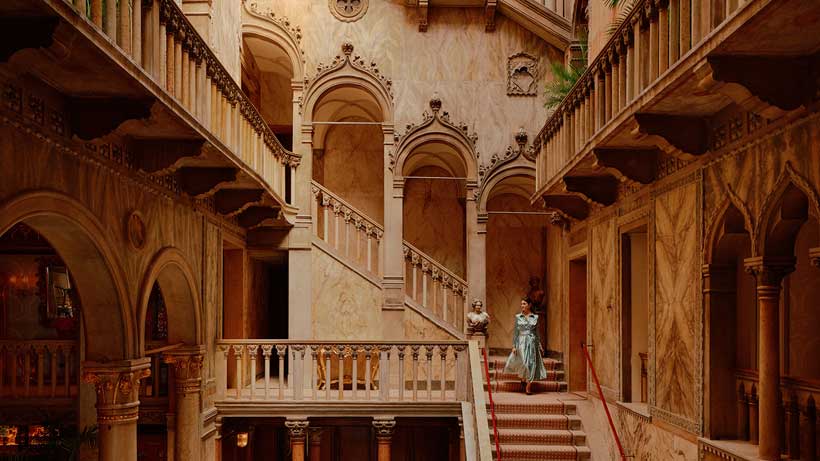
The building itself predates the hotel by four hundred years. It began as Palazzo Dandolo, built at the close of the fourteenth century for one of Venice’s great patrician families, and it stayed a private residence until 1822, when a hotelier from Friuli named Giuseppe Dal Niel rented the first floor and began taking in guests. Two years later he bought the whole building, restored it, and gave it the name — Danieli, an Italianization of his own — that has stuck for two hundred years. Guests over that time have included Dickens, Wagner, Byron, Proust and Balzac; Ruskin worked on The Stones of Venice while staying there; Peggy Guggenheim, Leonard Bernstein and Benjamin Britten were regulars in the twentieth century. The hotel picked up electricity, lifts and central heating in 1895, was absorbed into the Italian hotel group CIGA in 1906, passed to Sheraton and then Starwood through the 1990s, and was bought by Italy’s Statuto Group in 2005, which kept it under the Luxury Collection banner until the 2023 closure. Three years dark is, by that history, an unusually long pause for a hotel that has rarely stopped taking guests since Dal Niel first opened its doors.
The Bigger Trend
That pause matters because of what Venice has been doing at the same time. In 2026 the city expanded its day-visitor entry fee — a charge introduced in 2024 aimed at tourists who arrive for a few hours and leave without spending a night — to cover roughly sixty days a year, up from the handful of trial dates it started with. The logic is straightforward: Venice’s resident population has been shrinking for decades while its day-tripper numbers have kept climbing, and the city has concluded that the visitors straining its infrastructure without contributing much to its economy are the ones passing through, not the ones staying over. Seen against that backdrop, the Danieli’s reopening looks less like an isolated hospitality story and more like the other half of the same policy: as Venice makes it more expensive and more regulated to visit for the day, its hotel sector is investing, slowly and expensively, in giving people reasons to stay the night instead. Four Seasons did not build a new hotel to do this. It spent three years and an undisclosed sum restoring one that already had two hundred years of reasons for people to want to stay in it — which is arguably the more telling signal. Across Europe’s most heritage-heavy cities, the hospitality groups making the biggest bets right now are not building new towers; they are buying and painstakingly restoring the buildings that were already the reason people wanted to visit in the first place.
The Experience
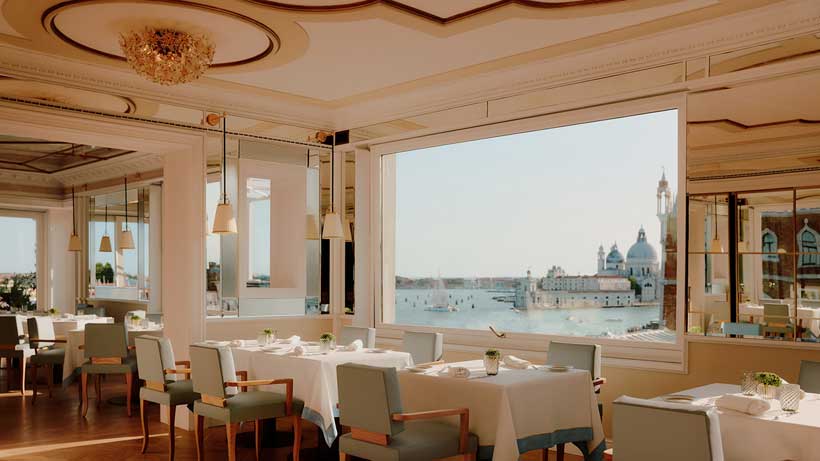
Rochon’s redesign leans into the lagoon rather than away from it. The palette he has used across the reopened rooms and public spaces — celadon green, soft blue, terracotta, ochre and powder pink — reads as a fairly literal translation of Venice’s water, brick and stone into fabric and paint, executed in Murano glass fixtures, terrazzo flooring and textiles from Rubelli, the Venetian fabric house that has been weaving for the city’s palazzi since the nineteenth century. In the lobby, the hand-painted gilded ceiling, laid out in a quatrefoil pattern, has been fully restored rather than reproduced. The rooms themselves mix that historic fabric with quieter modern additions: automated curtains, and televisions built into wall panels designed to read as artwork rather than screens, which is as close as the redesign gets to announcing itself as a twenty-first-century hotel. Upstairs, Terrazza Danieli’s rooftop dining room takes a softer version of the same palette — pastel tones, azure accents, muted gold — for a room whose real draw is the view across the lagoon toward San Giorgio Maggiore, with Rausa’s tableside-finished dishes doing the work of keeping attention on the table rather than only the water beyond it.
Practical Information
The hotel sits on Riva degli Schiavoni, the waterfront promenade a short walk from St Mark’s Square, with the San Zaccaria vaporetto stop directly outside — practically speaking, the easiest way in is by water, whether that’s a water taxi from Marco Polo Airport or the vaporetto from Venice’s Santa Lucia rail station. Four Seasons has not published standard nightly rates for the reopened property, and given both the brand and the building’s history, prospective guests should expect the upper end of Venice’s hotel market rather than assume a figure; reservations are open now through Four Seasons directly. Anyone weighing when to go might consider that the calculus has changed slightly this year: with Venice’s day-visitor fee now running across roughly sixty days annually, the city is nudging some of its lighter, more spontaneous tourist traffic elsewhere, which could make the shoulder months — spring and early autumn, when the hotel’s own restoration is also freshest — a genuinely quieter time to be one of the guests who actually stayed.
The Broader Meaning
What the Danieli’s reopening really demonstrates is how much the definition of luxury in a city like Venice has shifted toward continuity and craft rather than scale. Nobody is claiming this is a new hotel; Four Seasons’ entire pitch rests on the fact that it is an old one, painstakingly kept old-looking in the places that matter and quietly modernized in the places that don’t. That is a different proposition from the mega-resort model that dominates newer luxury destinations, and it is a bet that in a market as saturated with five-star options as Venice, the properties with the deepest histories — not the newest amenities — are what will keep commanding a premium. It is also, more pointedly, a bet on Venice itself: that a city actively trying to make itself less convenient for the day-tripper can still be worth an expensive, unhurried stay for the guest willing to commit to one.
What to Watch Next
The Palazzo Danieli Excelsior wing, with the remaining 48 rooms, is due in 2027, and the spa follows later this year — both will be worth revisiting once complete, since a restoration announced in phases often reveals its real character only when finished. Just as relevant will be whether Venice’s expanded entry-fee regime actually reshapes the balance between day-trippers and overnight guests the city is hoping for, and whether other owners of Venice’s aging grand hotels follow the Danieli’s example — a slow, conservation-minded restoration rather than a faster refresh — or whether the economics of a three-year closure prove too costly for anyone without Four Seasons’ backing to attempt.