The world is witnessing rapid geopolitical changes with the changing relations between the Uand its historical allies in Europe, the growing influence of China, and armed conflict in Ukraine and the Middle East. However, a more overlooked but related change is happening closer to home for Europe.
A complicated relationship
Iceland has cultivated close ties with the rest of Europe since 1994, constituting a member of the European Economic Area (EEA), featuring cooperation across a wide array of issues including security, trade and energy. However, popular interest in joining the European Union (EU) remained lukewarm until 2009, when Iceland applied for EU membership in the wake of the 2008 Financial Crisis. Negotiations proceeded swiftly—albeit with disagreement over fishery and agricultural policy—until 2013, when the Icelandic government unilaterally suspended negotiations, only to be resumed by popular referendum. In 2024, the new Icelandic government promised that a referendum to resume negotiations would be held by 2027. However, the Icelandic government announced in March 2026 that the referendum will be held on August 29 this year. What has caused this pivot?
A shifting geopolitical landscape
Stay ahead of the geopolitical week.
MD Briefing delivers expert analysis across five global fronts — the Indo-Pacific, energy, geoeconomics, European security, and the Middle East — every Monday morning. Free.
As Iceland lacks a national standing army, its national security depends on its membership in the North Atlantic Treaty Organisation (NATO). With US President Trump’s ‘America First’ policy of weaponizing trade, threats of withdrawal from NATO, and claims to annex Greenland dividing the alliance, NATO constitutes an increasingly less reliable security guarantee. Hence, Iceland is seeking alternative security ties, signing a mutual defense partnership with the EU in March 2026, and may be betting its hope on the EU’s renewed interest in the rather obscure mutual defense clause contained in the founding treaty of the EU. Moreover, as Iceland has in recent years suffered from a volatile currency and high inflation, accession to the EU and the eurozone is becoming increasingly attractive to enhance economic stability in an increasingly volatile geopolitical landscape and global economy.
A superpower ice race
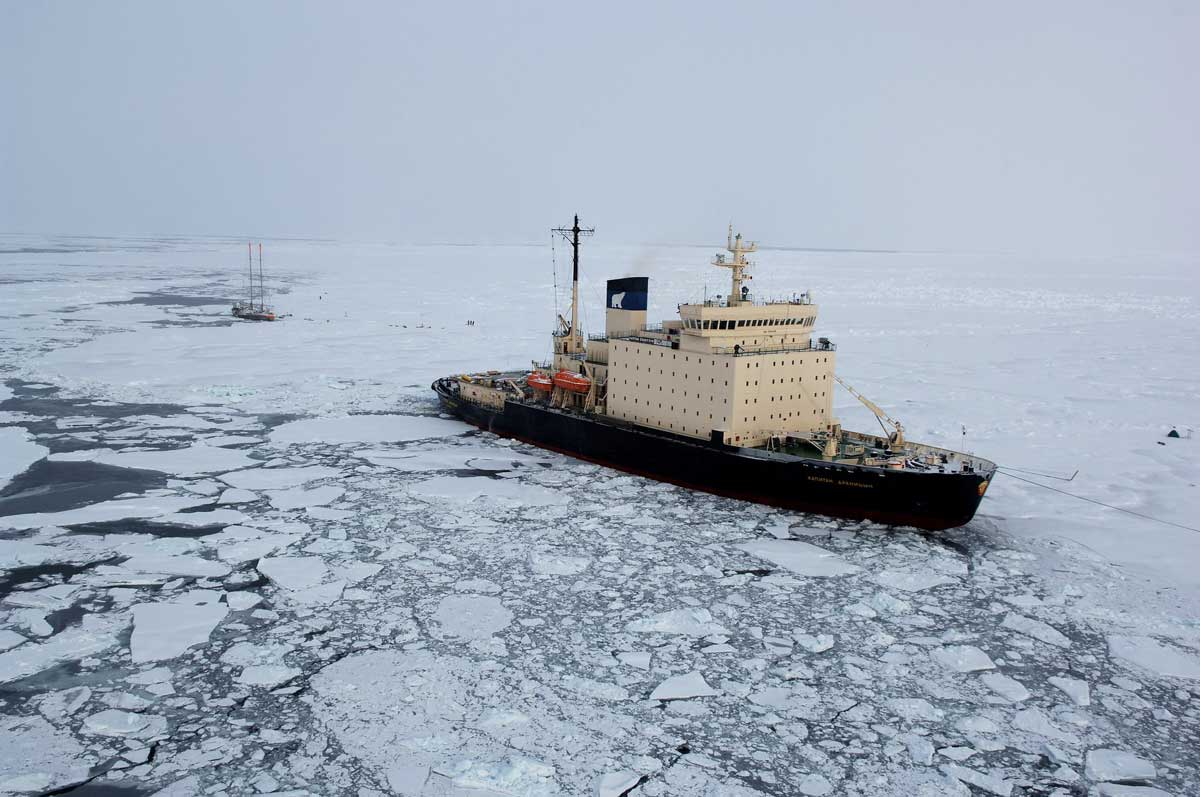
The geopolitical implications of Icelandic accession would not be isolated to Europe. The strategic location of Iceland at the North Atlantic route toward the Arctic could give the EU a larger role in the future in the ongoing scramble between countries like the US, China and Russia for control over Arctic sea routes and natural resources. The scramble for the Arctic dates back to the Cold War, and recommenced in 2007, when Russia planted its flag on the North Pole flag claiming the region for Russia. This was followed in 2009 by the US’ Arctic Region Policy, aiming to secure US strategic interests in the region. President Trump’s energy policy of ‘Drill, baby, drill,’ aiming to expand US hydrocarbon production, may reinforce US involvement in the Arctic. Similarly, in 2018, China declared itself a ‘near-Arctic state’ to justify its territorial claims in the region, and has since matched Russia and the US in expanding Arctic economic and military investments as part of its plan for a ‘Polar Silk Road,’ mirroring its large-scale Belt and Road Initiative infrastructure project across Asia and Africa.
New trade routes
The two main Arctic routes, the North Sea Route and the Northwest Passage are becoming increasingly viable during greater parts of the year as climate change is causing glaciers to melt. This could divert traffic away from trade routes like the Suez Canal, in effect making trade up to 25% more profitable. Similarly, emerging Arctic sea routes improve the connection between East Asia and Europe by allowing trade to circumvent the Panama Canal, significantly reducing transportation Arctic and costs. Furthermore, the current energy crisis resulting from Iran’s closure of the Strait of Hormuz—blocking 20% of global oil and supplies—will likely render alternative Arctic trade routes even more attractive as countries seek to reduce their vulnerability to global supply chains.
The Arctic as the New Oil Region?
This is reinforced by the fact that the Arctic, such as the Yamal Region, offers more cost-efficient extraction of hydrocarbons than oil-producing countries in the Middle East and Arabic Gulf due to lower Arctic temperatures. The Yamal Region has attracted increased interest even before the outbreak of the current war in the Middle East. The EU and Norway have sought to expand the extraction of liquid natural gas in the Arctic since Russia invaded Ukraine in 2022, leading the EU to impose sanctions on Russian gas. In addition, the Arctic region in general and Iceland in particular are gaining increased traction as countries embark on a green transition toward renewable energy to mitigate climate change due to the region’s great potential for wind energy. This is reinforced by the potential for the extraction of critical minerals and rare earths including aluminium, silicon green technologies like electric vehicles and batteries. Thus, an integrated Iceland might prove a key ally in the EU’s energy transition.
All roads do not lead to the EU
Even so, hurdles remain. The disputes that froze negotiations back in 2013 remain, the contentious issue of commercial whaling and the EU’s Common Fisheries Policy, which Iceland’s fisheries-based economy remains skeptical to. Yet, if Icelandic security and sovereignty continues to be jeopardized, economic considerations may have to be sacrificed to the primary concern of safeguarding the continuation of the mere existence of the nation through EU membership.
The birth of a new multilateral order?
This implies that geopolitics is regressing with the US’ unilateralist retreat, from the deep cooperation across a variety of areas that has developed since the end of the Cold War, back to the elementary concern of subsistence and national sovereignty that dominated the embryonic stage of international cooperation under the Concert of Europe after the Napoleonic Wars. Nevertheless, at a time where many are predicting the end of the rule-based international order upheld by US hegemony since the end of World War II, the case of Iceland paints a more nuanced picture, suggesting that multilateralism may not only survive, but find ways to thrive, albeit under different political constellations. Perhaps the EU will assume the mantle where the US drops it.