


There is a question European governments have returned to repeatedly in recent years, and it is one that few seem entirely comfortable answering: how confidently can Europe assume that the United States will remain its ultimate security guarantor across changing political cycles? For a long time the debate lived mostly in Brussels policy papers and in speeches about “strategic autonomy.” Increasingly, though, it surfaces in less abstract places—procurement contracts—which arguably reveal what governments actually anticipate, as distinct from what they are willing to declare publicly.
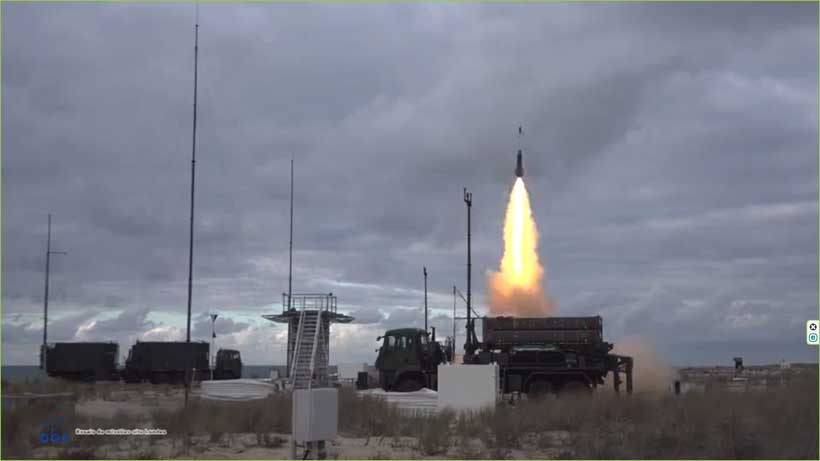
Denmark gives us a good case to think with. Last September, Copenhagen announced it would purchase the Franco-Italian SAMP/T system to anchor the long-range layer of its new ground-based air defenses, choosing the only European alternative to the American Patriot. The figures are substantial: roughly 58 billion kroner, or about $9.1 billion, for eight systems. One reasonable reading is straightforwardly practical. Patriot delivery timelines have lengthened as global demand has surged, and Danish officials stated openly that securing capability quickly was a priority, noting that using multiple suppliers would shorten delivery times. Yet the logistical explanation may not capture the full picture, and it would be a mistake to assume it does.
What gives the decision wider significance is the political environment surrounding it. Denmark’s relationship with Washington has been strained over Greenland, where the Trump administration’s stated interest in acquiring the Danish territory has generated real friction. When a country in that position selects a European system over an American one, the implications are read well beyond the defense ministry. Carnegie Europe’s Rym Momtaz characterized the broader mood directly: European leaders, she argued, have lost confidence not only in Trump’s presidency but in American hegemony more broadly, and a growing number are making quiet, long-term adjustments in response. She situates Denmark’s defense ministry alongside the Dutch central bank’s move away from an American cloud provider toward a European one—decisions she attributes in part to concerns about US reliability. Whether one accepts that interpretation in full, the pattern she describes is not one of impulsive reaction but of deliberate recalibration, and recalibrations of this kind tend to persist.
A confidence problem, not a power problem
Stay ahead of the geopolitical week.
MD Briefing delivers expert analysis across five global fronts — the Indo-Pacific, energy, geoeconomics, European security, and the Middle East — every Monday morning. Free.
The most important distinction here is easy to misstate. The question is not whether the United States remains militarily dominant; by most measures it clearly does, and little on the horizon alters that. The question is whether American commitments can be relied upon to survive a change of administration or a shift in domestic political priorities. For decades the transatlantic arrangement rested on a kind of working assumption: that whoever occupied the White House, Washington would honor its NATO obligations. It is that assumption, rather than American capability, that now appears less secure to many European policymakers.
The timing of recent developments has made the concern harder to set aside. In late May 2026, the German outlet Spiegel reported—subsequently relayed by Reuters and Defense News—that a US envoy informed NATO officials in Brussels of plans to reduce significantly the forces Washington would make available to the alliance in a crisis: fighter jets cut by roughly a third, strategic bombers reduced by half, fewer destroyers, and no submarines committed to the alliance’s force model. According to the reporting, European officials who had expected gradual adjustment were taken aback by the scale. A NATO spokeswoman, for her part, framed the change less dramatically, noting that there had been an over-reliance on the United States in alliance planning and that responsibilities could be reorganized as Europe and Canada invest more. Both framings can be true at once; what they share is the expectation that Europe will shoulder more itself.
The autonomy paradox
Europe’s response to this uncertainty travels under the heading of strategic autonomy, and French President Emmanuel Macron has been its most consistent advocate, arguing that Europe needs the capacity to act independently when circumstances require. The EU’s ReArm Europe initiative, with its proposal to mobilize up to €800 billion, represents the most ambitious version of that idea to date.
A tension runs through the project, however, and it deserves acknowledgement: Europe is pursuing greater independence precisely because its existing dependence is so deep. The same governments advancing the case for sovereignty continue to rely on American nuclear deterrence, US intelligence, NATO command structures, and logistical capacity that no European coalition can yet replicate. Analysts at the Institute for Policy Studies have highlighted how uneven the effort remains internally; the limits of European strategic autonomy are in part limits of political will, with member states divided over how far and how fast integration should proceed. Procuring a European air defense system is plainly achievable. Replacing the broader spectrum of American capabilities—carrier strike groups, the nuclear umbrella, and signals intelligence—would be a generational undertaking, if it were feasible at all. The more prominent the rhetoric of autonomy becomes, the more visible the distance between ambition and current capacity.
This reframes the central question. It is no longer whether autonomy is desirable; across much of the political spectrum, European governments now broadly agree that it is. The more difficult question is whether the alliance can manage the transition—whether Washington and Brussels can navigate a period in which Europe becomes genuinely less dependent without the relationship itself fracturing under the strain.
Denmark as a sign of things to come
Copenhagen is unlikely to be the last European capital to make such a choice. The structural incentives point in a consistent direction: American delivery timelines that sit awkwardly with European requirements, the signaling value of European procurement, and the underlying uncertainty about the durability of the US guarantee. Carnegie’s own analysis is measured but firm on the prospects for repair: even after the Trump administration, the relationship is unlikely to revert to its post–Cold War form, because trust eroded at this scale is not easily restored within a single electoral cycle.
A single missile contract will not reshape the global balance of power, and it would be an overstatement to suggest otherwise. But it does indicate the direction in which European thinking is moving. For the first time since 1945, a meaningful number of European governments appear to be designing their long-term security around the possibility—not the certainty, but a credible possibility—that the American guarantee is not permanent. That is a notable shift in assumption, and assumptions of this kind tend to shape the decisions that follow. The question facing both sides of the Atlantic is therefore less about whether Europe desires autonomy than about whether the alliance can adapt to a Europe that has begun, however tentatively, to build it.
