


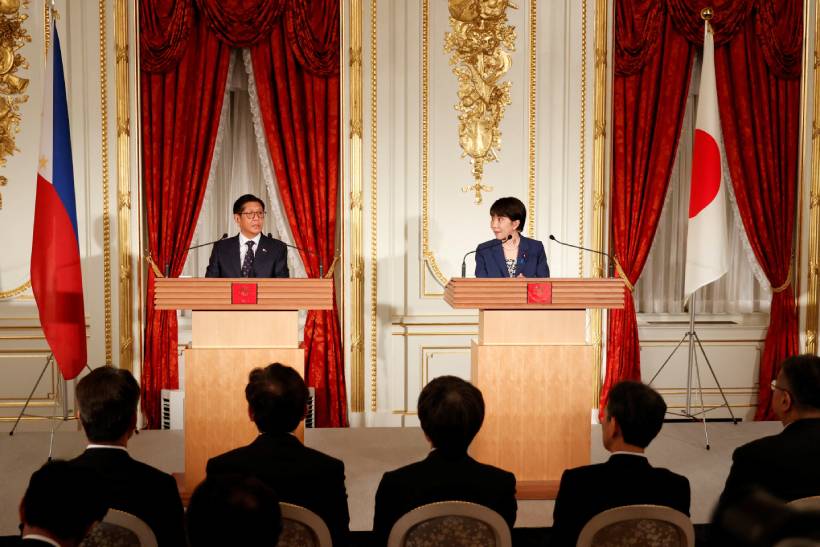
China’s Coast Guard said on Monday that it carried out law enforcement patrols in waters east of Taiwan in response to plans by Japan and the Philippines to begin formal maritime boundary delimitation negotiations in an area Beijing claims falls under its sovereignty.
The move comes after Japan and the Philippines announced last week that they would start talks on defining the maritime boundary of their exclusive economic zones and continental shelves in accordance with international law. Although both countries did not provide detailed information about the exact area under discussion, China argued that the negotiations involve waters east of Taiwan, which Beijing considers part of its territory.
In a statement, China’s Coast Guard said a flotilla conducted patrol operations east of Taiwan as a necessary response to what it described as unilateral actions by Japan and the Philippines. Chinese authorities urged both countries to halt any activities that they claim infringe on China’s sovereign rights and interests.
Taiwan Rejects Beijing’s Position
Taiwan swiftly rejected Beijing’s position. Taiwan’s Foreign Ministry said China has no right to interfere in Taiwan’s territorial sovereignty or its maritime rights. The latest exchange adds to growing tensions in waters surrounding Taiwan, where Chinese warships, aircraft, and coast guard vessels frequently operate near the island.
Stay ahead of the geopolitical week.
MD Briefing delivers expert analysis across five global fronts — the Indo-Pacific, energy, geoeconomics, European security, and the Middle East — every Monday morning. Free.
The dispute comes against the backdrop of broader regional disagreements over maritime claims. China claims Taiwan and most of the South China Sea through its widely contested territorial assertions, which overlap with the exclusive economic zones of several neighboring countries, including the Philippines, Vietnam, Malaysia, Brunei, and Indonesia. Taiwan’s government continues to reject Beijing’s sovereignty claims.
Background
The planned maritime boundary talks between Japan and the Philippines are aimed at clarifying the limits of their exclusive economic zones and continental shelves. China argues that parts of the area under discussion involve waters east of Taiwan and therefore fall within its claimed jurisdiction.
The issue adds another layer to long standing disputes over territorial sovereignty and maritime rights in East Asia and the South China Sea, where competing claims have frequently generated diplomatic tensions.
Why It Matters
The latest confrontation highlights increasing competition over maritime boundaries and strategic waterways in the Indo Pacific region. Maritime boundaries determine access to valuable resources such as fisheries, energy reserves, and shipping routes, making them highly significant for national security and economic interests.
China’s response demonstrates its determination to challenge actions it believes affect its territorial claims, while Japan and the Philippines continue to strengthen cooperation on maritime and security issues. The dispute also reflects broader geopolitical tensions involving Taiwan and competing claims across regional waters.
What Happens Next
Japan and the Philippines are expected to proceed with discussions on maritime boundary delimitation despite Beijing’s objections. China may continue maritime patrols and diplomatic pressure to reinforce its claims, while Taiwan is likely to maintain its position that it has sovereign authority over its territorial waters and maritime zones.
Regional governments and international observers will closely monitor developments to assess whether tensions remain contained through diplomatic channels or escalate into a wider dispute.
Future Outlook
The maritime dispute is likely to remain a source of tension in the months ahead. If Japan and the Philippines make progress toward a formal boundary agreement, China could increase its diplomatic protests and maritime activities in contested waters.
At the same time, Taiwan’s continued rejection of Beijing’s territorial claims ensures that sovereignty disputes will remain a central issue in regional security discussions. While all sides currently appear committed to legal and diplomatic measures, the growing presence of coast guard and military vessels in contested areas means that the risk of future confrontations cannot be ruled out.
The outcome of these negotiations could influence future maritime agreements across the Indo Pacific and shape how regional powers manage overlapping territorial claims in increasingly contested waters.
With information from Reuters.
