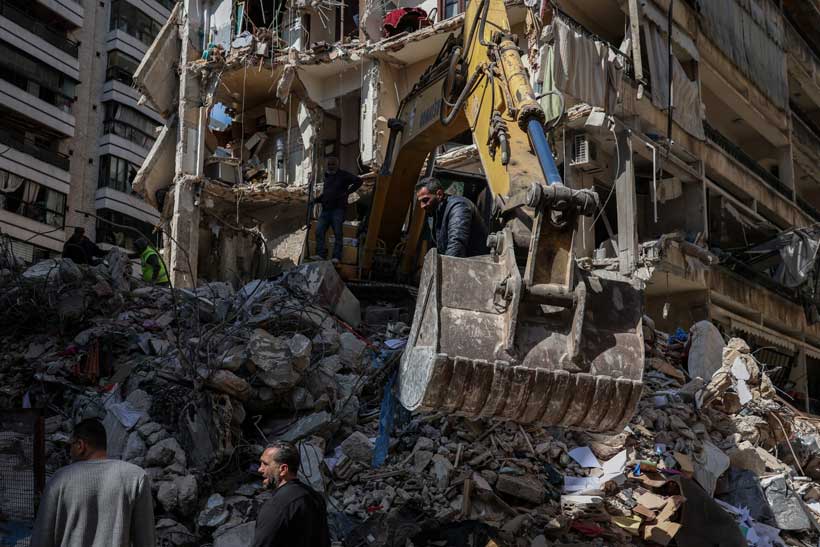
Israel conducted extensive bombings in Lebanon, jeopardizing the U. S.-Iran ceasefire following significant Israeli attacks that resulted in over 250 deaths. In Pakistan, the capital Islamabad was locked down as peace talks were anticipated, with a designated area around the Serena Hotel, where U. S. and Iranian delegations are expected to stay. The hotel informed guests to check out until Sunday due to its requisition for this event. However, Iran maintained its blockade of the Strait of Hormuz, leading to severe disruptions in global energy supplies and stating no deal would be reached as long as Israel continued its attacks on Lebanon.
Israel contended that its military actions in Lebanon were not included in the ceasefire announced by President Trump, a view echoed by the U. S. Iran and Pakistan, acting as mediator, argued that the ceasefire should also apply to Lebanon. Other nations, including the UK and France, supported this stance, while a Pakistani source indicated efforts were underway to establish a ceasefire for Lebanon and Yemen, areas where Israel had conducted assaults on Iran-aligned groups. Iranian Parliament Speaker Mohammad Baqer Qalibaf emphasized that Lebanon and Iran’s regional allies were essential to any ceasefire agreement.
The Israeli military reported it had killed the nephew of Hezbollah’s leader and targeted various locations in southern Lebanon. Initially, Hezbollah paused its attacks but later resumed them, launching strikes against Israeli forces. Following the assault described as a “massacre” by Lebanese officials, Lebanon observed a day of mourning, with rescue efforts ongoing to find survivors amid devastated areas. Eyewitness accounts described the aftermath of the bombings and the overwhelming toll on victims.
As the war extended into its sixth week, President Trump sought a way out before economic repercussions could threaten his presidency. The ceasefire helped stabilize rising oil prices, yet current market conditions indicated prices reaching near record levels. Inside Iran, large crowds commemorated the 40th day of mourning for Supreme Leader Ayatollah Ali Khamenei, showcasing a strong public display of loyalty through gatherings and billboards.
Trump attempted to assert pressure on Iran, indicating a potential return to military action unless compliance was achieved. Despite declaring victory, the U. S. did not fulfill its aims of eliminating Iran’s military capabilities or nuclear potential. Iran continues to maintain significant missile and drone capabilities, along with a substantial stockpile of enriched uranium, demonstrating resilience against U. S. strategies.
Iran is now advocating for more concessions from the U. S. in negotiations, including lifting sanctions and acknowledging its control over the Strait of Hormuz. In contrast, the U. S. demands include relinquishing enriched uranium and ceasing missile development. Iranian officials have also hinted at imposing regulations on shipping through the strait, signaling a potential shift in maritime control.
With information from Reuters