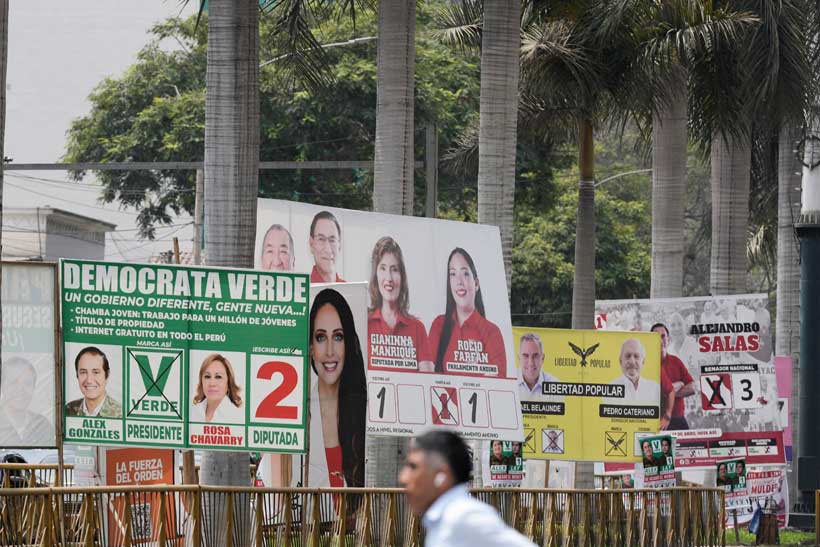
Peruvians are set to vote on April 12, aiming to end a decade of political instability where no president has completed a full term due to corruption scandals, rising crime, and voter dissatisfaction. Approximately 27 million people are eligible to vote for a new president and a reinstated bicameral congress. Polling stations will open at 0700 local time and close at 1700, followed by the counting of unusually long paper ballots.
A record 35 presidential candidates are competing, leading to crowded campaign posters in Lima. Opinion polls indicate that right-wing candidate Keiko Fujimori has a slight lead, closely followed by former Lima mayors Rafael Lopez Aliaga and Ricardo Belmont, and outsider Carlos Alvarez. None of the candidates have significant support, with analysts predicting a runoff on June 7. About 13% of voters are still undecided, adding uncertainty to the election.
The fragmented race reflects deep institutional decline, as Peru has seen eight presidents since 2018, many of whom were impeached or jailed. This election might either break the cycle of instability or continue the current trend, as noted by political analyst Fernando Tuesta. The campaign heavily emphasizes fighting corruption, with four former presidents imprisoned for bribery. In addition to corruption, crime has surged, especially homicide and extortion, affecting transport workers and small businesses. Candidates are proposing various tough measures against crime, including deploying troops, reinstating the death penalty, and allowing anonymous judges, a practice not seen in Peru since 1997.
With information from Reuters