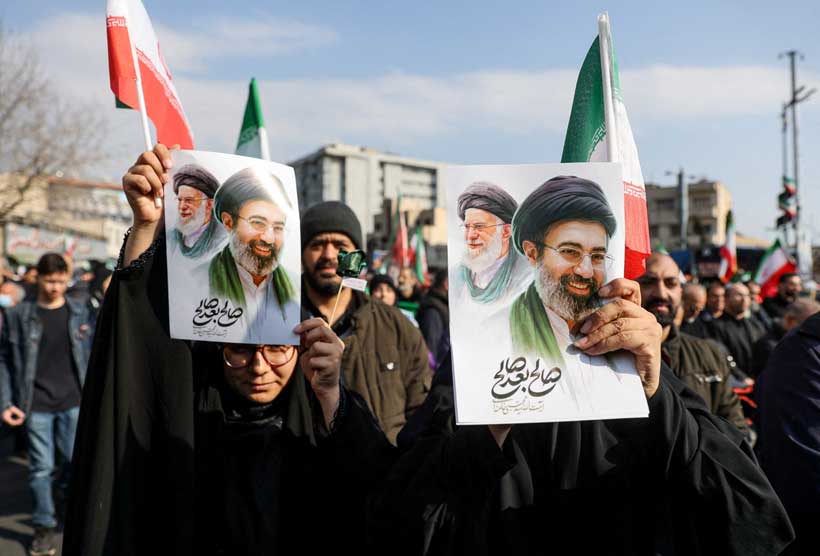
Iran’s hardliners demonstrated their support for the new Supreme Leader Mojtaba Khamenei on Monday, indicating that the ongoing conflict in the Middle East will continue to disrupt global markets. Oil prices surged significantly, peaking at $119.50 per barrel, causing stock markets to decline sharply. President Donald Trump has rejected Khamenei’s leadership, calling for Iran’s unconditional surrender.
Large crowds rallied in various cities, showcasing loyalty to Khamenei, whose father, the previous leader, was killed at the start of the conflict. State media reported chants of support and displayed images of both Khameneis. Political figures pledged allegiance, emphasizing their commitment to the new leader, while public opinion was divided. Some supporters celebrated the leadership change as resilient, while opponents expressed concern over a lack of opportunity for change.
The military and political elite in Iran remain powerful, with many citizens feeling powerless in the face of the regime’s strength. In contrast, Israel aims to dismantle Iran’s clerical system, while U. S. officials focus on disabling Iran’s missile and nuclear programs. Israel has threatened to target anyone who succeeds Khamenei unless Iran modifies its stance.
The war has obstructed the Strait of Hormuz, a crucial channel for global oil transport, causing various Gulf nations to reduce production. The rising oil prices have sparked fears of a prolonged energy crisis reminiscent of the 1970s, leading to significant drops in global share markets, especially affecting the airline industry. Given the political implications of rising gas prices in the U. S., Trump is considering measures to manage domestic oil prices, including potential releases from strategic reserves.
Additionally, strikes on Iranian energy facilities have increased, with environmental health risks raised by officials due to potential contamination of food and water. Turkey reported that NATO air defenses intercepted a ballistic missile from Iran, but did not formally request further assistance from NATO members. Meanwhile, Israel continued its military actions against Iran and its allies, resulting in numerous casualties in both Iran and Lebanon.
Amidst these conflicts, U. S.-Israeli operations have reportedly killed over 1,300 Iranian civilians and caused significant displacement in Lebanon. The ongoing violence persists as international dynamics shift according to the changing leadership in Iran and the resulting geopolitical tensions.
With information from Reuters