


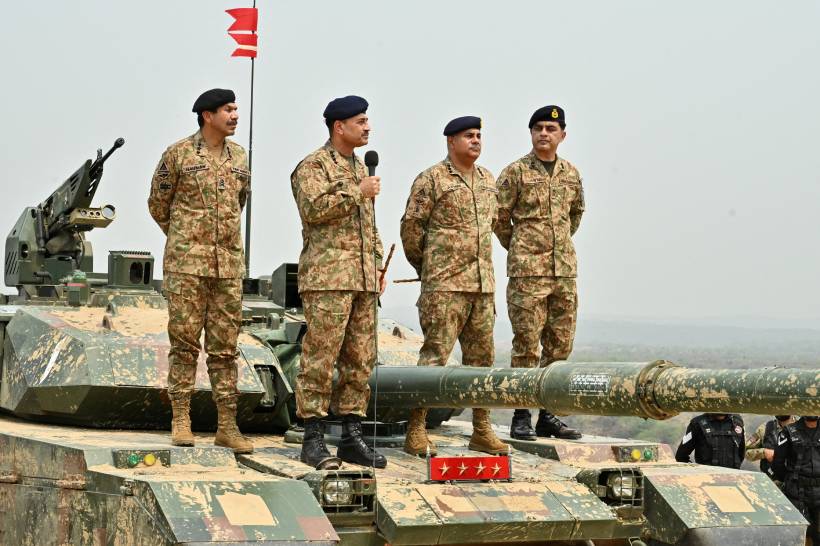
Pakistan’s most powerful military chief in decades is confronting a defining foreign policy test as the United States pushes Islamabad to contribute troops to a proposed Gaza stabilisation force. The request, tied to President Donald Trump’s 20-point plan for post-war Gaza, places Field Marshal Asim Munir at the centre of a decision that carries significant diplomatic rewards but equally severe domestic risks.
Washington’s Expectations
Munir is expected to travel to Washington in the coming weeks for talks with Trump, his third meeting with the U.S. president in six months, according to sources familiar with the matter. The talks are expected to focus on the Gaza plan, which envisions a multinational force drawn largely from Muslim-majority states to oversee a transition period of reconstruction and economic recovery in territory devastated by more than two years of Israeli bombardment. While framed as stabilisation, the mission implicitly involves confronting Hamas, a prospect that has made many countries wary of participation.
Why Pakistan Matters
Pakistan’s military profile makes it an attractive partner for Washington. As the world’s only Muslim-majority nuclear power, with a battle-hardened army shaped by wars with India and prolonged counterinsurgency campaigns, Islamabad is viewed as capable of deploying disciplined forces in hostile environments. Analysts say this capability creates pressure on Munir to act, particularly as Pakistan seeks to revive ties with the United States after years of mutual suspicion.
The Munir–Trump Equation
Munir has cultivated a notably close relationship with Trump, becoming the central figure in restoring U.S.–Pakistan engagement. His White House lunch in June the first time a U.S. president hosted a Pakistani army chief alone highlighted the degree to which Washington now sees the military, rather than civilian leaders, as its primary interlocutor. Analysts warn that rejecting the Gaza request could irritate Trump at a moment when Islamabad is eager for U.S. investment and security cooperation.
Stay ahead of the geopolitical week.
MD Briefing delivers expert analysis across five global fronts — the Indo-Pacific, energy, geoeconomics, European security, and the Middle East — every Monday morning. Free.
Unprecedented Authority at Home
Munir’s position is unique in Pakistan’s history. Earlier this month he was appointed chief of the defence forces, bringing the army, navy and air force under his command, while constitutional amendments granted him an extension until 2030, lifetime immunity from prosecution and the permanent title of field marshal. This concentration of power gives Munir wide latitude to take strategic risks, with few institutional checks on his decisions.
Domestic Political Fault Lines
Despite his authority, Munir faces a volatile domestic landscape. Islamist parties in Pakistan retain the ability to mobilise large protests, particularly on issues involving Israel and Palestine. Although a major anti-Israel Islamist group was banned in October and its leadership jailed, its ideological influence remains strong. Analysts say a Pakistani troop deployment to Gaza under a U.S.-backed framework would almost certainly reignite street agitation.
The Imran Khan Factor
Adding to the pressure is the enduring popularity of jailed former prime minister Imran Khan. His supporters, who won the most seats in the 2024 elections, are openly hostile to Munir and could exploit any Gaza involvement to portray the army chief as acting on Washington’s behalf. Such a narrative, analysts warn, would resonate across Pakistan’s political spectrum.
Regional Consultations
In recent weeks, Munir has held talks with leaders from Saudi Arabia, Turkey, Egypt, Qatar, Indonesia and Malaysia, engagements analysts interpret as consultations on the Gaza force and efforts to distribute political responsibility among Muslim states. Pakistan’s foreign minister has publicly left the door open to peacekeeping while insisting that disarming Hamas is not Islamabad’s role, signalling an attempt to define clear limits on any involvement.
What Is at Stake
The core risk, analysts say, lies not in the initial decision but in what follows. Once a stabilisation force is deployed, any escalation on the ground could quickly entangle contributing countries in direct conflict. For Munir, whose power is unparalleled but whose legitimacy still depends on domestic stability, the Gaza question may prove to be the most consequential test of his rule one in which strategic gains abroad could come at a steep political cost at home.
With information from Reuters.
