


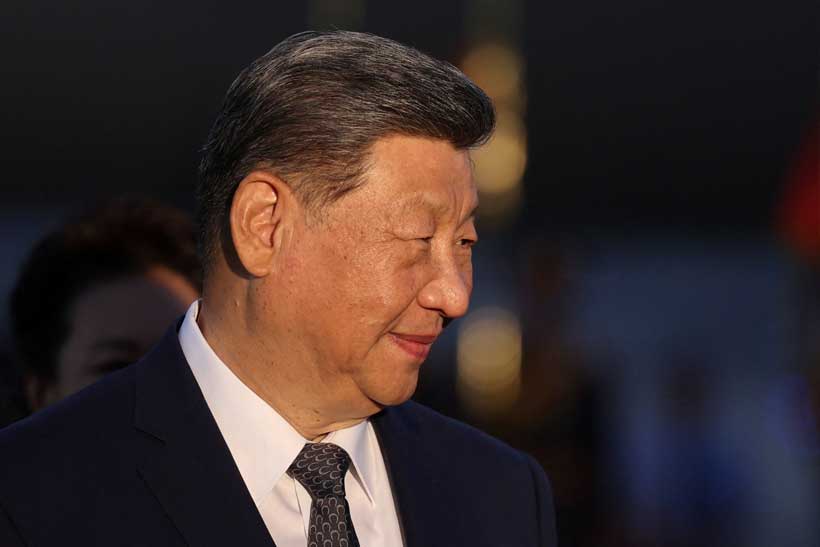
China’s Communist Party has opened a four-day leadership meeting focused on strengthening internal discipline, combating corruption and enforcing stricter governance as President Xi Jinping seeks to consolidate his authority ahead of a potential leadership reshuffle in 2027.
The fifth plenum of the Communist Party’s Central Committee, running from Monday to Thursday, is expected to emphasise the implementation of party decisions and the enforcement of ideological discipline. With major policy directions largely established at previous meetings, analysts expect the gathering to focus heavily on demonstrating Xi’s continued control.
Xi Pushes for Stronger Party Discipline
Xi Jinping briefed the Central Committee on a draft document addressing the party’s governing capacity, internal challenges and the need to prevent complacency and corruption, according to state news agency Xinhua.
A commentary published by Xinhua stressed that decisions made by the party’s central leadership must translate into concrete action rather than remain empty rhetoric.
Stay ahead of the geopolitical week.
MD Briefing delivers expert analysis across five global fronts — the Indo-Pacific, energy, geoeconomics, European security, and the Middle East — every Monday morning. Free.
The commentary called for stronger institutional rules, fewer regulatory loopholes and more effective safeguards to ensure compliance.
The emphasis on enforcement reflects the leadership’s efforts to ensure that party officials follow central directives consistently. It also reinforces Xi’s broader approach to governance, which places party discipline and ideological unity at the centre of China’s political system.
A Signal Ahead of the 2027 Leadership Reshuffle
The meeting could be the last major party gathering before the leadership reshuffle expected in 2027. Xi is widely expected to seek a fourth term as the party’s top leader, although the formal outcome will depend on the party’s internal political process.
Kerry Brown, director of King’s College London’s Lau China Institute, said the plenum would present Xi as firmly in control and capable of continuing to lead.
Brown also suggested that the meeting’s political messaging could be as significant as its substantive policy outcomes, given that many major decisions had already been established at previous gatherings.
The emphasis on unity and leadership authority comes amid speculation about Xi’s long-term political future. The meeting provides an opportunity for the party to project continuity and minimise uncertainty surrounding its leadership.
Anti-Corruption Campaign Remains Central
Xi’s extensive anti-corruption campaign has resulted in the removal and investigation of hundreds of senior officials, including high-ranking military figures and individuals who were once considered close to the president.
The leadership presents the campaign as essential to strengthening the party, improving governance and preventing officials from abusing their positions.
Xinhua described the objective as creating a system in which officials would not dare to commit corruption, would lack the opportunity to do so and would have no desire to engage in it.
However, the campaign has also attracted criticism. Observers argue that repeated purges, particularly within the armed forces, can disrupt institutional continuity, undermine morale and raise questions about military readiness.
The competing interpretations highlight the wider implications of Xi’s governance model: stronger central oversight may improve compliance with party directives, but frequent personnel changes can also create uncertainty within key institutions.
What Does This Mean for China’s Economy?
The party has linked its anti-corruption drive to more predictable governance and a stronger institutional environment for international cooperation.
Xinhua argued that reducing bribery and favouritism would allow merit and the rule of law to play a greater role in official decision-making, potentially improving conditions for global investors and policymakers.
For international businesses, consistent enforcement of regulations and reduced corruption could help make administrative decisions more predictable. However, the extent to which the campaign improves the investment environment will depend on how rules are applied in practice and whether businesses have confidence in regulatory transparency.
The political implications also matter for China’s economic direction. A stronger emphasis on central discipline could help the leadership implement national priorities, while uncertainty surrounding senior officials and military appointments may complicate assessments of institutional stability.
What Happens Next?
The fifth plenum is expected to reinforce the party’s commitment to discipline, anti-corruption enforcement and the implementation of central decisions. Its significance will extend beyond the immediate announcements, particularly as China approaches its next leadership transition.
For Xi, the meeting offers an opportunity to demonstrate continued authority and strengthen the political foundations of his leadership. For observers abroad, the key question is whether tighter party control will translate into more effective governance and greater economic predictability or create additional uncertainty through continued institutional purges.
The outcome will help clarify how the Communist Party intends to balance political centralisation, administrative effectiveness and institutional stability in the years ahead.
With information from Reuters.
