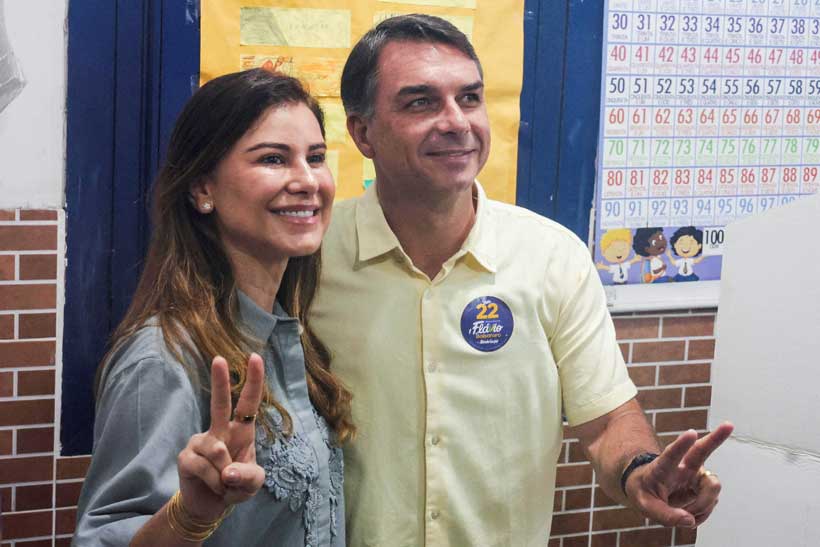
Two US State Department officials, Darren Beattie and Ricardo Pita, led efforts to restore the right-wing Bolsonaro family to power in Brazil, according to ten current and former US officials. They pushed for sanctions designed to influence the election in favor of the Bolsonaros, ahead of a close run-off on Sunday between Senator Flavio Bolsonaro and President Luiz Inacio Lula da Silva. Lula has accused his opponent of colluding with the Trump administration and warned against US interference in Brazil’s sovereignty.
Beattie and Pita have apparently organized a campaign to support former President Jair Bolsonaro, who had been disqualified from office for attempting a coup in 2022 after losing to Lula. Following Jair Bolsonaro’s 27-year prison sentence in September 2025, they shifted their support to his son, Flavio Bolsonaro. They advised embassy staff to avoid interacting with other conservative candidates who might compete against Flavio.
Since last year, Beattie and Pita have successfully pushed for US measures aimed at undermining Lula and strengthening the Bolsonaros. These actions included labeling Brazilian gangs as terrorist organizations and sanctioning a Brazilian Supreme Court Justice investigating Jair Bolsonaro. The degree to which Beattie and Pita acted on orders from the White House remains unclear, and the White House has chosen not to comment on the situation.
One former State Department official expressed concerns about the use of US foreign policy to pressure another democracy regarding the fate of a political ally, suggesting that it blurred the line between diplomacy and political intervention.
Stay ahead of the geopolitical week.
MD Briefing delivers expert analysis across five global fronts — the Indo-Pacific, energy, geoeconomics, European security, and the Middle East — every Monday morning. Free.
Beattie, a former White House speechwriter, was fired in 2018 for attending an event with white nationalists and is known for promoting “free speech diplomacy.” This policy, favored by Trump allies, aims to punish countries that censor right-wing speech. The United States has accused Brazilian Supreme Court Justice Alexandre de Moraes of violating free speech rights by jailing citizens for social media posts and censoring US social media content. Moraes claims he is fighting fake news that threatens Brazil’s democracy. He has not responded to inquiries.
Pita, a conservative Venezuelan-American, views Lula as a risk to US interests in Latin America. Senator Marco Rubio leads aggressive US policies in the region, including a failed invasion of Venezuela and sanctions on Cuba. Beattie and Pita support Jair Bolsonaro, who insists he did not lose the 2022 presidential election, leading to riots by his supporters. In September 2025, Bolsonaro was convicted of attempting to maintain power through a coup. Before this, the Bolsonaro family sought US sanctions against Moraes under the Global Magnitsky Human Rights Accountability Act, which allows sanctions for human rights abuses.
In April 2025, Eduardo Bolsonaro, Jair’s son, visited Beattie to advocate for these sanctions. Beattie made calls to the US Treasury Department to support sanctions against Moraes, with Treasury Secretary Scott Bessent reportedly not opposing the move. In July 2025, the US imposed Magnitsky sanctions on Moraes for censoring anti-government social media posts. A Treasury official stated that Bessent and Rubio supported the administration’s foreign policy.
The Bolsonaro family also pushed to classify Brazil’s major gangs as terrorist organizations, believing this would harm Lula politically. Eduardo Bolsonaro befriended Pita through conservative networks and they both aimed for these designations. In May 2025, Pita joined a US delegation visiting Jair Bolsonaro, and later suggested exploring terrorist designations in Brazil, similar to those imposed on Mexican cartels.
In May 2026, Flavio Bolsonaro met with Beattie and Deputy Secretary of State Christopher Landau to discuss the urgency of designating Brazil’s gangs as foreign terrorist organizations, which the State Department announced the next day. The extent of influence from Pita or Beattie in this decision remains unclear.
In July 2025, the US announced additional measures against Brazil, including visa revocations for Supreme Court justices and tariffs on Brazilian goods, citing the treatment of Jair Bolsonaro. However, these measures did not effectively halt his trial and instead aided Lula’s popularity, according to analysts. Furthermore, the tariffs faced resistance from major US and Brazilian businesses.
Beattie and Pita encountered difficulties as well; the US removed Justice Moraes from the sanctions list in December without explanation, and Brazil prohibited Beattie from entering the country in March to meet Bolsonaro. Trump may have refrained from endorsing Bolsonaro publicly to avoid influencing Brazil’s elections negatively for Bolsonaro. Nonetheless, after Flavio Bolsonaro’s strong performance in a recent election, Trump labeled it a significant victory.
With information from Reuters