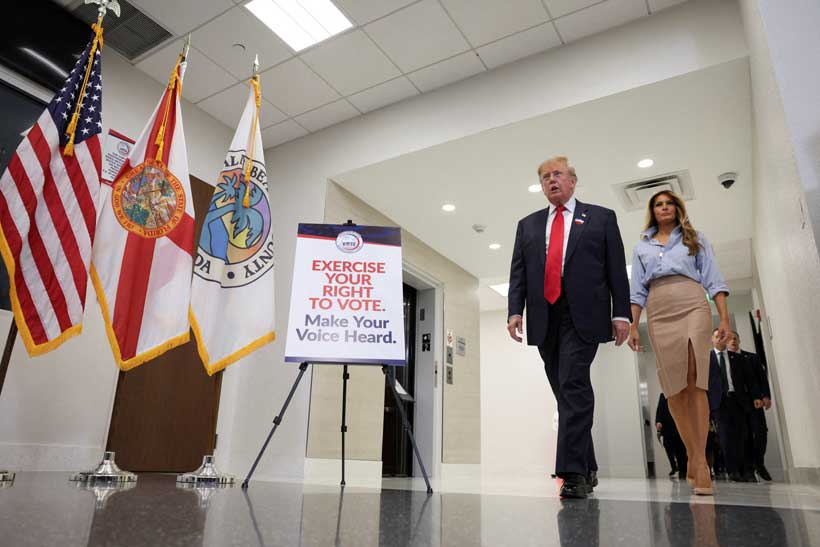
Americans are set to vote on November 3 in midterm elections that will determine control of Congress for the last two years of President Donald Trump’s term. Democrats aim to gain four seats to secure a majority in the House of Representatives and the Senate, where Republicans currently hold narrow majorities. While polling suggests Democrats may win the House, the Senate race is still very tight. With Trump’s approval rating low, the outcome could significantly impact Washington. However, even if Democrats win one or both chambers, Trump would still have veto power and considerable executive authority, which could restrict any major legislative changes.
If the Democrats win the House but not the Senate, they could gain anywhere from 5 to 20 seats. This scenario would enable them to take control of House committees and initiate investigations into Trump and his administration. However, established Trump appointees in the Justice Department might not enforce subpoenas. With Trump retaining veto power and authority over tariffs, immigration, and foreign policy, it would be difficult for Democrats to block his agenda. They could pass symbolic bills addressing healthcare, abortion rights, and other issues, but significant legislative success would be minimal. Future battles over the debt ceiling and government funding are expected, regardless of the results.
Should Democrats gain 21 to 40 seats in the House, their leadership would have more flexibility and might push more progressive initiatives. A larger group could lead to calls for Trump’s impeachment and make some Republicans more open to dissent on unpopular issues. This larger majority might also strengthen negotiations for budget and debt ceiling issues, making it easier to secure concessions from Republicans. However, major victories would still be limited due to Senate Republican opposition and Trump’s veto power.
In the event of a 50-50 split in the Senate with Democrats controlling the House, Republicans would still manage the chamber’s decisions due to Vice President JD Vance’s tie-breaking vote. This would render debt ceiling and budget discussions unpredictable as both parties would be constrained by the need for unity. Swing senators could play a pivotal role in rolling out decisions, resulting in potential gridlock in Washington.
Stay ahead of the geopolitical week.
MD Briefing delivers expert analysis across five global fronts — the Indo-Pacific, energy, geoeconomics, European security, and the Middle East — every Monday morning. Free.
If Democrats secure both the House and Senate with a majority, the Senate’s control would hold more weight since it handles judicial confirmations and appointments. A small Democratic majority would allow them to manage committees and create agendas, possibly blocking many of Trump’s judicial nominees. Republicans may rush to confirm appointees before the new Congress starts in January. While Democrats would have the power to influence negotiations over the debt ceiling, Trump’s veto and the need for 60 votes to pass most major legislation would limit their achievements.
With a slightly larger Democratic Senate majority of 4 to 6 seats, the party could pass more bills aimed at addressing national concerns like high prices and healthcare, but Trump would still be able to veto most legislation. A greater majority could help the Democrats frame the 2028 election narrative against Trump, but they would still face legislative barriers such as the filibuster.
In the scenario where Democrats hold an 8-seat or greater majority, they might feel a clearer mandate from voters. This position would strengthen their negotiating power on debt ceiling and funding matters, although they still wouldn’t possess enough votes to override filibusters or impeach Trump.
While it’s less likely, a scenario where Republicans maintain control of both the House and Senate could happen, claiming a fresh mandate for Trump. This would enable Trump to continue judicial nominations with minimal congressional checks, but it could also lead to significant financial confrontations like budget standoffs.
With information from Reuters