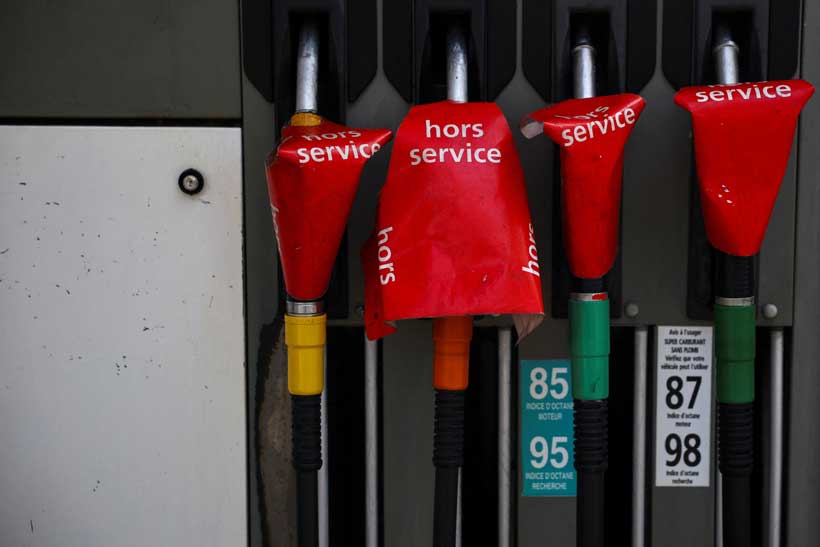
With the November midterm elections approaching, President Donald Trump is trying various expensive solutions to tackle the issue of rising diesel prices. His administration has proposed billions in aid for farmers, relaxed regulations for truck drivers, lifted sanctions on Russian fuel, and pressed European allies to release emergency fuel supplies. However, diesel prices increased again last week, reaching an average of $6.28 per gallon, despite previous declines. This situation leaves Trump struggling to gain the support of voters, as almost 80% of Americans blame him for the rising costs, according to a Reuters/Ipsos poll.
The pressure is especially significant in Republican regions like Iowa and Kansas, where high fuel and fertilizer prices are causing anger among some of Trump’s key supporters. At campaign rallies, Trump has highlighted his efforts to address diesel prices, such as signing an executive order allowing the use of red-dyed diesel for highway vehicles and announcing $8 billion in new aid for farmers.
These measures, however, come with trade-offs. The new farm aid could increase the federal deficit, while the relaxed sanctions on Russian fuel may provide funds for Russia’s war efforts. Additionally, encouraging European allies to release emergency stockpiles and threatening to limit U.S. diesel exports has strained diplomatic relations.
Experts express skepticism about the effectiveness of Trump’s actions. They emphasize that the president often prioritizes short-term benefits over long-term consequences. The White House attributes high diesel prices to ongoing issues, such as refinery closures and the impacts of the Russia-Ukraine conflict, while asserting Trump’s commitment to reducing costs for American workers.
One of Trump’s strategies has met challenges. He signed an executive order permitting truck drivers to use red-dyed diesel, usually meant for off-road purposes, but the IRS has not waived the federal diesel tax entirely. This uncertainty creates confusion for fuel providers, with industry representatives expressing doubts about whether these policy changes will significantly lower diesel prices.
Federal payments to farmers have already been forecasted to exceed $47 billion this year, including nearly $12 billion in relief from tariffs. The proposed additional $8 billion in farm aid would raise this total to over $55 billion, surpassing the previous record set in 2020. While these payments may assist farmers facing higher costs, they do not resolve the broader market issues leading to fuel price hikes and raise concerns about taxpayer spending.
Furthermore, Trump’s decision to ease sanctions on Russian diesel has attracted bipartisan backlash, questioning whether this measure will effectively reduce U.S. fuel prices. He argues that the sanctions relief is crucial for negotiations to end the conflict in Ukraine and to secure the release of an American prisoner. As his initiatives to lower fuel costs falter, Trump has attempted to shift the blame toward the situation in Ukraine rather than the ongoing conflict with Iran, which analysts say has been the primary cause of rising diesel prices.
With information from Reuters