


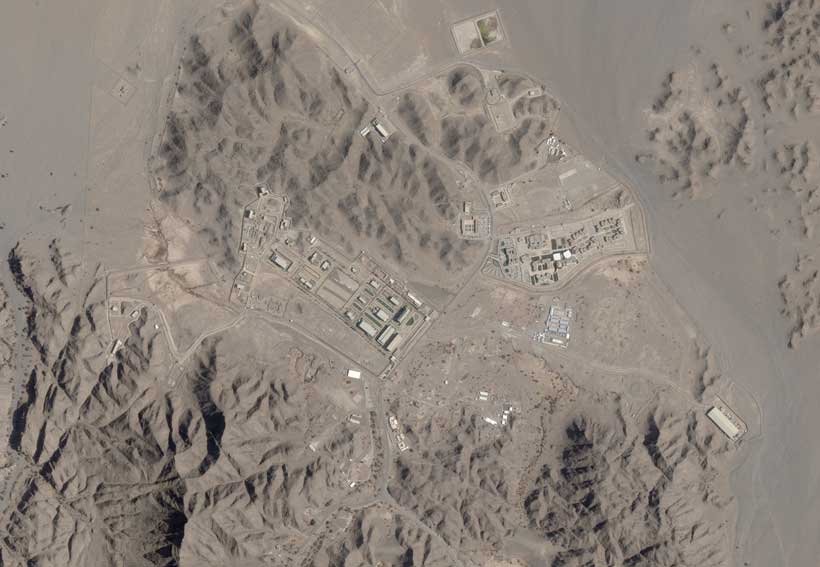
Saudi Arabia is expanding its ballistic missile factory to create larger solid-fuel missiles that can fly farther and carry heavier loads. Researchers from the Foreign Policy Research Institute examined over a year of satellite images and found evidence that the al-Duwadimi facility, located west of Riyadh, is adding new buildings aimed at enhancing its production capabilities. These improvements could help Saudi Arabia deter Iranian attacks and depend less on foreign support in its military efforts, particularly against Houthi fighters in Yemen. However, this development may also escalate a missile race in the region and lead to increased scrutiny in the US Congress regarding a civilian nuclear deal with Saudi Arabia, amid concerns of nuclear proliferation.
Images taken by Planet Labs revealed that the new construction includes casting pits, where missile fuel is prepared, and possibly storage for fuel ingredients or finished components. This expansion indicates that Saudi Arabia is likely working on producing missiles with larger payloads and longer ranges, which are preferred by military forces due to their ease of storage and rapid launch capabilities. It’s suggested that these advancements are based on Chinese technology, as Saudi Arabia has previously acquired missile systems from China and has displayed them in military parades.
The report suggests that Saudi Arabia could be producing a solid-fuel variant of the DF-15 missile and might be aiming to develop the longer-range DF-21 or similar models. Historically, the kingdom has turned to China for military technology due to restrictions on exports from the US. Analysts warn that if Saudi Arabia develops longer-range missiles, it would be able to threaten Iranian infrastructure without exposing its aircraft to Iranian defenses.
Experts have noted that the missile programs are not unique to Saudi Arabia; other Gulf states, like the UAE and Turkey, are also enhancing their military capabilities. The regional arms buildup presents potential political repercussions in the US, as opposition may grow toward a US-Saudi uranium enrichment agreement aimed at nuclear power generation, with skeptics fearing it might lead to the development of nuclear weapons.
Construction work at al-Duwadimi reportedly began in April 2025, with images showing the process of preparing the land and building structures intended for missile production. The expansion is thought to be nearing completion, with the facility possibly ready to produce missiles by late 2026. The satellite imagery has captured details like deep pits for casting solid propellant motors and protective walls to prevent accidental explosions.
With information from Reuters
