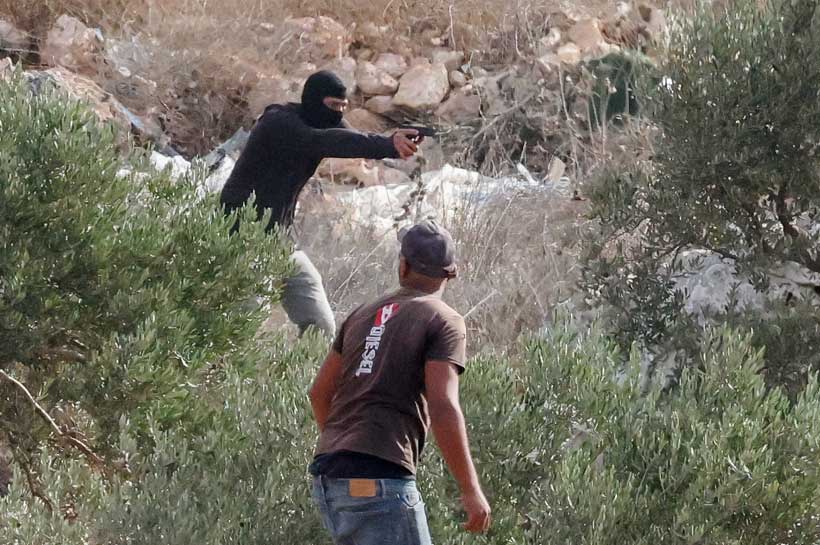
Palestinian Ahmed Salem expressed his deep sorrow and fear as he recounted how Israeli settlers attacked his olive trees and stole his olives in the occupied West Bank. This year, reports indicate an increase in violence and theft during the olive harvesting season, affecting many Palestinians. Settlers have been seen taking olives from trees and transporting them to settlements for processing. Salem highlighted the emotional pain of not being able to defend what rightfully belongs to him, pointing out that the military has restricted Palestinian access to their lands due to the presence of settlements.
As the olive harvest arrives with cooler weather, many Palestinian families return to groves passed down through generations. However, under Netanyahu’s government, the establishment of numerous settler outposts has further limited Palestinian access to these lands. An Israeli rights group, Yesh Din, reported numerous incidents of physical attacks and theft against Palestinian harvesters, often occurring in the presence of Israeli military forces. An Israeli military official acknowledged violence and criminal activity seriously but did not comment directly on settler actions in these instances.
Reactions to the theft of olives vary among Israeli rabbis. Some, like Rabbi Zev Weitman, condemn such actions as theft, while others, like Rabbi Dov Lior, justify the settlers’ actions by claiming Palestinians have no rights to the land. The area around Salem’s village, Lubban al-Gharbi, has seen significant land seizures by the Avichai Farm settler outpost, leading to further encroachments on Palestinian agricultural lands. Settlers have actively encouraged other Israelis to participate in harvesting olives from these contested lands.
The olive oil produced at Avichai Farm is marketed as high-quality and is part of an effort to reinforce Jewish claims to land. Palestinian villagers view this harvesting from seized land as outright theft. The United Nations and various nations deem these settlements illegal under international law, although Israel disputes this characterization.
As the olive harvest continues, violent encounters have escalated, with Palestinian authorities noting fatalities and injuries among their community, journalists, and foreign diplomats due to settler attacks. Yesh Din’s executive director characterized this violence as a campaign of ethnic cleansing, which is aimed at facilitating the annexation of the West Bank. While Israel has acknowledged some incidents are under investigation, a government spokesperson defended the actions of Jewish farmers, claiming olive picking by Jews does not equate to theft.
One Palestinian farmer, Samer Ben Shamsi, described an incident where masked settlers attacked him, stealing his olives while he and others fled. He conveyed a sense of despair, stating that settlers act with increased boldness, seeing themselves as backed by state power. The phrase “we pay in blood for the olives” encapsulates the continuous struggles faced by Palestinian farmers, who experience both violence and loss in the process of preserving their agricultural heritage.
With information from Reuters