


North Korea has ordered its border troops to take “prompt and resolute action” if South Korean forces threaten their safety, raising the risk of a military confrontation along one of the world’s most heavily militarised frontiers.
North Korea’s state media reported on Wednesday that the directive followed an inspection of border fortifications by Army Marshal Pak Jong Chon on Tuesday. Kim Yo Jong, the influential sister of North Korean leader Kim Jong Un, accompanied him during the visit.
The warning came a day after South Korea vowed to respond firmly to further provocations from Pyongyang if it followed through on threats to strengthen its military posture along the border.
The exchange of warnings highlights the continuing deterioration in relations between the two Koreas, where growing military preparations and increasingly confrontational rhetoric have heightened concerns about a possible clash.
Stay ahead of the geopolitical week.
MD Briefing delivers expert analysis across five global fronts — the Indo-Pacific, energy, geoeconomics, European security, and the Middle East — every Monday morning. Free.
Why Are North and South Korea Increasing Border Tensions?
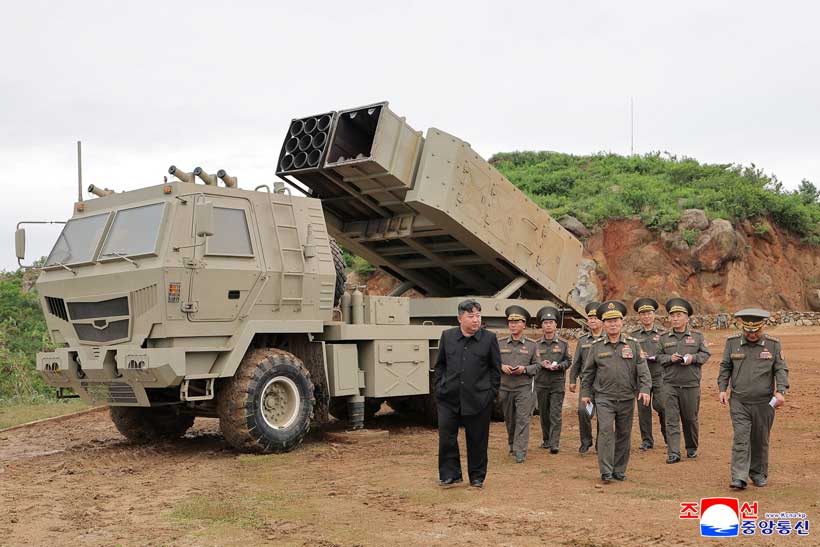
According to North Korea’s Korean Central News Agency (KCNA), Kim Yo Jong said newly deployed firepower units had “taken their firing positions” along the border.
The statement suggests that Pyongyang is reinforcing its military posture in the area, although the report did not provide further details about the units or their capabilities.
Tensions have been rising since April 2024, when North Korea began strengthening border fortifications. The move has added to longstanding mistrust between the two countries, which remain technically at war because the Korean War ended with an armistice rather than a peace treaty in 1953.
The heavily fortified Demilitarized Zone separates North and South Korea. Despite its name, the area is among the most sensitive military frontiers in the world, with armed forces positioned on both sides.
North Korea’s latest directive indicates that its military is prepared to respond if it perceives a threat from South Korean forces. However, the statement does not establish that an immediate attack is planned.
Seoul Warns Against Further Provocations
South Korea has responded to Pyongyang’s threats by promising a firm response to any further military provocations.
The competing warnings create a potentially dangerous situation in which routine military activities, movements near fortifications or misunderstandings between troops could be interpreted as hostile actions.
Both governments have incentives to demonstrate military readiness and avoid appearing weak. However, increasingly forceful public statements can narrow the space for de-escalation, particularly when troops are operating close to one another.
North Korea’s emphasis on protecting its border forces also raises the possibility that Pyongyang could justify a military response by claiming that South Korean activities threaten its troops.
Seoul, meanwhile, faces pressure to deter North Korean actions without triggering a wider confrontation.
What Does This Mean for Regional Security?
The latest developments add to security concerns on the Korean Peninsula, where military deterrence and political mistrust have long complicated efforts to reduce tensions.
North Korea’s border fortifications and reported deployment of firepower units could make the frontier more militarily sensitive. Any confrontation involving troops stationed near the Demilitarized Zone could escalate rapidly if either side responds with force.
The situation also matters for regional security because instability on the peninsula could affect South Korea’s relations with the United States and broader security calculations involving Japan and other regional actors.
For now, the available reports point to heightened military readiness and increasingly confrontational rhetoric rather than confirmation of an imminent conflict.
The immediate challenge will be to prevent threats and defensive preparations from turning into a cycle of retaliation. Without effective communication and restraint, even a limited border incident could further deepen the divide between the two Koreas.
With information from Reuters.
